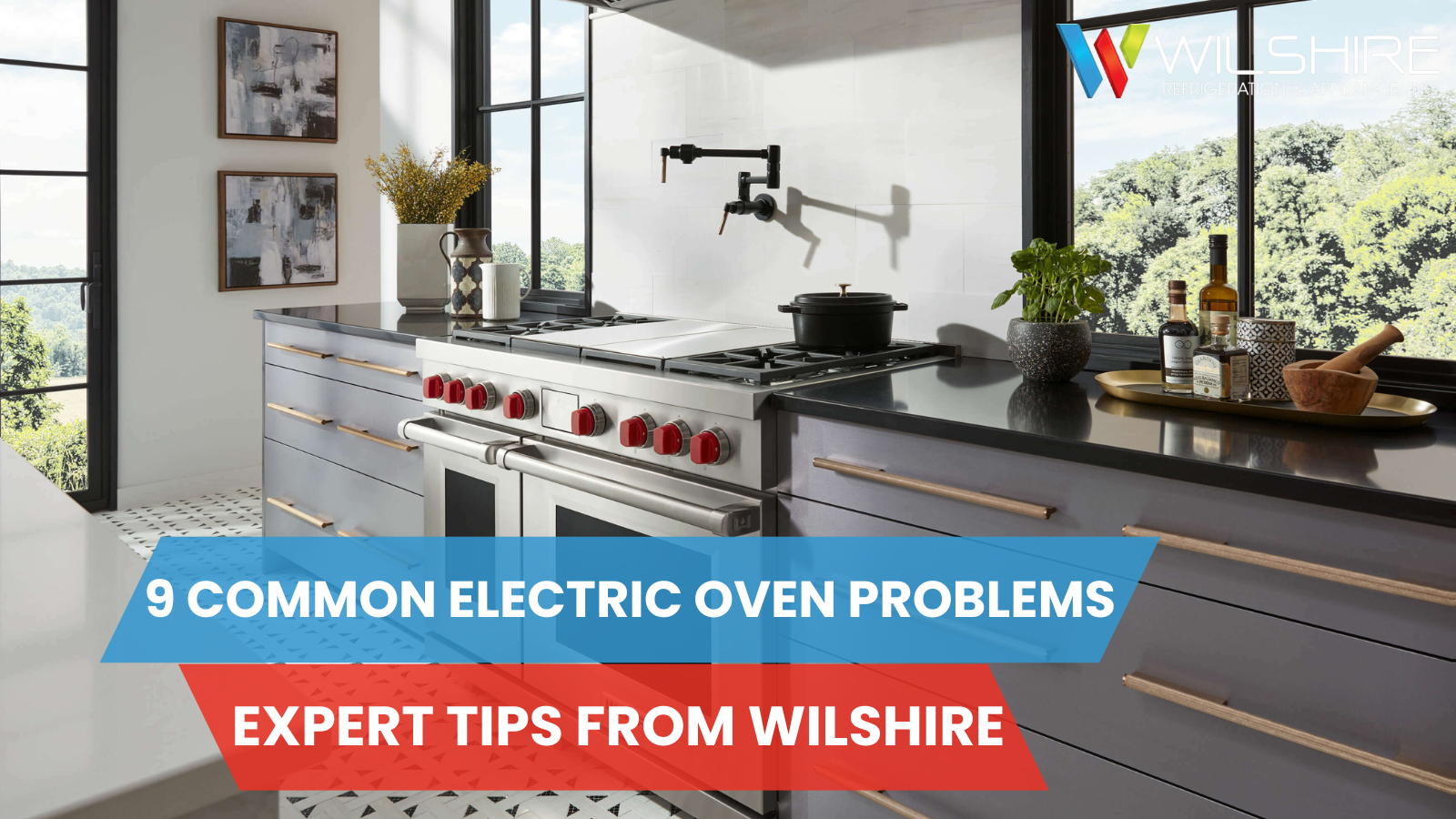
Dinner plans grind to a halt when your electric oven suddenly quits. No heat, no bake, and absolutely no idea what went wrong.
The good news is that many common oven issues are simple enough to troubleshoot on your own. However, if the problem isn’t a quick fix like a tripped breaker or a loose wire, calling a local expert is the right move. That is where Wilshire has built a solid name. Homeowners trust this company for clear pricing on electric stove repairs and reliable service for everything, from standard models to specific general electric oven repair jobs.
9 Common Electric Oven Problems You Can Fix at Home
Not every oven issue requires a service appointment. Some faults are easy to find and fix using basic tools and a bit of patience.
1. The Oven Won’t Turn On
Start with the obvious checks. Confirm the oven is fully plugged into the wall. Next, look at the main service panel to see if a circuit breaker has tripped. If those two things check out, inspect the terminal block on the oven itself. Loose or burned wires here are a common cause of complete power loss to the unit.
2. The Oven Doesn’t Heat Up
An oven that fails to heat usually means a blown fuse or a bad heating element. You can often spot a bad element by looking for visible damage, such as cracks, blistering, or a disconnected coil. Replacing a faulty element is a simple job, provided you feel comfortable working with internal electrical parts.
3. Oven Heats, Then Shuts Off
If the oven starts heating fine but then powers down unexpectedly, it is likely overheating. This safety shutdown can happen when the thermostat or temperature sensor fails. When the sensor malfunctions, the appliance cannot regulate heat and deliberately powers off to prevent damage or fire.
4. Food Isn’t Cooking Evenly
Poor air movement or worn-out heating elements are usually the reason behind uneven cooking. Listen to the fan motor; if it is making excessive noise or simply not rotating, it may be failing. Likewise, a weak element can cause hot and cold pockets inside the oven cavity.
5. The Oven Takes Too Long to Heat
When preheating seems to take an hour, the problem could be a broken heating element, a damaged door seal, or a faulty thermostat. Significant heat loss through a bad door seal will slow down the whole preheating process significantly.
6. Strange Noises While Heating
Banging, humming, or rattling sounds are a clear sign that something is wrong. These noises usually point to loose internal parts, a bad circulation fan, or motor issues. Neglecting these sounds can easily lead to a much larger, more costly repair later on.
7. Oven Light Not Working
A dark oven light does not always mean a bad bulb. If replacing the bulb fails to fix the issue, you should check the surrounding wiring or the socket connection. This repair is typically one of the safest for a homeowner to attempt.
8. Digital Display or Timer Not Responding
If the display is blank or the control buttons are unresponsive, the main control board may need a reset or total replacement. Electrical surges sometimes damage delicate electronics. It is wise to inspect the connections and look for any physical signs of burning or damage.
9. Self-Cleaning Function Not Working
When the self-clean cycle fails to activate, the issue is often a faulty door lock mechanism or a software glitch in the control panel. Because this function uses very high heat, the oven is designed not to start until it confirms the door is securely and safely locked.
What Tools Do You Need for Basic Oven Repairs?
Before tackling any DIY fixes, it is helpful to gather the right tools. A few basic items can make troubleshooting much simpler and safer.
Essential Tools:
- Screwdriver set (Phillips and flathead)
- Multimeter (for checking continuity and voltage)
- Flashlight (for examining dark or hidden spots)
Optional but Useful:
- Nut driver or socket set
- Wire stripper
- Needle-nose pliers
- Appliance manual (offers model-specific instructions)
How to Stay Safe When Fixing an Electric Oven
Safety must be the priority when doing any appliance repair. Before opening any access panels or touching internal components, make absolutely sure the oven is unplugged from the wall outlet. For an extra layer of protection, switch off the corresponding circuit breaker at the main electrical panel. Residual electricity can still be dangerous even when the unit is simply turned off.
Some situations demand a professional technician. Ovens connected to gas lines, units that have exposed or visibly damaged wiring, or any problem involving the main control board can escalate quickly into a dangerous scenario. If you feel uncertain about the component you are looking at, it is always safer (and often more cost-effective in the end) to contact a certified oven repair specialist.
Should You Repair or Replace Your Electric Oven?
Not every oven malfunction signals the end of the appliance. Here is how to decide when a repair is smarter and when replacement makes more sense.
- Repairs are usually a good investment if the oven is less than ten years old and the repair is minor, such as replacing a heating element or a faulty sensor.
- The age of the unit and the availability of parts are critical factors. A fifteen-year-old model with discontinued components will likely be more trouble than it is worth.
- Compare the costs. If the repair estimate approaches half the price of buying a brand-new comparable oven, upgrading is typically the better choice.
Wilshire provides objective advice for high-end oven owners, helping the customer make the most practical decision based on the appliance’s brand, model, and overall condition.
When to Call a Certified Oven Repair Technician Near You
Some oven issues are simply beyond the scope of a DIY fix. Knowing when to stop troubleshooting and call a professional saves time, money, and unnecessary stress.
- Call Wilshire if the unit has recurring issues, you smell burning electrical components, you see sparks, or a major component has failed completely.
- High-end and luxury ovens often use proprietary parts and sensitive electronics. These require expert handling to ensure the warranty remains valid.
- Factory-trained technicians make sure the electric stove troubleshooting and final repair are done correctly the first time, using methods and tools specific to the oven’s brand.
Wilshire delivers fast, local service, with certified experts ready to handle everything from minor fixes to complicated general electric oven repairs in your local area.
Frequently Asked Questions
Why is my electric oven not heating but the stovetop works?
The oven’s heating element or an internal thermal fuse may have failed, even though the stovetop burners are operating independently.
Can a person repair an electric oven themselves?
Yes, simple issues like a tripped breaker or a bad heating element can often be fixed by a careful individual with the right tools.
How does one know if the oven thermostat is broken?
If the oven consistently overheats, underheats, or shuts off randomly, the thermostat or temperature sensor is likely failing.
Is fixing an electric oven expensive?
Costs vary widely, but most common repairs are quite affordable, especially when compared to the expense of purchasing a completely new unit.
What qualities should one look for in a local oven repair technician?
Look for factory-trained professionals with documented experience, positive local reviews, and fully transparent pricing policies.
Need Local Oven Repair? Wilshire Has You Covered
If your electric oven is still malfunctioning after attempting basic troubleshooting, the Wilshire team is ready to assist. Local technicians are factory-trained and experienced with all major brands, including high-end and general electric models.
We offer same-day or next-day service across the area, ensuring you are not stuck waiting days to get the appliance running again. Booking a service call is fast and easy. Simply visit the contact page or give us a call today at (818) 898-9999. Your oven troubles do not have to ruin dinner plans. Let Wilshire get everything back on track.