Few things frustrate a cook more than an oven that stops working right before a meal. If you are a homeowner trying to figure out the problem before scheduling an oven repair service, understand that this is a common struggle. Some issues, like a blown thermal fuse or a faulty igniter, are simple enough to resolve at home. Others absolutely require the expertise of a professional technician.
Knowing the difference can save time, money, and a great deal of stress. Whether you need a common gas oven repair or service for a high-end unit, a little initial troubleshooting goes a long way. If you find yourself needing a microwave oven repair at the same time, it becomes even more vital to know exactly when to roll up your sleeves or when to pick up the phone and call Wilshire.
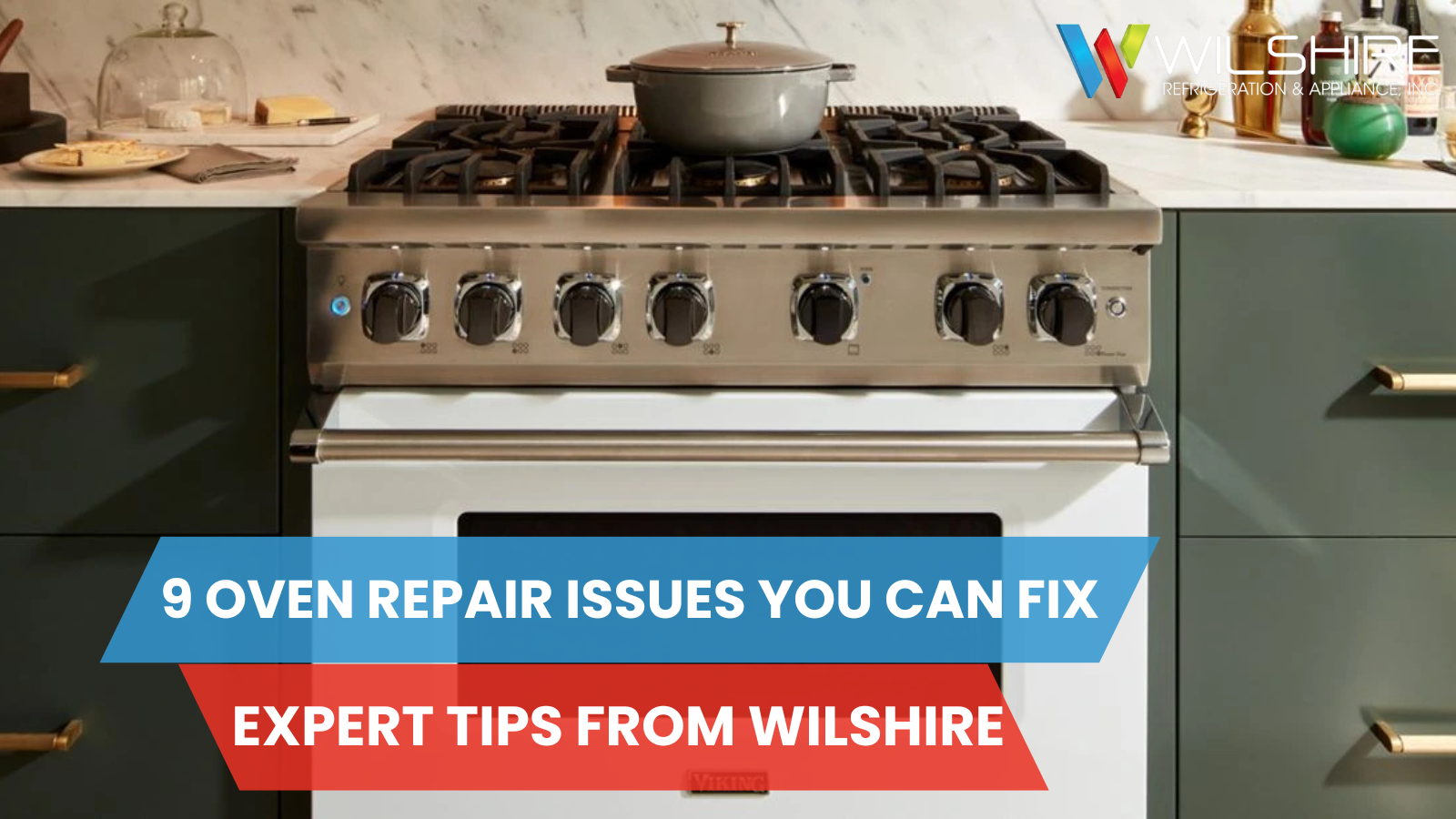
9 Common Oven Repair Problems and How to Fix Them
Many oven issues are simpler to troubleshoot than people first assume. Before calling for a technician, consider these nine common problems you may be able to handle on your own.
1. The Oven Won’t Turn On
Start with the most obvious checks. Is the oven plugged in? Is the outlet confirmed to be working? Has the circuit breaker tripped? For electric models, the problem could be a blown thermal fuse or a faulty power cord. Gas ovens often have issues with the igniter or safety valve instead. If everything external looks correct and the unit still will not power up, that is the point when an expert must step in.
2. The Oven Isn’t Heating Properly
An oven failing to reach the proper temperature often has a burned-out heating element, especially in electric models. If the element appears intact, the real issue might be a faulty temperature sensor or thermostat. Problems with calibration can also lead to heat that is uneven or too low, significantly impacting cooking times and results.
3. The Oven Gets Too Hot
If the oven temperature spikes and overheats, the electronic control board may be sending incorrect signals. Another frequent problem is a miscalibrated thermostat, which causes temperatures to climb far above the setting. In these situations, professional diagnosis is usually necessary. Attempting to fix this personally often risks damaging sensitive internal components.
4. The Oven Door Won’t Shut or Seal
When a door refuses to close correctly, it almost always means the gasket is damaged or worn out. This allows heat to leak out, which completely throws off the oven’s performance. The hinges or latches can also fail after years of use. Replacing these few parts is often a fast repair, but it is critical for maintaining efficiency while cooking.
5. The Interior Light Is Out
If the oven light stops working, check the bulb first. If putting in a new one does not resolve the issue, you could be facing a wiring or socket problem. A broken light is not a cooking emergency, but it makes monitoring food much harder. Sometimes, it also signals a deeper electrical fault that needs attention.
6. The Oven Makes Unusual Noises
Strange sounds like buzzing, clicking, or rattling usually point to a fan issue or internal components that have come loose. In some instances, the noise comes from electrical parts or relays. Noise is a warning sign that should never be ignored. It is often the very first indication that your oven needs service.
7. Self-Cleaning Mode Doesn’t Work
If the self-cleaning cycle refuses to start, the door lock mechanism may be malfunctioning. Certain models also require a full software reset to clear errors before the cleaning cycle will engage. Be sure to check the user manual for reset instructions before scheduling any kind of oven repair service.
8. Persistent Error Codes
Error codes can signal anything from sensor faults to circuit board failures. Sometimes, unplugging the unit for a few minutes will clear the error and allow normal operation. If the code reappears constantly, it is best to contact a specialized technician who handles brand-specific diagnostics, such as Thermador, Bosch, or Gaggenau oven repair.
9. Range Burners or Igniter Won’t Light
If a gas oven will not ignite, the igniter is likely weak or faulty. The igniter must get hot enough to signal the gas safety valve to open; if it is worn out, it fails to draw the necessary current to heat up, and gas never flows.
For electric ranges, the issue is often a failed burner coil or a faulty switch. While these parts are replaceable, working with gas connections or high voltage is dangerous without the proper tools, knowledge, and experience.
What Tools Can Help You Fix Your Oven Safely?
Having the correct tools makes even basic oven troubleshooting much simpler. These few essentials should handle most minor repairs:
- A quality screwdriver set
- A multimeter for checking electrical flow
- A bright flashlight for better visibility
Some repairs are truly best left to the pros. This is especially true if you smell gas, notice odors suggesting burning plastic, or find exposed wiring. Attempting a gas oven repair or dealing with complex brands like Wolf or Viking oven repair without proper training may lead to far bigger, and ultimately more expensive, problems.
Should You Repair or Replace Your Oven?
The decision between a repair and a complete replacement usually hinges on three main factors: cost, age, and current performance. Keep these points in mind during the assessment:
- If the oven is over 10 to 15 years old, replacement may make more financial sense, particularly for standard-grade models.
- When the cost to repair exceeds half the price of a brand-new unit, investing in an upgrade is generally the smarter choice.
- Luxury ovens like Wolf, Thermador, Gaggenau, Bosch, or Viking are built for longevity. Repairing them often preserves better performance and features than replacing them with a lower-tier unit.
When to Call a Professional Oven Repair Technician
Certain problems should never be tackled without professional training or tools. These are the key situations when you must bring in an expert:
- If you smell gas, see exposed wires, or encounter error codes that keep cycling back, this is absolutely not a do-it-yourself job.
- Gas line work, high-voltage wiring, and replacement of damaged control boards demand certified technicians.
- Wilshire’s team of factory-trained professionals knows how to service complex brands safely, ensuring existing warranties remain intact.
Skilled technicians protect the long-term value of your luxury appliances and ensure the job is completed the first time.
Frequently Asked Questions
Why won’t my oven heat up even when it’s on?
It could be a faulty heating element, a broken temperature sensor, or a main control board issue.
Is it worth repairing an old oven?
If the unit is under 15 years old and is a high-end model, repairs are generally worth the investment.
What do error codes on ovens mean?
Error codes specifically point to issues, such as sensor failures or control board errors, that might require only a reset or a service call.
Can a homeowner fix a gas oven personally?
Minor fixes, such as carefully cleaning an igniter, may be safe. However, anything involving gas lines should be immediately left to a qualified professional.
How does one know if it’s an igniter or heating element issue?
If the oven clicks repeatedly but fails to light, the igniter is the likely culprit. If there is simply no heat at all, this usually points to a bad heating element.
Call Wilshire for Reliable Oven Repairs Today
If your oven is acting up and you are unsure what the problem is, Wilshire is ready to help. Our certified technicians respond quickly and specialize in high-end brands, from Viking and Bosch to Gaggenau and Wolf.
We are here to make certain your appliance receives the exact care it needs without risking damage or voided warranties. Book a service call and get your kitchen running smoothly again. It takes only a minute to schedule, and we will take it from there.