Is your wine collection safe, or is the cooler slowly putting bottles at risk? Even a slight shift in temperature or humidity can affect careful aging in a matter of days. High-end wine refrigerators are designed to protect valuable bottles, but when something goes wrong, fast, expert wine cooler repair becomes crucial.
Wine reacts to changes in the surrounding environment. A faulty wine cooler can dry out corks, disturb sediment, or dull the flavor of special bottles. Paying attention to early warning signs gives enough time to fix the problem before the wine starts to suffer.
Wilshire Refrigeration & Appliance offers factory-certified technicians servicing luxury brands throughout Southern California and Las Vegas. A small wine fridge holding a few favorites or a larger wine cooler fridge with a growing collection both depend on the same thing, which is stable, reliable cooling.
Why Maintenance Matters for Your Collection
Wine changes over time, and even small shifts in storage conditions can affect quality. A luxury wine cooler creates a controlled space with steady cooling, balanced humidity, and minimal vibration. When any part of that system stops working as designed, the aging process can go off track, and valuable bottles may lose character.
Catching issues early is not only about protecting the appliance. Careful attention also helps preserve the flavor, aroma, and texture of every bottle in the collection.
Sign 1: Unstable Temperatures and Warm Zones
Unstable temperatures inside a wine cooler often point to a developing problem. The unit needs to hold a steady temperature so corks do not expand and contract, and so air does not seep into bottles.
Rapid Spikes in Internal Temperature
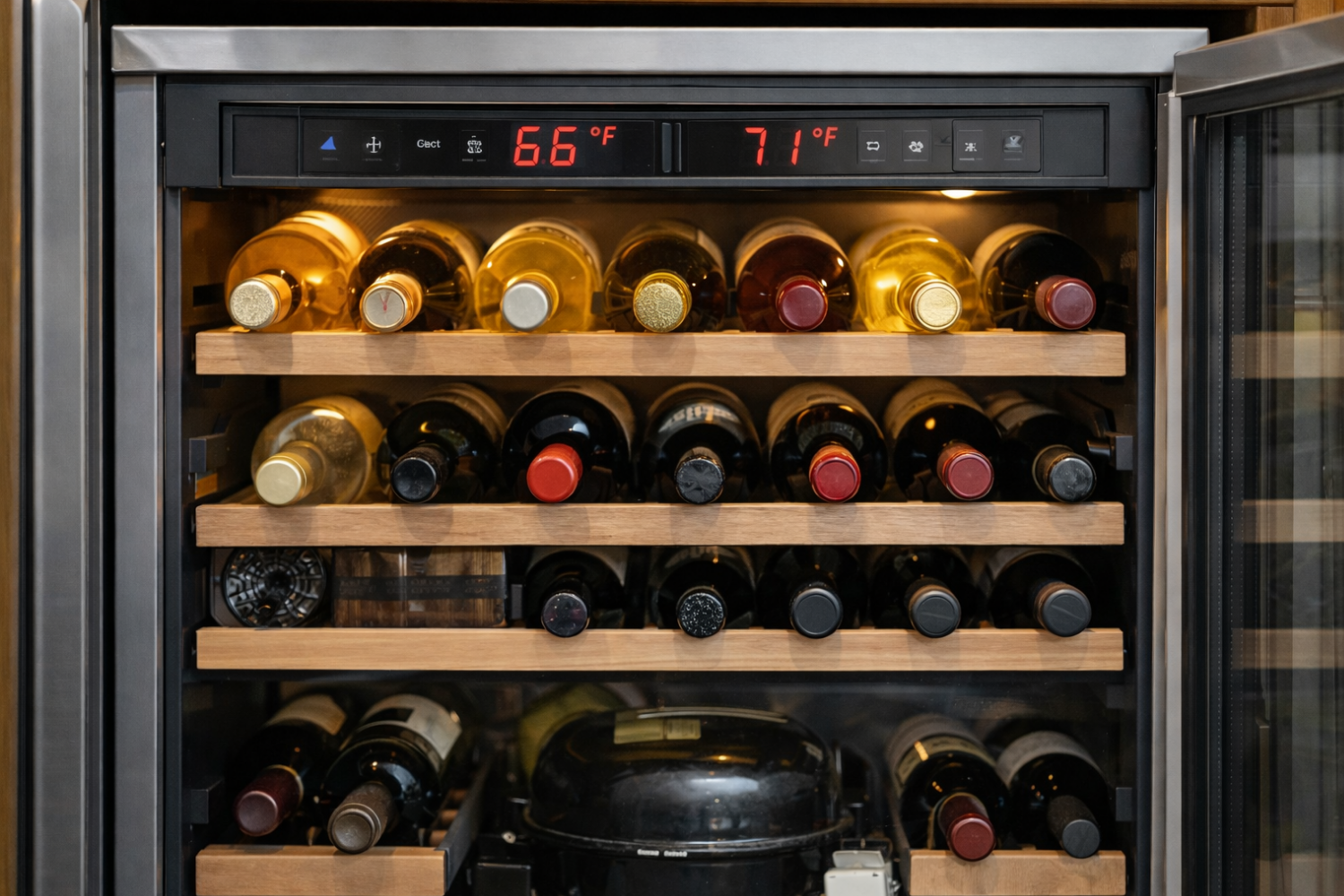
A wine fridge usually performs best between 55°F and 58°F for long-term storage. If the digital display jumps up and down or bottles feel warm one day and cooler the next, the thermostat or control board may be starting to fail. These swings can damage the flavor profile and lead to wine that tastes flat or “cooked.”
Warm Zones in the Cabinet
A wine cooler fridge should keep the entire cabinet at a consistent temperature. Warmer shelves or “hot spots” often point to weak circulation fans, blocked vents, or airflow problems. When certain racks run warmer than others, bottles in those zones face a higher risk of aging too quickly.
Sign 2: Abnormal Humidity, Mold, or Leaks
Humidity inside a wine cooler plays a major role in keeping corks tight and wine protected. When the humidity system stops working correctly, cork can dry out, or surfaces inside the cabinet can stay damp for too long.
Dried and Crumbled Corks
Corks that look cracked, shrunken, or crumble when removed often point to humidity that is too low. Dry corks allow air to enter the bottle and start oxidation, which can turn wine sour or dull. A trusted wine cooler repair service can test the humidity control and restore proper balance.
Mold Growth Inside the Cabinet
Mold appearing on racks, interior walls, or corks often indicates excessive humidity or poor ventilation. This can leave unpleasant odors and may affect labels and flavor over time. Good airflow and correct moisture levels are key to keeping the inside of the cooler clean and stable.
Sign 3: Loud Buzzing, Clicking, or Vibrations
A well-functioning wine refrigerator should run quietly in the background. New buzzing, clicking, or shaking sounds often signal that moving parts are worn, loose, or out of balance.
Vibration Transferring to the Racks
Shelves should feel steady when the wine cooler is running. If racks shake or rattle, vibration dampeners may be worn out, or the compressor may be slightly off balance. Excessive vibration can shift sediment in red wines, affecting the clarity and experience of the pour.
Rattling Fans
Clicking or rattling from inside the cabinet often comes from fans that hit frost, ice, or debris as they spin. Poor airflow leads to weak cooling and rising wine temperature. A professional wine cooler repair visit can clear the obstruction, check the fan, and restore smooth operation.
Sign 4: Damaged or Leaking Door Seals
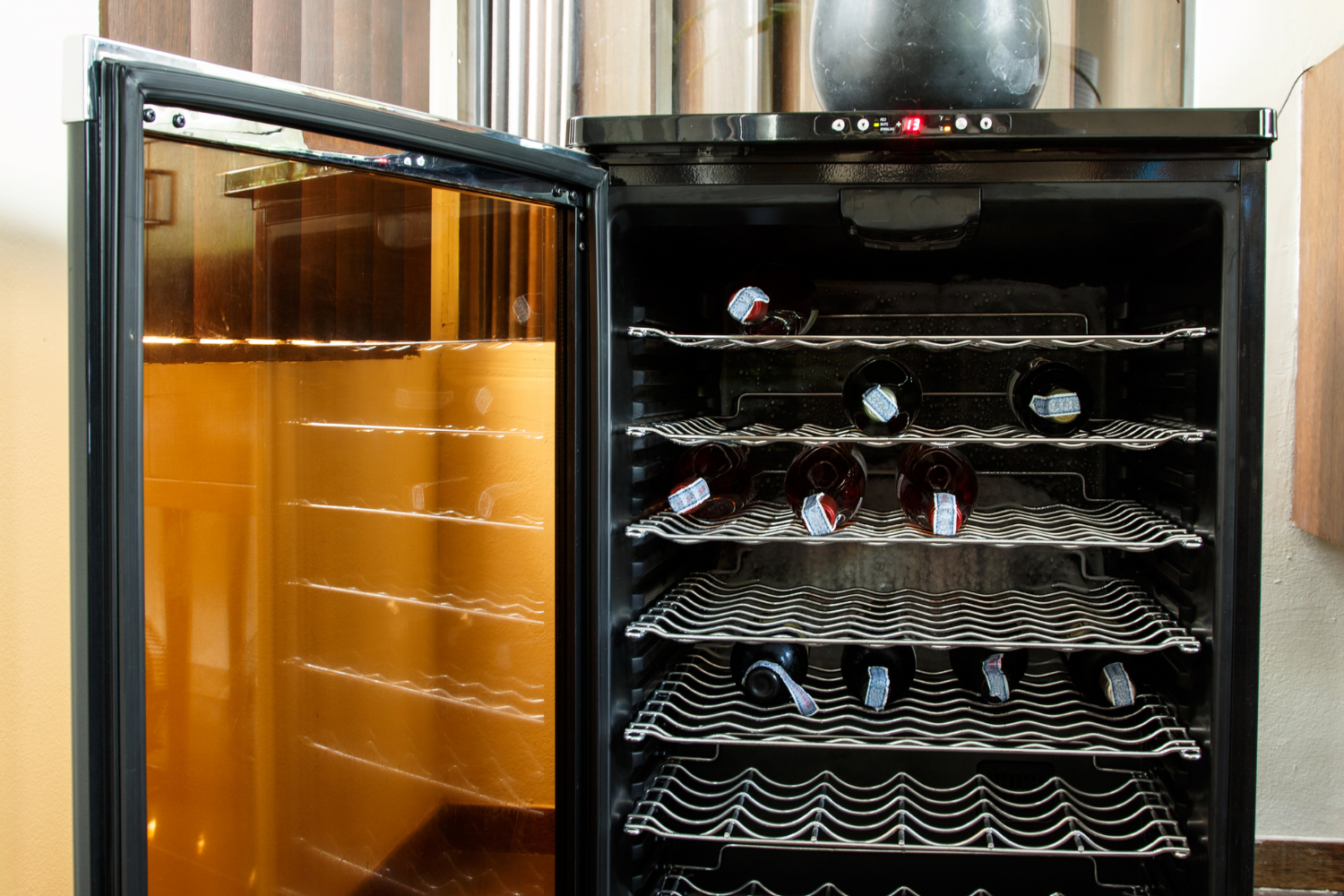
A worn door seal lets warm air enter and cold air escape, which disrupts the controlled environment inside the wine cooler. This forces the system to work harder and can lead to uneven temperatures over time.
Visible Cracks or Tears
Rubber gaskets around the door can dry out or crack as the appliance ages. Even a narrow gap allows outside air to slip in and change the conditions in the cabinet. A quick visual check of the seal from top to bottom can help catch these problems early.
Condensation Near the Frame
Water droplets or small puddles near the door frame often indicate that warm, moist air is leaking into the cooler. This usually means the door seal is no longer tight and needs to be replaced to keep the wine storage stable.
Sign 5: The Compressor Runs Continuously
A compressor that runs without stopping or keeps turning on and off in short bursts often points to a mechanical problem. These issues can waste energy and shorten the life of the wine cooler.
System Overload
When the compressor never shuts off, the unit may be low on refrigerant, or the condenser coil may be clogged with dust. In that situation, the cooler struggles to reach the set temperature and stays under constant strain. A professional wine cooler repair service can diagnose the cause and recommend the right fix.
Short Cycling
Rapid starts and stops, often called short cycling, can signal overheating parts, electrical problems, or a failing component. This behavior prevents the cabinet from reaching a steady temperature and increases the risk of spoiled bottles.
Specialized Diagnostics for Luxury Brands
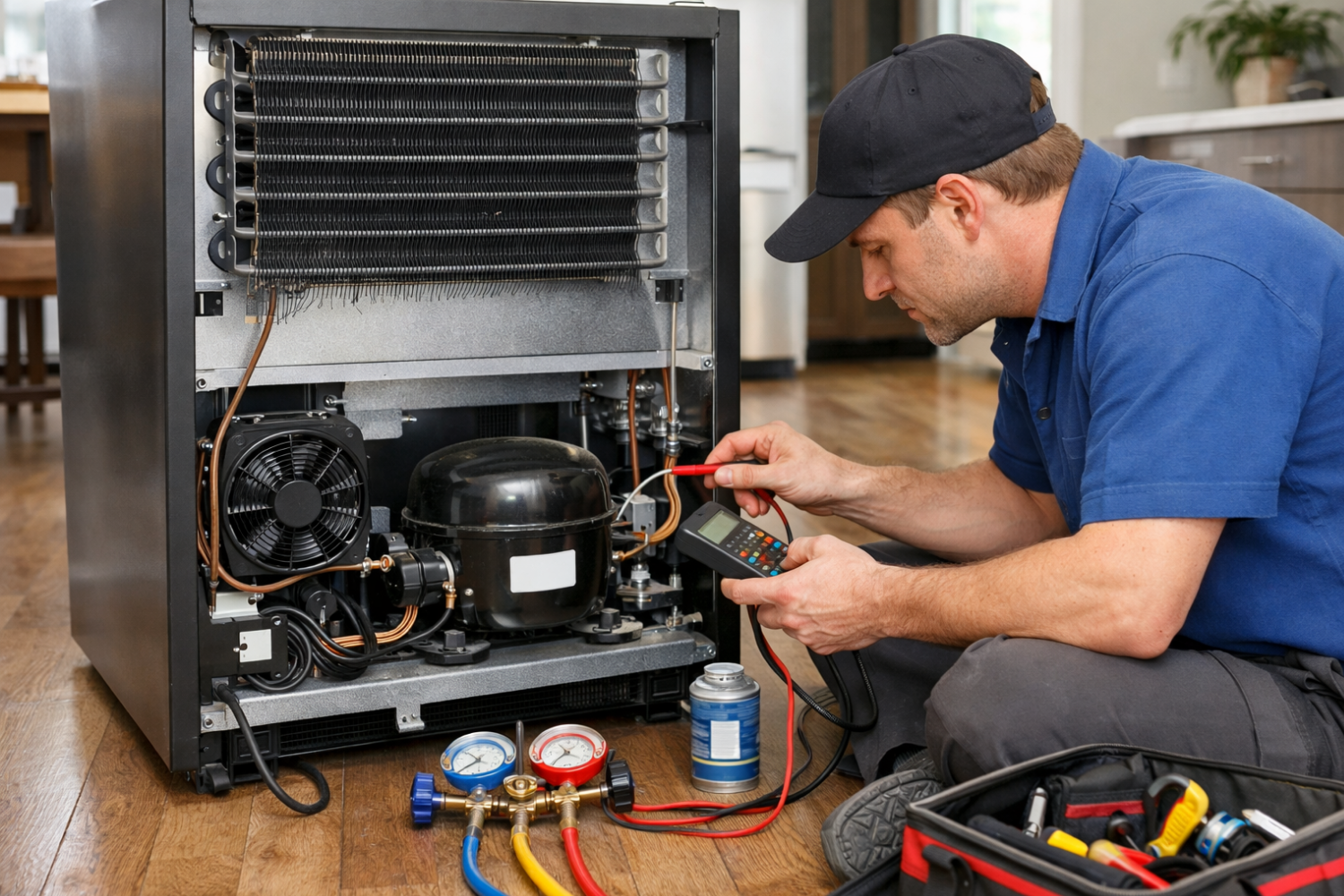
High-end wine refrigerators use advanced technology that calls for brand-specific training and tools. Wilshire Refrigeration provides certified service for luxury wine refrigerators throughout Southern California and Las Vegas, including detailed Sub-Zero wine cooler repair and Viking wine cooler repair.
Advanced Cooling System Diagnostics
Sub-Zero wine refrigerators often use dual refrigeration systems, separate zones, and microprocessor controls. These complex systems require factory diagnostic tools to read proprietary error codes and guide accurate wine cooler repair.
Calibrating Sensitive Electronic Controls
Viking wine cooler repair and service on similar luxury brands often involves keypads, temperature sensors, and smart panels. Proper calibration ensures that the electronic controls send clear signals to the cooling system so the selected settings match real temperatures inside the cabinet.
Precision Access for Integrated & Compact Models
Servicing an under-counter wine fridge or a built-in column model usually means working in tight spaces. Technicians must protect surrounding cabinetry and finishes while reaching motors, coils, and other key components. This careful approach is especially important in custom luxury kitchens and bar areas.
Frequently Asked Questions
Why is my wine cooler not cooling?
Common causes include a bad thermostat, dirty condenser coils, broken fans, or a failed compressor inside the wine cooler.
Can a wine fridge be repaired?
In most cases, wine fridges and small wine cooler models can be repaired by a qualified service.
What is the life expectancy of a wine cooler?
A premium wine cooler often lasts 10 to 15 years when maintenance is performed regularly.
Is it worth repairing a wine cooler?
Repair is usually worth it for luxury wine refrigerators, especially when the cooler protects a valuable collection.
What is the correct humidity for a wine fridge?
Ideal humidity for a wine fridge is usually between 50% and 70% to keep corks sealed and reduce mold growth.
How Expert Maintenance Protects Your Investment
Wine storage depends on steady conditions, and small warning signs can quickly turn into damaged corks or spoiled bottles. Expert wine cooler repair helps keep each bottle as close as possible to the way the winemaker intended.
Wilshire Refrigeration is a factory-certified service provider for brands such as Sub-Zero, Wolf, and Cove. Homeowners across Southern California and Las Vegas rely on these services to keep every wine cooler fridge and under-counter wine fridge running smoothly. If a wine cooler starts to make noise, leak, or drift out of range, scheduling service right away is one of the best ways to protect the collection and enjoy every future pour.