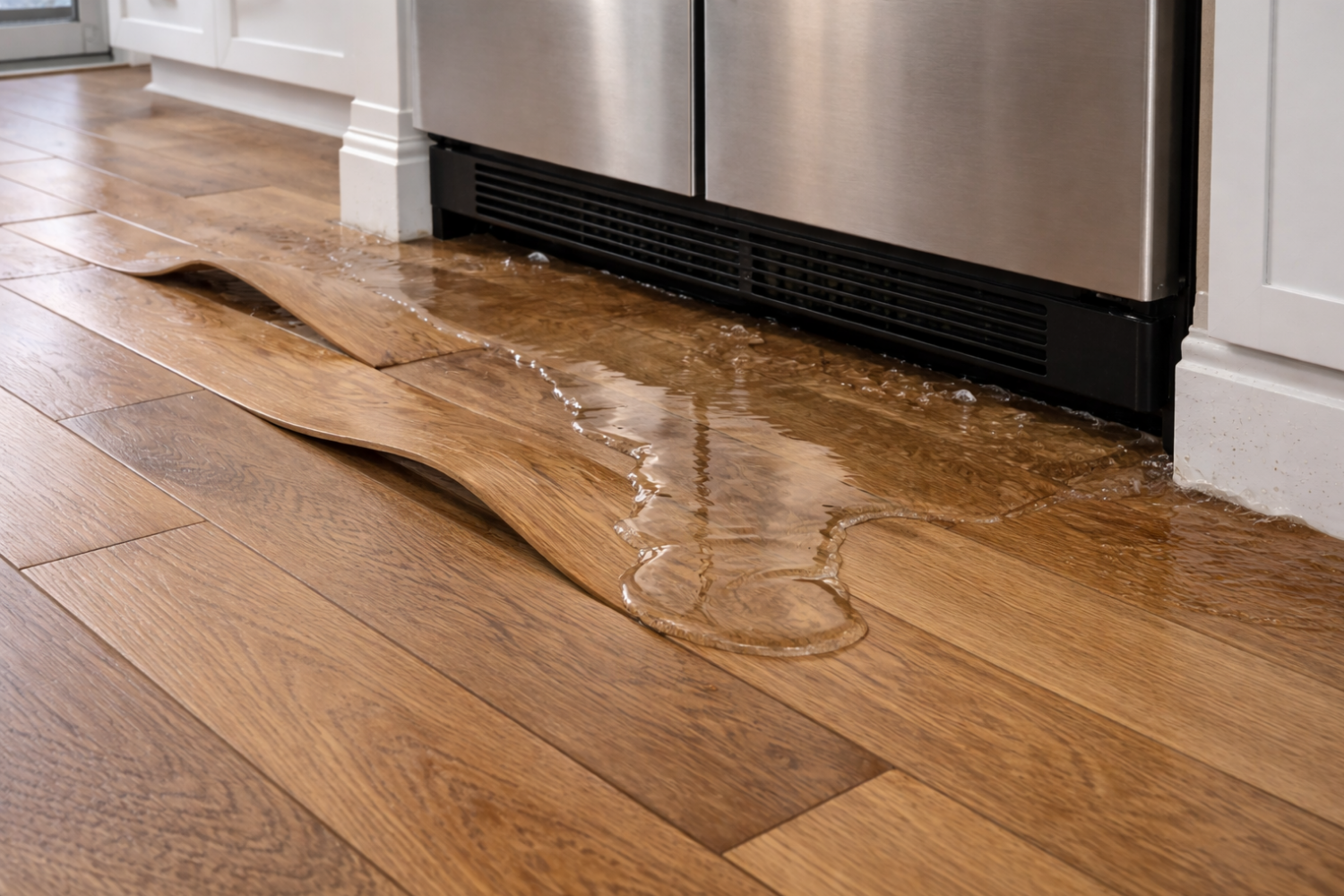
Hidden water behind a built-in fridge can quietly ruin a beautiful kitchen. When a refrigerator that is leaking water is tucked into custom cabinetry, pulling it forward to check the back is often not an option. Instead of a small puddle, the first clue is often warped hardwood, swollen toe kicks, or stains creeping out from under nearby cabinets.
In luxury homes across Southern California and Las Vegas, Wilshire Refrigeration & Appliance Inc. often finds hidden leaks that have been dripping for weeks before anyone notices a problem. A built-in fridge is heavy and tightly fitted, so trying to move it without the right tools can crack flooring, damage panels, or even cause injury.
Knowing how to recognize early signs of hidden leaks and check safely for water line issues helps prevent serious damage and tells homeowners when it’s time to bring in a trained technician.
Early Warning Signs of a Fridge Leaking Water
Early warning signs of a fridge leaking water often show up on floors, cabinets, or baseboards before a puddle appears. Water can travel away from the appliance, so a refrigerator leaking water might leave clues across the room. Noticing these changes early helps action happen before damage spreads through the kitchen.
Warped or Discolored Hardwood Flooring
Warped or discolored hardwood flooring near a refrigerator often points to a slow, hidden leak. Instead of a single stain, several changes may appear in the boards over time, such as:
- Boards that cup, curve, or lift at the edges near or in front of the fridge
- Dark or cloudy patches in the finish that do not match normal wear
- Gaps or raised seams that get worse closer to the refrigerator or along a path leading away from it
If these signs appear without another clear cause, a hidden supply line or a refrigerator leaking water on the floor under the unit may be to blame.
Musty Odors Emanating From Cabinetry
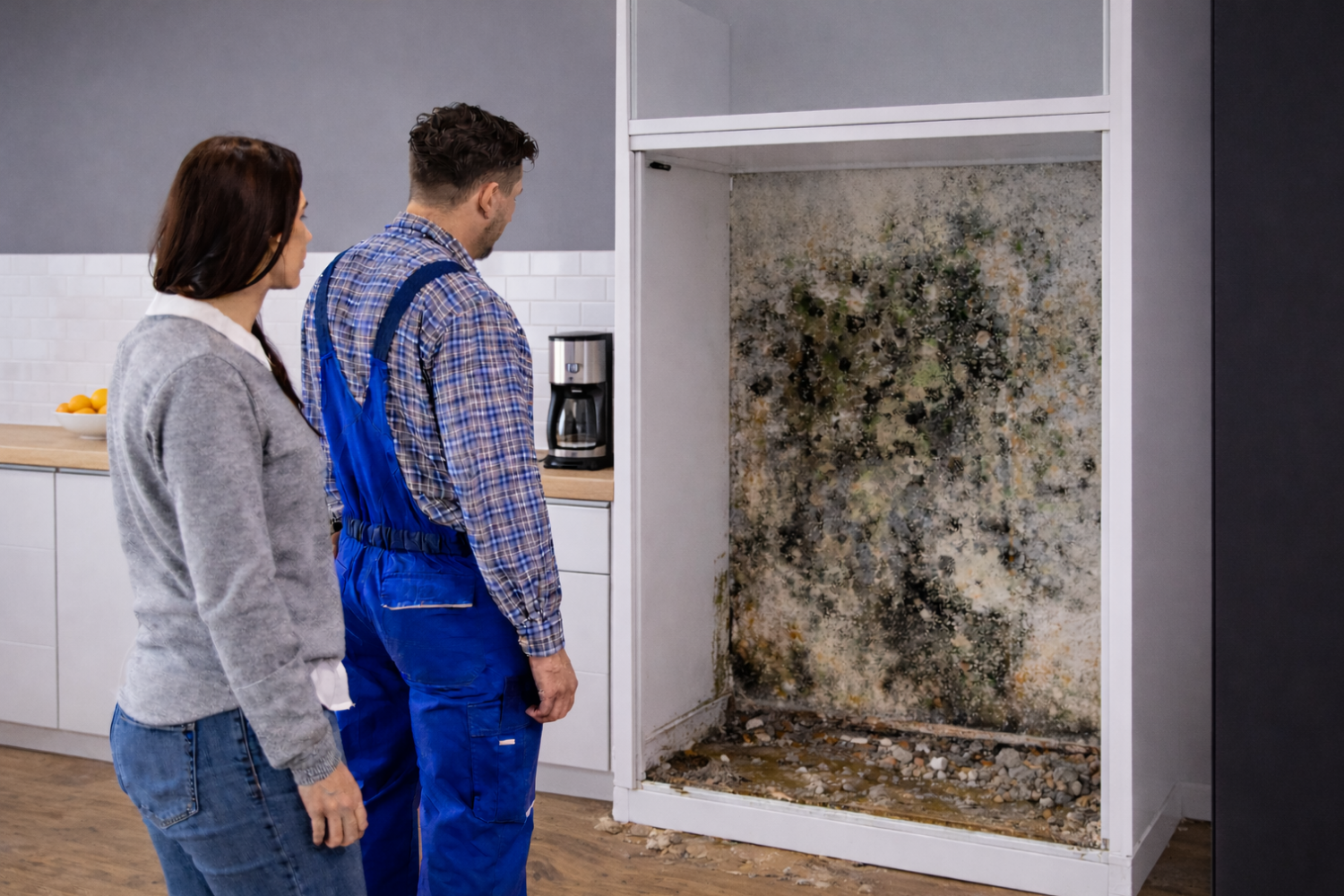
Musty odors coming from nearby cabinets or toe kicks can signal moisture trapped under or behind a built-in refrigerator. Water from a slow leak can soak into cabinet bases, wall materials, or insulation, feeding mold and mildew. If the smell is strongest in cabinets next to the fridge or near the floor, that pattern may be a sign that water is moving under the cabinetry instead of showing up as a visible puddle.
Unexplained Refrigerator Leaking Water on Floor
Unexplained refrigerator leaking water on the floor around the front or sides of the unit usually means more than a simple spill. If the area is dry and water returns in the same spot, especially after the ice maker fills or someone uses the water dispenser, the supply line or its connection could be leaking out of sight. Even a small, regular pool of water at the base of the fridge is a reason to investigate before the leak leads to more serious damage.
Is a Fridge Leaking Water Dangerous?
A fridge leaking water is dangerous for home infrastructure because it can weaken walls, floors, and support beams over time. Even a small, steady drip behind a built-in refrigerator can cause damage in homes where wood, tile, and custom finishes are common. Understanding these risks shows why a simple leak needs quick attention.
Rapid Mold and Mildew Growth Behind Walls
Rapid mold and mildew growth behind walls often starts when a refrigerator that is leaking water is hidden from view. Damp drywall, insulation, and wood provide a good environment for spores to grow and spread. Over time, this growth can lead to stains, strong odors, and possible health concerns for people who are sensitive to mold.
Structural Rot in Subflooring and Joists
Structural rot in subflooring and joists can develop when a fridge leaking water soaks the same area again and again. Wood that stays wet for long periods begins to soften, darken, and weaken, which can cause floors to sag or feel spongy. What began as a small leak under or around the fridge can turn into a major repair, affecting the kitchen and sometimes nearby rooms.
Electrical Short Risks From Water Exposure
Electrical short risks from water exposure become a serious concern when leaks reach outlets, wiring, or electrical parts around the refrigerator. Water on or near these components can lead to tripped breakers, sparks, or damage to the appliance controls. A fridge leaking water is dangerous because even a small amount of moisture near electricity can create a safety hazard. The risk of water and electricity coming into contact is one of the clearest reasons to bring in a trained technician quickly.
Distinguish Internal Spills and Rear Water Line Leaks
Distinguishing internal spills from rear water line leaks is essential. Internal issues usually show up inside the fridge or freezer, while plumbing leaks tend to appear around the base of the unit or in nearby cabinets. Checking each area step by step can help reveal whether the problem is simple or if hidden plumbing behind the fridge needs professional attention.
Clogged Defrost Drains Causing Fridge Leaking Water Inside
Clogged defrost drains often cause a fridge to leak water inside the fresh food or freezer sections. Melted frost that should drain away instead backs up and spills into the bottom of the compartment. Ice buildup near the drain hole, standing water under the crisper drawers, or wet food containers all point to a drainage issue rather than a leak in the wall.
Cracked Water Filter Housings
Cracked water filter housings can leak inside the refrigerator or near the top of the doors when the dispenser is used. A damaged or loose filter can allow water to drip down the back wall, into drawers, or onto shelves. If water trails or small puddles appear near the filter area, replacing the filter or inspecting the housing is a simple way to rule out this internal cause before assuming the rear water line is failing.
Excess Condensation From Door Gasket Failures
Excess condensation from worn or loose door gaskets can make it look like a refrigerator is leaking water on the floor at the front of the unit. Warm air sneaks inside when the seal is damaged, leading to extra frost and water as the fridge cycles. Moisture around the door frame, sweating on the gasket, or visible cracks and tears in the seal suggest the door gasket is the issue instead of a leak in the hidden plumbing.
How to Safely Check a Built-In Fridge Water Line
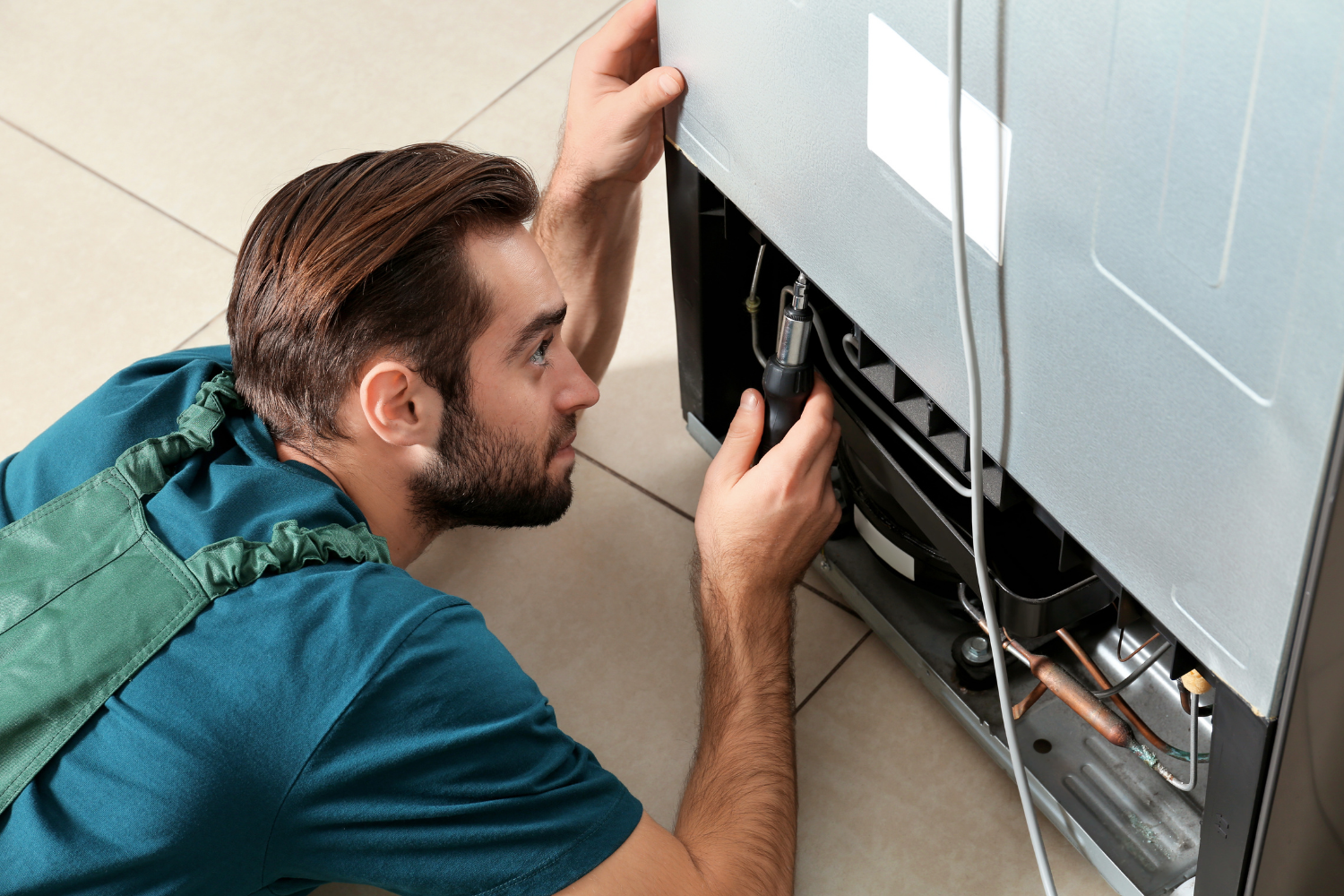
Safe inspection of the water line on a heavy built-in refrigerator focuses on what can be checked without moving the appliance. Most homeowners in Southern California and Las Vegas should avoid trying to pull a built-in unit out, since the weight and tight fit can cause injury or damage. Simple checks at the front and in nearby cabinets can reveal many signs of a generator leaking water before a technician arrives.
Removing the Kick Plate or Grille for Visibility
Removing the kick plate or grille at the bottom front of the fridge can provide a quick look at the area under the unit. Helpful checks in this space include:
- Using a flashlight to look for standing water, stains, or rust on metal parts
- Checking for damp insulation, warped trim, or peeling finish near the base
- Looking for mineral deposits or white crust on tubing that might indicate a slow leak
Any of these signs should be documented and reported to a qualified repair company.
Checking Adjacent Lower Cabinets for Moisture Transfer
Checking adjacent lower cabinets for moisture transfer helps reveal leaks that spread sideways under floors or along walls. Open the cabinets next to the fridge and feel along the base and back corners for dampness, bubbling paint, or swollen wood. If stored items feel damp or smell musty, water from a hidden leak may be traveling under the refrigerator or into shared wall spaces.
Listening for Hissing or Dripping Sounds at the Rear
Listening for hissing or dripping sounds at the rear of the built-in fridge can help locate a problem even when the water line cannot be seen. Stand close to the sides of the appliance and pay attention right after the ice maker fills or the water dispenser runs. Sounds like dripping, light spraying, or a faint hiss in those moments may suggest that the water line is loose, cracked, or rubbing against another part.

Frequently Asked Questions
Why is water pooling under my refrigerator?
Water pooling under a refrigerator is usually caused by a clogged defrost drain, a loose or damaged water line, or a refrigerator leaking water on the floor from a failing connection.
How do I know if my fridge water line is leaking?
A fridge water line may be leaking if repeated puddles, warped floors, or damp cabinets appear near the fridge after the ice maker or water dispenser runs.
Can a clogged defrost drain cause water on the floor?
Yes, a clogged defrost drain can overflow inside the unit and send water down to the bottom, where it can eventually appear on the floor in front of the refrigerator.
Is it safe to move a built-in refrigerator to check for leaks?
Moving a built-in refrigerator is usually not safe for homeowners because the unit is heavy and tightly fitted, and sliding it out without proper tools can damage floors and cabinetry.
How much does it cost to fix a refrigerator leak?
The cost to fix a refrigerator leaking water varies by brand and cause, but fixing the leak early is almost always far less expensive than repairing long-term water damage to a home.
Call a Factory Certified Expert Before Hidden Leaks Spread
Calling a factory-certified technician is the safest step when a hidden refrigerator leaking water is suspected behind a built-in unit or when warning signs keep coming back. Hidden supply lines, custom panels, and tight openings make these installations hard to move without the right tools and training, so a professional should pull the fridge out, test the water line, and complete any repairs.
Wilshire Refrigeration has served Southern California and Las Vegas since 1974, providing factory-certified service for luxury appliance brands and helping protect custom kitchens from costly leak damage. Scheduling a visit with a certified technician is one of the most reliable ways to protect both the refrigerator and the home.