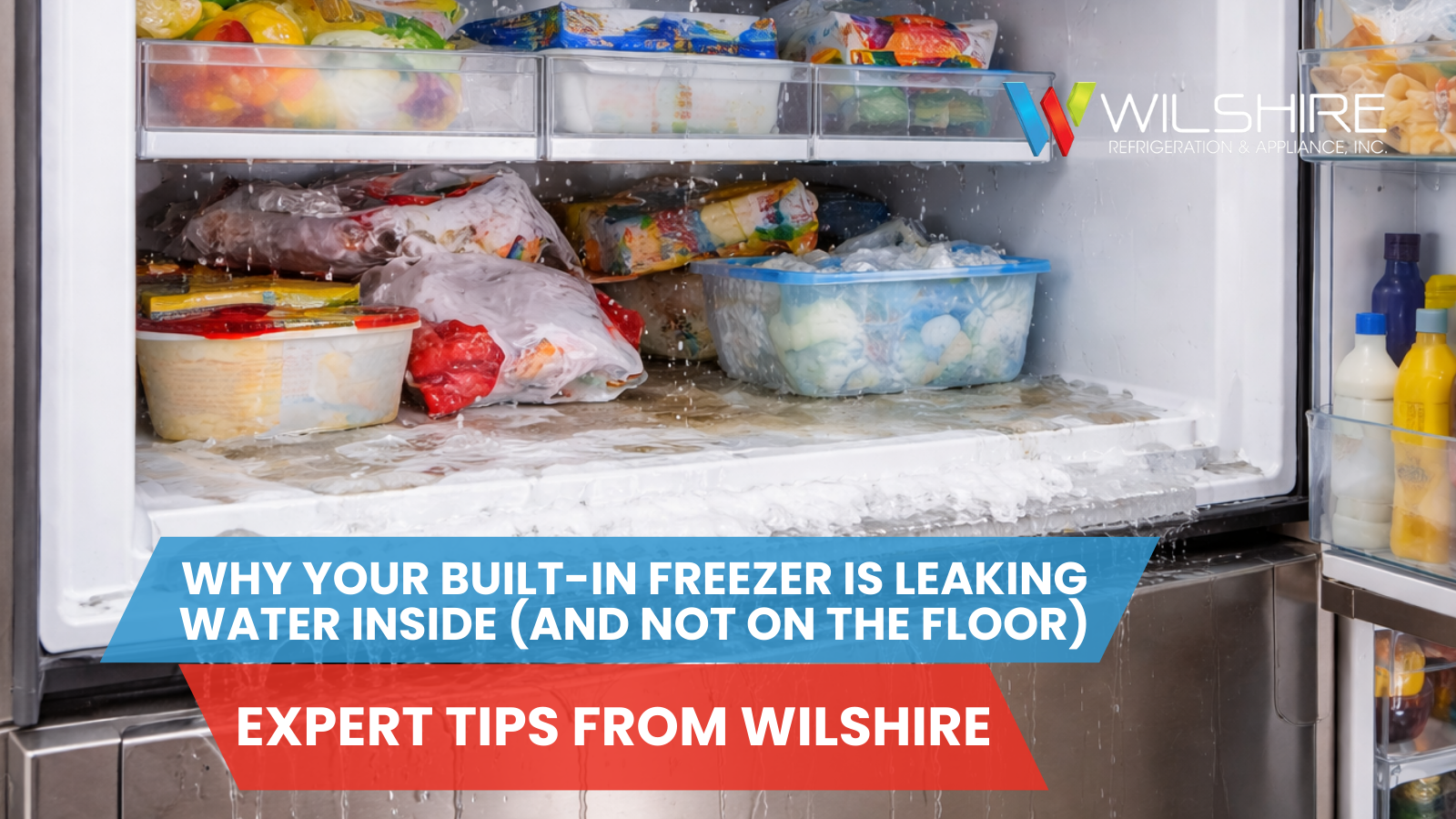
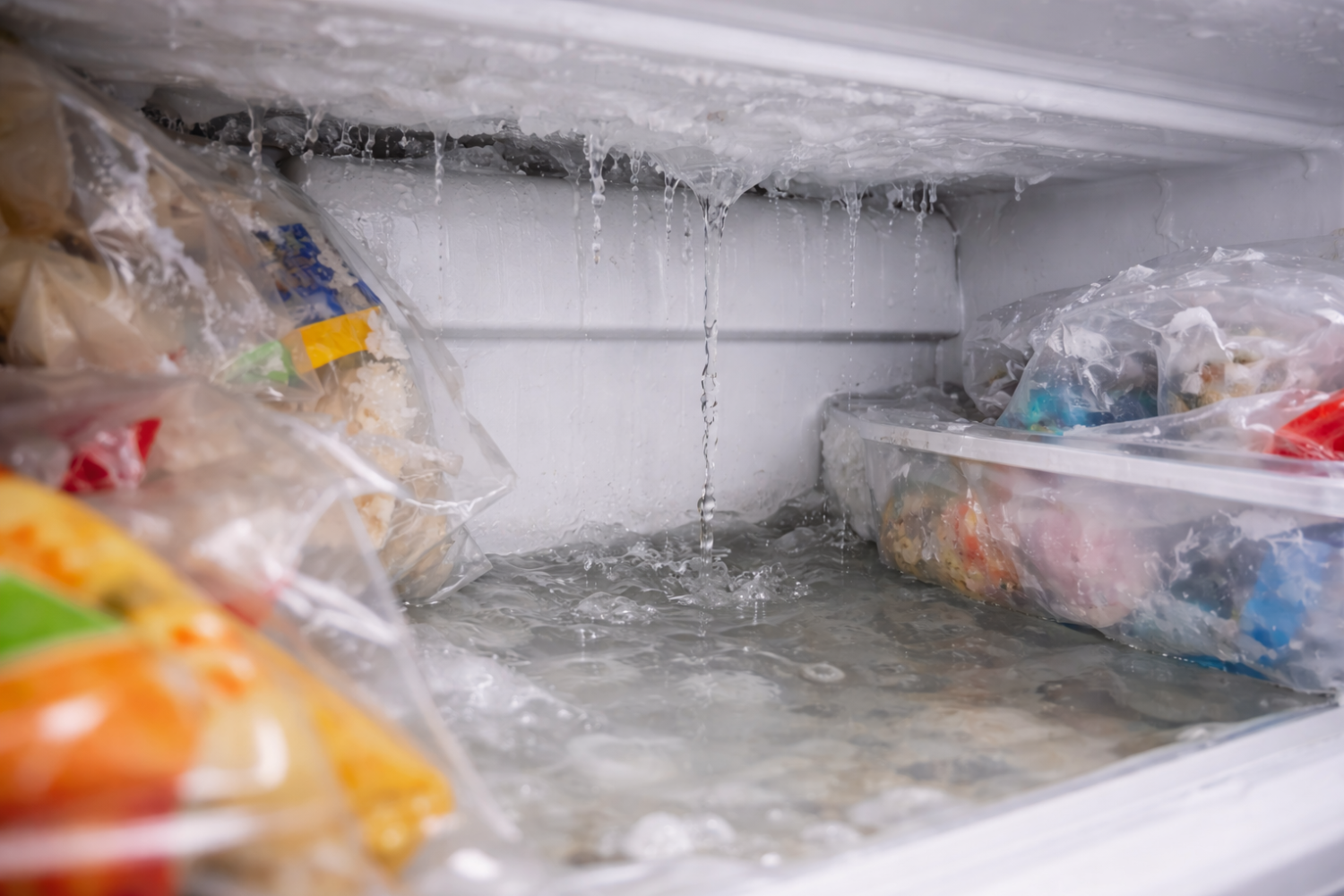
Why is my freezer leaking water? Many homeowners ask this question when reaching into the freezer for a bag of peas and hitting a hard sheet of ice at the bottom of the drawer. This is frustrating. Water collecting inside the cabinet can also make drawers stick, freeze food packaging to the floor, and create a mess during meal prep.
In many built-in models, a puddle inside the freezer is more often caused by a clogged or frozen drain path than by a cabinet leak. This guide covers common causes, signs to look for, and safe first steps to clear the blockage. If the issue keeps returning, service can confirm whether a drain, defrost, or airflow problem is driving the leak. Wilshire Refrigeration & Appliance can help with diagnostic testing and model-specific drain access when basic checks do not resolve the problem.
What It Means When a Freezer Leaks Water Inside
Water inside the freezer often means defrost meltwater is not moving through the normal drain path. Instead, it can overflow into the compartment and refreeze at the bottom. Many appliances run periodic defrost cycles to reduce frost buildup, and that meltwater is meant to drain out of the cabinet.
A small amount of moisture or light condensation can be normal, depending on humidity and door openings. Larger puddles or a thick ice sheet often indicate a drainage restriction that needs attention. Left unchecked, expanding ice can put stress on drawers and interior plastic parts over time.
The Most Common Causes of Water Pooling Inside a Built-In Freezer
Several issues can prevent meltwater from draining properly. Narrowing down the cause helps target the right fix without wasted effort. Below are the most common sources of water pooling inside a built-in freezer.
Clogged Defrost Drain Tube
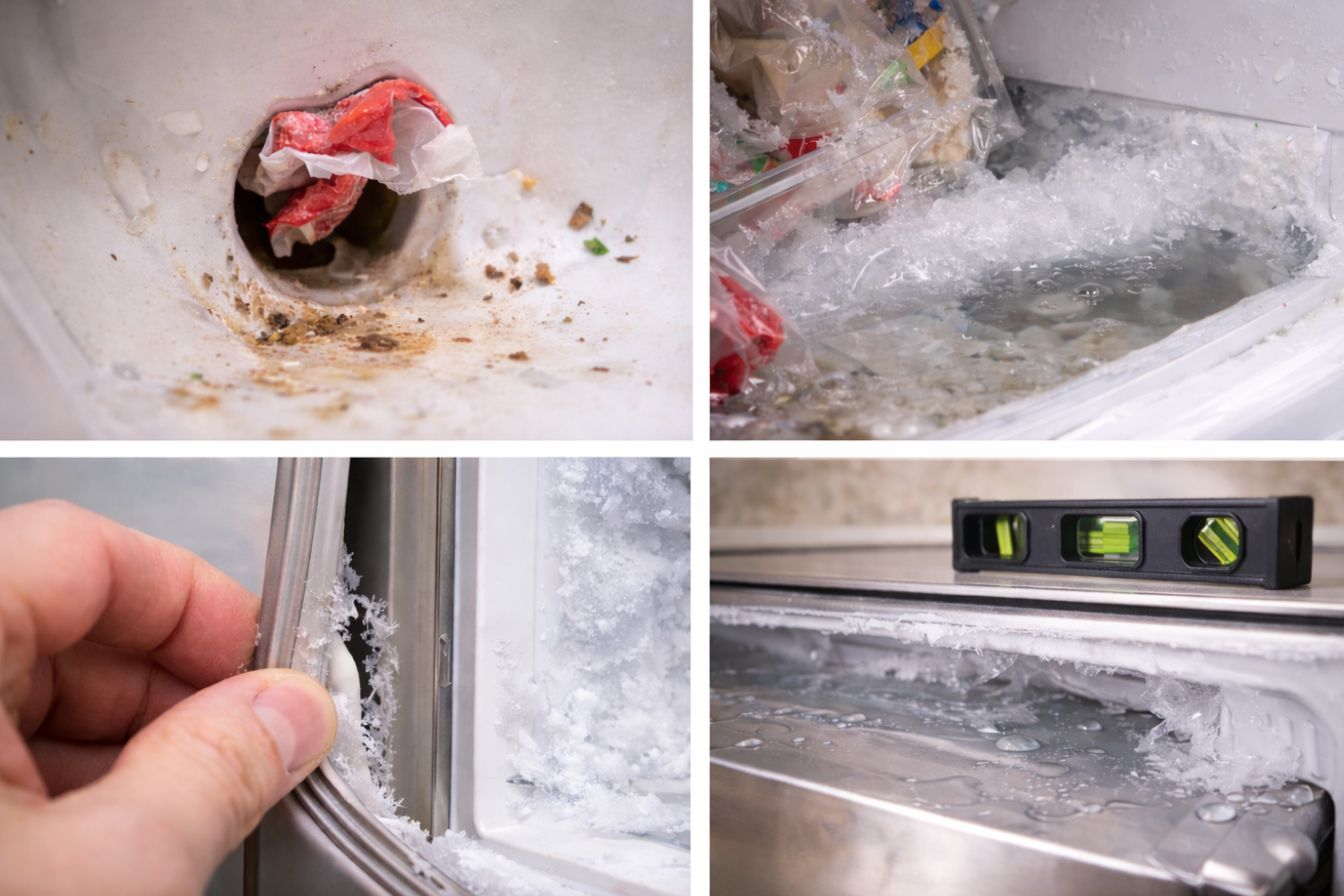
Tiny bits of food and torn plastic packaging frequently fall into the small drain opening at the back of the cabinet. Over time, debris can collect and restrict the tube. When the drain path is blocked, water can back up into the freezer instead of exiting as intended.
Frozen Drain Trough or Frozen Drain Tube
Sometimes the drain path freezes solid before the liquid water even gets a chance to escape. A thick block of ice forms deep inside the tube. This causes the very next defrost cycle to overflow. The trapped water can refreeze into a thick sheet across the freezer floor.
Door Seal Leaks That Create Excess Frost and Meltwater
A torn rubber door seal lets warm, humid kitchen air sneak into the freezer all day long. This constant air leak creates an unnaturally heavy layer of frost. That extra moisture can create heavier frost than normal. When it melts during defrost, the added water load can overwhelm a partially restricted drain path, leading to pooling.
Built-In Not Level, So Water Doesn’t Reach the Drain Path
If a built-in unit is noticeably out of level, meltwater may not flow toward the drain trough as intended. A slight tilt can encourage pooling in a corner rather than directing water toward the drain path.
Signs Your Defrost Drain Is the Real Problem
Pinpointing the source of water pooling inside the freezer can save time. A restricted defrost drain often leaves a consistent pattern. Look for these clues before removing drawers:
- A clear ice sheet forming along the bottom of the freezer
- Water appearing under lower drawers shortly after a defrost cycle
- Frost buildup concentrated near the back wall or drain area
- Puddling that returns a few days after the freezer floor is dried
Safe First Steps to Fix Water in the Bottom of a Freezer
Basic drain clogs can sometimes be addressed with patience and simple tools. A cautious approach helps avoid damage to interior plastics and seals.
Start by moving food to a cooler and placing towels to catch water. Check the back wall and drain area for obvious ice buildup.
To thaw the drain opening, use warm water with a turkey baster or squeeze bottle. Avoid boiling water, since sudden temperature changes can crack cold plastic or liners. Confirm the door closes fully and the gasket seals without gaps or debris.
Monitor the freezer over the next 24 hours to see whether pooling returns. If access to the drain is limited on a built-in model, service documentation and model-specific procedures may be needed.
When It’s Not the Defrost Drain
A clear drain path does not always end the leak. If the drain is flowing but water still collects, moisture may be coming from another area of the appliance. Built-in units can route water differently depending on configuration, so the location of pooling matters.
Ice Maker Works, but the Freezer Still Leaks
It is possible to see water pooling in the freezer even when the ice maker continues to produce ice. The ice maker supply line and the defrost drain are separate systems. A drain restriction can still cause overflow and refreezing while ice production appears normal.
Water in Crispers or Fresh Food Section Above the Freezer
An upstream drain restriction in the upper cabinet can easily overflow and drip downward into your lower compartments. This can explain a refrigerator leaking water in the fresh food section, including the crisper drawers, when the upper drain path is restricted. The water simply follows gravity when its primary exit is blocked.
Frequently Asked Questions
Why is my freezer leaking water inside the bottom?
Water pooling at the bottom of the freezer is often linked to a clogged or frozen defrost drain tube or trough.
Why does my refrigerator leak water into the crisper drawers?
A drain overflow in the upper compartment can drip into lower areas, including crisper drawers, when water cannot exit through the intended pathway.
Why is my freezer leaking, but the ice maker works?
The ice maker line and defrost drain are separate systems. A drain restriction can still cause pooling even when ice production looks normal.
How do you unclog a refrigerator defrost drain hole?
Many clogs can be addressed by gently flushing the drain opening with warm water and avoiding sharp tools that can damage plastic or liners.
Should I unplug my fridge if it is leaking water inside?
Unplugging the unit can be a sensible step when drying or thawing heavy ice buildup, especially when water is present. If the plug or outlet is difficult to access safely, turning off power at the breaker can be a safer option.
Are You Tired of Chipping Ice Out of Your Built-In Freezer?
Many cases of water pooling inside a freezer stem from a restricted drain path that allows defrost water to overflow and refreeze. Catching the issue early can reduce ice buildup and help protect drawers, bins, and stored food.
If the ice sheet returns soon after warm-water flushing, the cause may involve a deeper defrost or an airflow issue, such as a heater problem, a sensor issue, or a recurring drain freeze-up. Wilshire Refrigeration can test the system, confirm the cause, and recommend the next step so the freezer can return to steady, predictable draining.