Quick Navigation
Table of Contents
Click To Expand
Quick Navigation
Table of Contents
Click To Expand
Pulling out a crumbled cork ruins the entire experience of opening a prized bottle of wine. Aging fine vintages takes much more than just keeping glass bottles cold in a dark room. You need a highly controlled environment to protect that expensive investment. A Sub-Zero wine fridge offers this exact climate, but managing the internal moisture is arguably just as important as hitting the right temperature.
Wilshire Refrigeration provides the expert maintenance required to keep these luxury appliances running perfectly for decades. Understanding how moisture actively protects a collection ensures every vintage ages beautifully. Securing proper climate control inside the cabinet means you never have to pour a ruined bottle down the sink.
FACTORY-CERTIFIED APPLIANCE REPAIR
Luxury Appliance Trouble? Get Expert Help Fast.
From premium refrigeration to high-end kitchen appliances, our factory-certified team delivers trusted diagnosis and repair with the professionalism your home deserves.
Why Do Humidity Levels Matter for Wine Storage Units?
Air moisture directly controls how well a bottle seal survives over the years of aging. Proper climate control in wine storage units is the ultimate safeguard for your most valuable vintages. If you ignore moisture management, the structural integrity of that natural seal eventually fails.Prevention of Cork Drying and Shrinkage
A properly humid environment prevents the natural wood from drying out. When stoppers shrink, they pull away from the glass neck. Consistent humidity keeps that barrier tight and secure, locking out harmful outside air.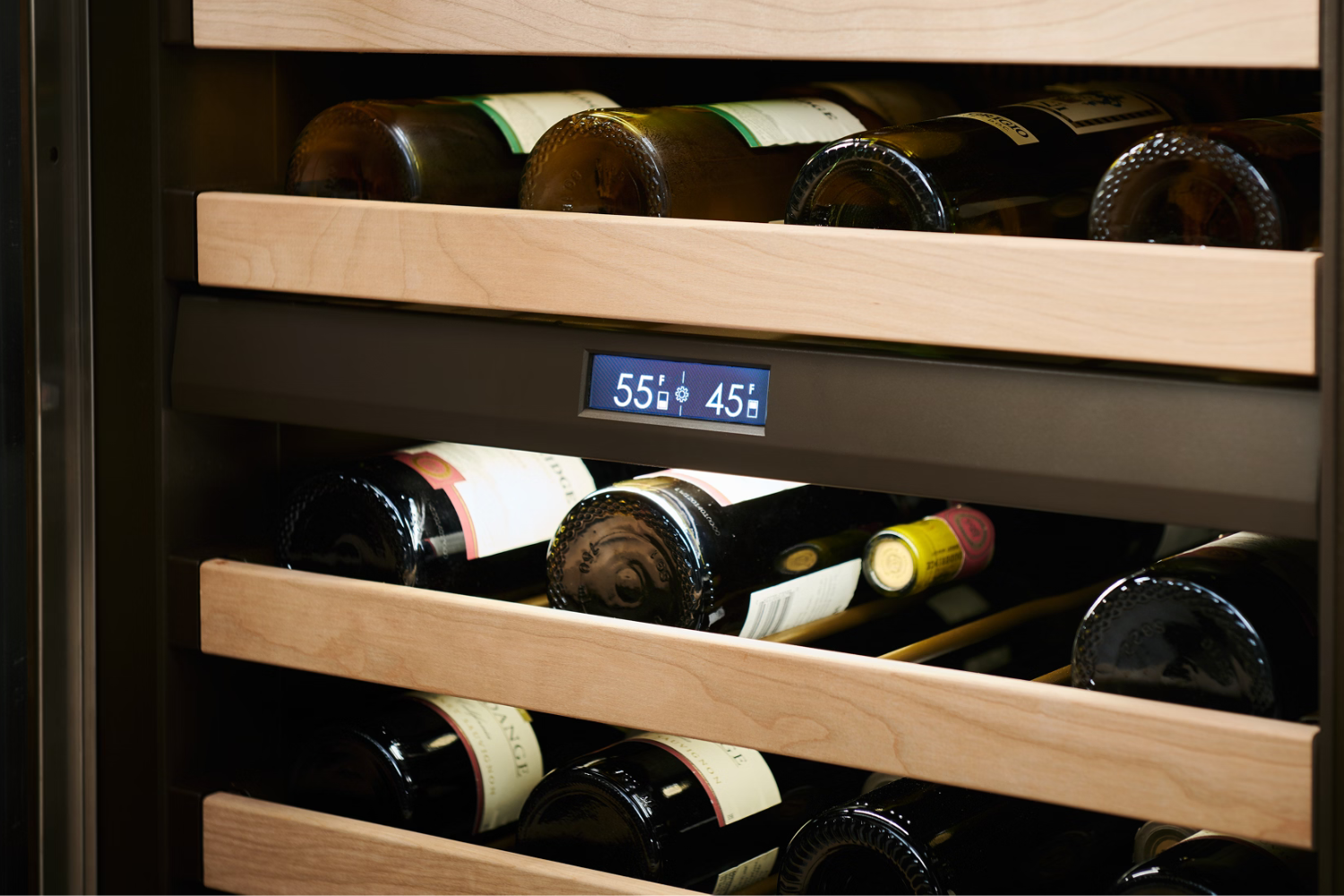
What Is the Ideal Humidity for a Sub-Zero Wine Fridge?
The ideal climate for these high-end coolers mimics the exact conditions found inside a natural underground cave. Maintaining this specific atmosphere prevents the dual threats of severe drying and extreme dampness. Luxury manufacturers recommend specific moisture parameters to maintain the best possible storage conditions:- Standard targets range from 50 to 70 percent relative humidity.
- The optimal sweet spot sits securely at about 60 percent.
- You want to avoid drastic daily fluctuations that shock the delicate aging process.
FACTORY-CERTIFIED APPLIANCE REPAIR
Luxury Appliance Trouble? Get Expert Help Fast.
From premium refrigeration to high-end kitchen appliances, our factory-certified team delivers trusted diagnosis and repair with the professionalism your home deserves.
How Does an Under-Cabinet Wine Fridge Control Moisture?
An under-counter wine fridge controls moisture using advanced independent zones that constantly regulate the interior air. These luxury appliances rely on smart engineering to replicate the feel of a traditional cellar without taking up the entire basement. Specialized cooling mechanisms operate around the clock to maintain a balanced internal atmosphere, so you never have to make manual adjustments.Dual Evaporator Systems and Active Sensors
Dual evaporators manage the cooling cycle without removing all the natural moisture from the air. Active sensors keep a watchful eye on the cabinet. They adjust the air circulation automatically to keep those humidity levels locked in place.What Happens if a Built-In Wine Fridge Is Too Dry?
A built-in wine fridge running too dry slowly destroys the protective seal on every single bottle you own. Dry air actively pulls moisture directly from the wood. This leaves the entire collection completely vulnerable to rapid oxidation. A lack of sufficient moisture inside the cooling cabinet leads to these specific problems:- Brittle stoppers that crumble into dust during extraction.
- Unwanted oxygen seeping into the liquid and turning it to vinegar.
- Rapid degradation of those complex flavor profiles you paid for.
Can a Red Wine Refrigerator Have Too Much Humidity?
A red wine refrigerator can absolutely hold too much moisture. This introduces completely different physical risks for serious collectors. High humidity does a fantastic job of keeping the bottle seal intact. Unfortunately, it also creates a swampy environment that wreaks havoc on the exterior packaging. Excessive condensation quickly ruins the visual presentation value of prized bottles.Label Degradation and Mold Growth
Extreme dampness causes expensive paper labels to peel, bubble, and eventually rot right off the glass. Unchecked moisture also invites harmful mold. This fuzzy growth spreads quickly across wooden display racks and gathers heavily around the bottle necks.FACTORY-CERTIFIED APPLIANCE REPAIR
Luxury Appliance Trouble? Get Expert Help Fast.
From premium refrigeration to high-end kitchen appliances, our factory-certified team delivers trusted diagnosis and repair with the professionalism your home deserves.
Frequently Asked Questions
How do I increase humidity in a Sub-Zero wine fridge?
You can quickly boost the internal moisture by placing a small damp sponge or a specialized clay bead pack inside the cabinet.
What is the best temperature for a Sub-Zero beverage fridge?
The ideal setting for a Sub-Zero beverage fridge usually sits between 38 and 42 degrees Fahrenheit for optimal drink refreshment.
Do Sub-Zero wine refrigerators require annual maintenance?
Yes, booking professional annual maintenance ensures Sub-Zero wine refrigerators maintain accurate climate control and avoid sudden mechanical failures.
Can I store red and white wine in the same unit?
You can safely store both varieties together if you own a dual-zone cooler that allows for entirely separate temperature settings.
Why is my built-in wine fridge leaking water?
A built-in wine fridge typically leaks water onto the floor when the internal defrost drain gets clogged with dust or debris.