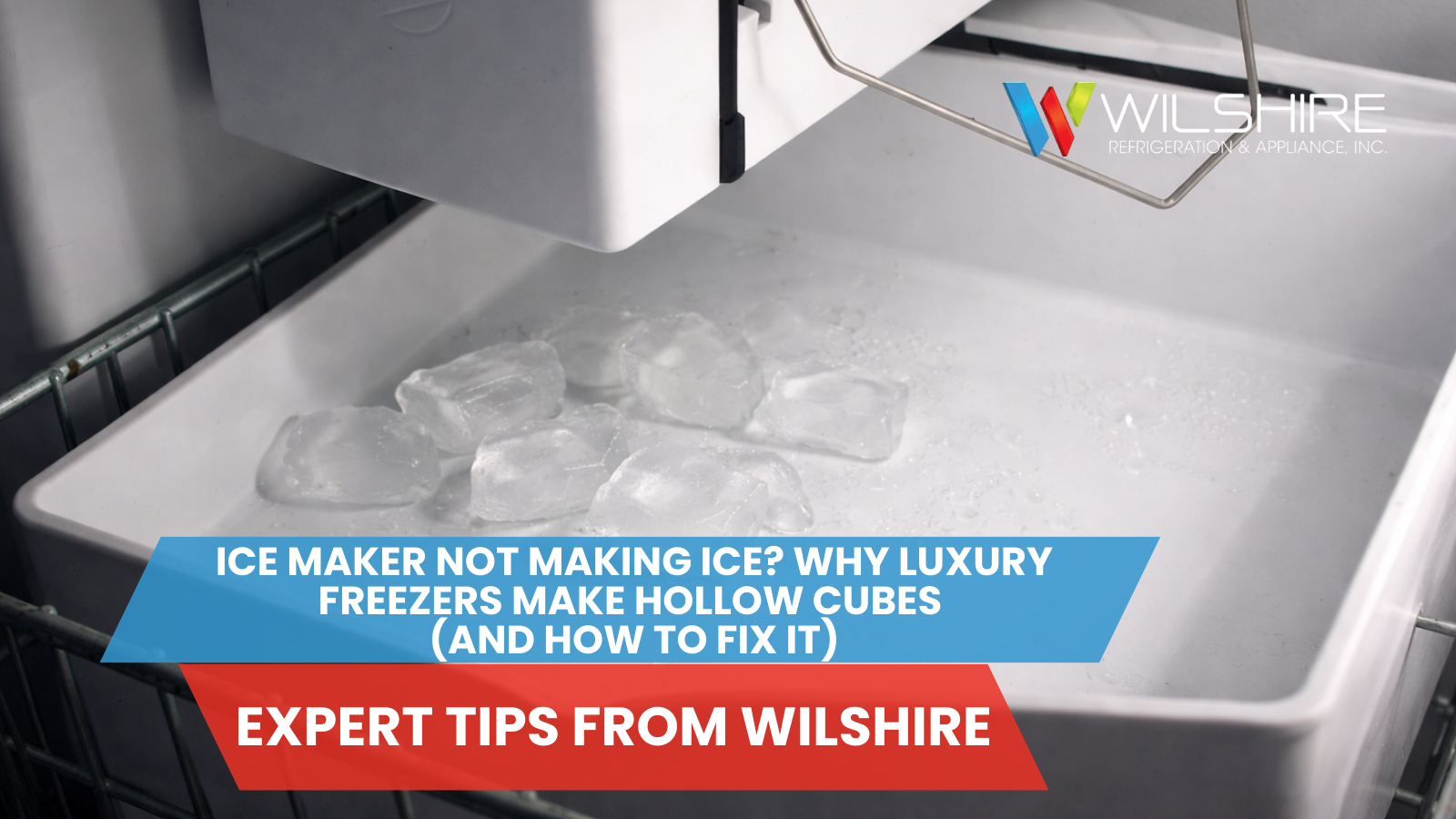
You grab a glass to get some ice, and instead of solid, satisfying cubes, you hear the sad clatter of hollow shells hitting the bottom. When an ice maker stops making ice, it becomes a daily annoyance and can feel like the whole machine is broken.
In many cases, the cause is simpler than it looks. A water-fill issue, blocked airflow, or a small temperature drift inside the freezer is often to blame. Catching small issues early helps prevent leaks and recurring clogs later. Sometimes a quick adjustment gets things moving again.
For luxury units, Wilshire Refrigeration can help confirm the root cause when the basic checks come back negative. If the basics check out, a certified luxury appliance technician can test the system and identify the failed part.
What Do Hollow Ice Cubes Actually Mean?
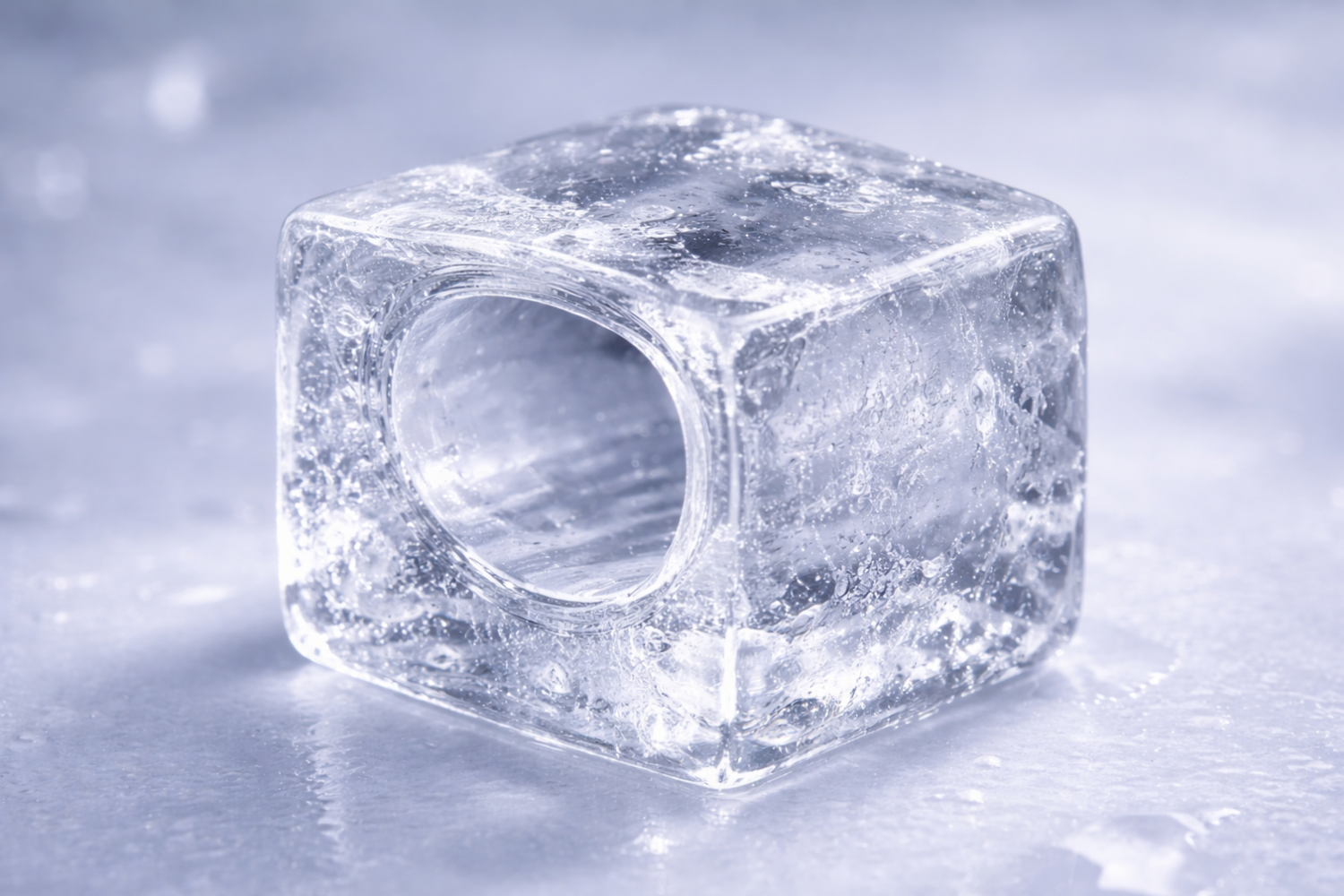
Hollow cubes typically form when the ice mold is not filled enough during the fill step, or when the freezing process stops before the harvest cycle is complete. It is a lot like baking a cake with only half the batter, because the machine simply freezes whatever water it receives. This leaves you with a fragile shell instead of a heavy, solid cube.
While reduced water flow is usually the primary culprit, a freezer running warmer than normal or experiencing poor airflow can also produce these weak shapes. Ultimately, finding hollow ice in your bin indicates a basic fill problem, a sudden temperature drift, or a blocked air intake inside the unit.
Most Common Causes Of Hollow Ice Cubes In Luxury Freezers
Tracking down an ice maker that is not working usually comes down to two basics: a steady water supply and a steady freezing temperature. Luxury units operate on tight timing and sensors, so small changes can disrupt the cycle. Finding where the process breaks is the fastest path to a lasting fix.
Low Water Pressure Or Restricted Supply
A weak water supply prevents ice mold from filling during its short fill window. If your neighborhood experiences a sudden pressure drop, your fridge will struggle to maintain the water flow required for the dispenser and ice maker to function properly. A partially closed shutoff valve or a kinked supply line pressed behind the refrigerator will cause the exact same problem.
Clogged Or Expired Water Filter
Water filters catch debris and, over time, can clog and restrict flow before it reaches the ice maker. Many manufacturers recommend replacing the filter about every six months, depending on water quality and usage. If cubes look hollow or production slows, installing a fresh filter is a strong first step. Skipping this basic maintenance is a common reason high-end icemakers stop making ice.
Frozen Fill Tube Stopping Water From Reaching The Mold
The fill tube is the final slide that drops water into the ice tray. If it freezes over, it builds a solid ice dam that blocks fresh water from getting through. You might even hear the water valve click open, but the ice bin stays bone dry. This is a common failure point, often after the freezer door is left cracked open overnight.
Freezer Temperature Not In A Good Ice-Making Range
Your ice maker needs a deep, stable freeze to trigger the harvest cycle. Many freezers are designed to operate near 0°F, and ice production can slow when the temperature rises. If the internal temperature rises into the low teens, cycles can stall, or cubes can turn out weak. Check the freezer setpoint and ensure the vents are not blocked to allow cold air to circulate.
Restricted Or Failing Water Inlet Valve
The water inlet valve controls the amount of water entering the ice mold. If it is restricted or sticking, fill times can come up short. Because many units use separate solenoids or circuits for ice and dispensing, dispenser flow may appear normal while the ice maker fails to fill correctly.
Quick Checklist Before You Call For Ice Maker Repair
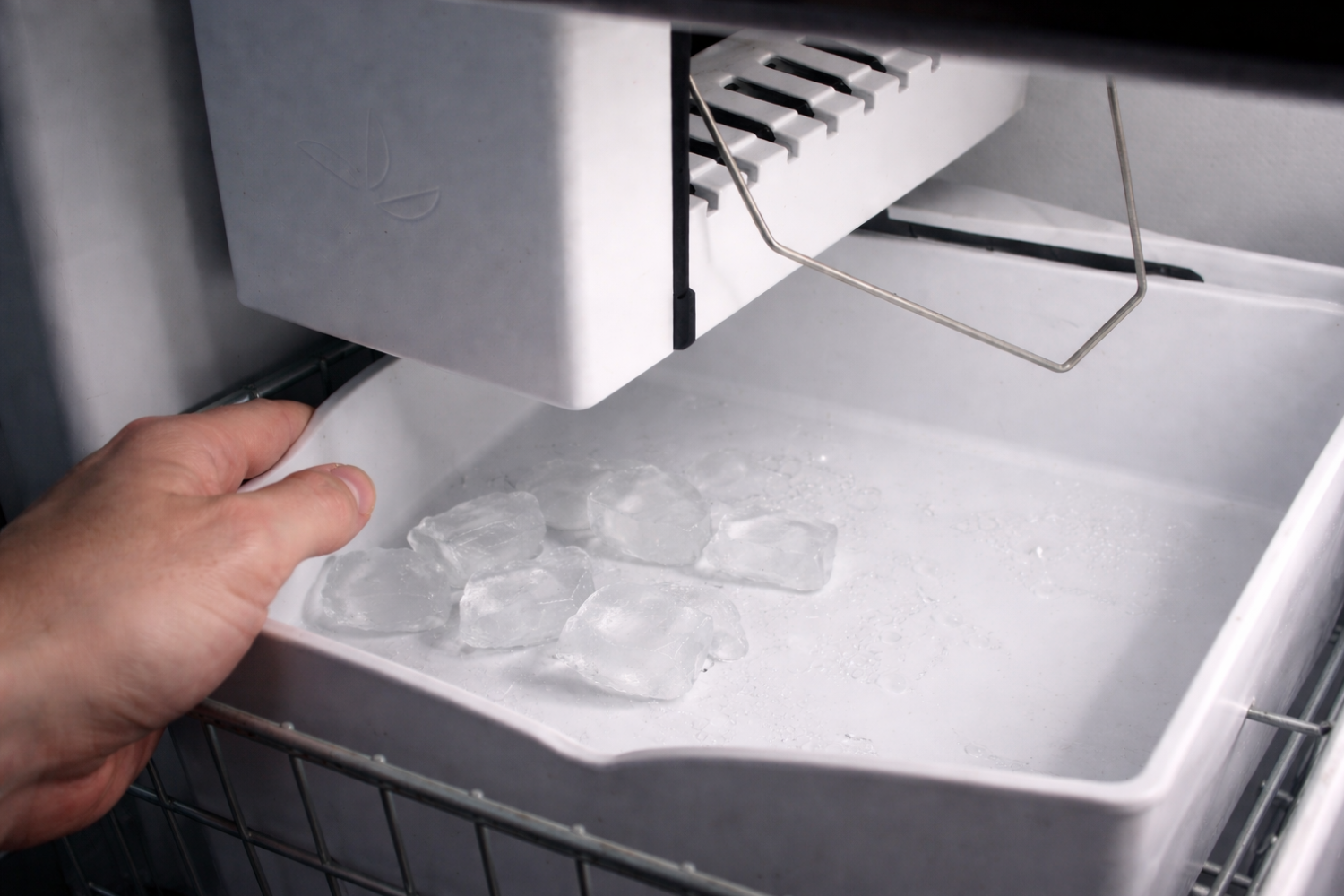
Before you pick up the phone to book an ice maker repair, take 5 minutes to inspect the machine yourself. You can easily rule out accidental setting changes or minor plumbing quirks. Run through these items first to see if you can get the ice flowing again today.
- Water Supply: Confirm the shutoff valve under the sink or behind the fridge is fully open. Check behind the unit for pinched or crushed water lines.
- Ice Maker Settings: Confirm the ice maker power switch is on. Check the shutoff arm or bail wire and confirm it sits in the down position.
- Filter: Replace the water filter if it is older than six months, or if the dispenser flow is noticeably slow.
- Temperature: Check the display to confirm the freezer is cold enough. After lowering the setpoint, allow about 24 hours for temperature and ice production to stabilize.
Safe Fixes You Can Try For Hollow Cubes And No-Ice Symptoms
You do not need a tool belt to try a few safe fixes. Resetting the computer or thawing a minor freeze-up can work wonders. Just remember to stop immediately and call a professional if you spot a water leak or hear loud grinding noises.
Power Cycle Or Use The Ice Maker Reset (Model-Dependent)
Sometimes the control system needs a reset to clear a temporary glitch. Turn the refrigerator off at the control panel or switch the circuit breaker off for a few minutes. Many people search online for how to reset ice maker settings, but steps vary by brand and model. Refer to the owner’s manual to determine the correct reset method for the unit.
Thaw A Frozen Fill Tube (Gentle Heat Only)
If you spot a chunk of ice blocking the fill tube, you can carefully melt it. Use a hairdryer on its lowest heat setting and work in short bursts. Keep warm air circulating and keep all dripping water away from electrical wiring. If you notice the plastic getting too hot, or if the tube freezes up again the next day, stop trying to thaw it and call a pro.
Recheck Temperature And Airflow Basics
Cold air needs room to move. If you stack too many frozen pizzas against the back vents, the ice maker will never reach the required cold temperature. Take a moment to reorganize the shelves. Also, wipe down the rubber door gaskets to keep the seal tight each time the door closes.
Refrigerator Not Making Ice, But The Water Dispenser Works?
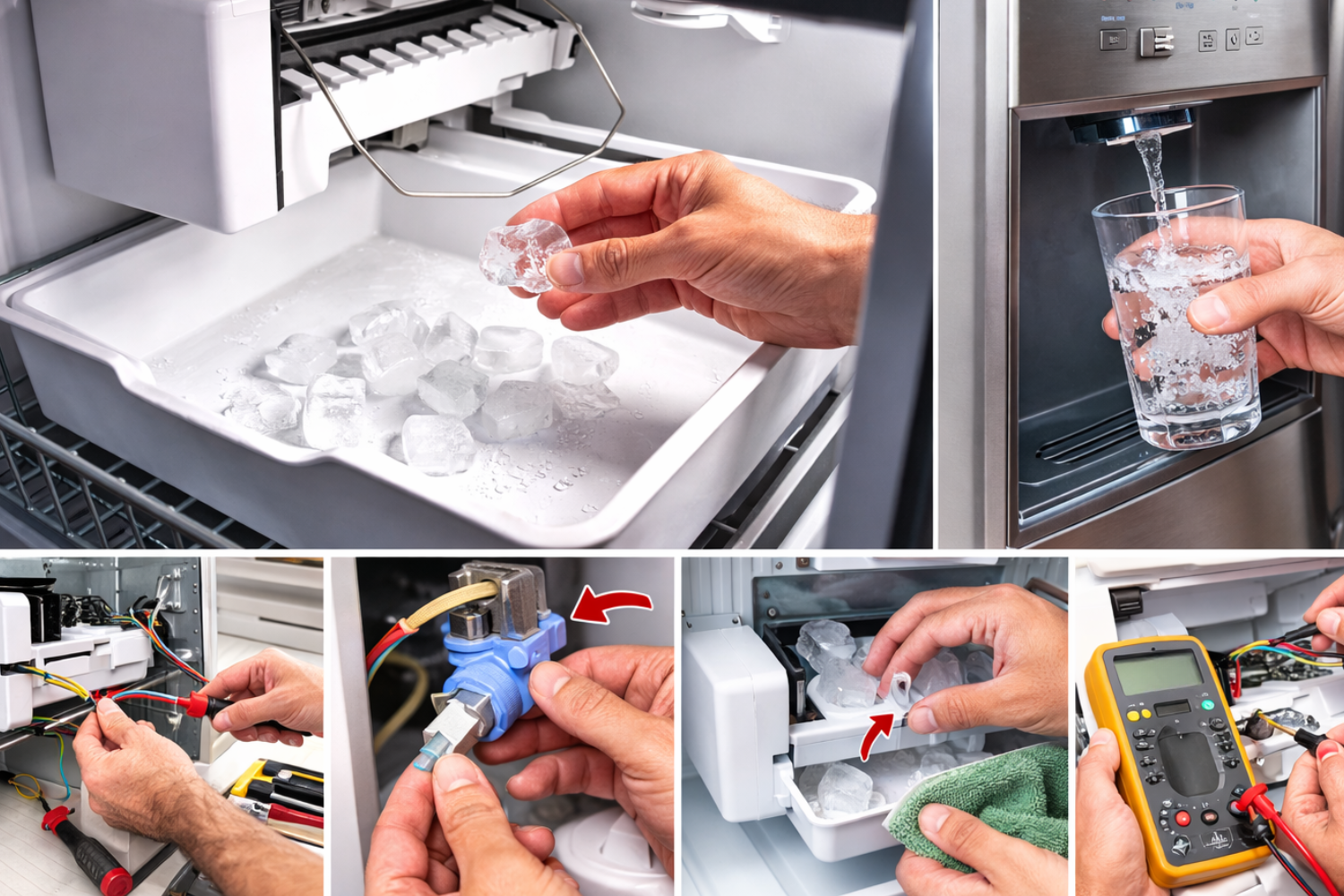
Having strong dispenser flow without ice is frustrating, but it offers a helpful clue. The water supply is reaching the refrigerator, so the issue may be isolated to the ice maker circuit, the ice-side valve, the fill tube, or the ice maker module. This is a common scenario when the water dispenser works, but the refrigerator is not making ice.
Common clues include strong dispenser flow while the ice mold stays dry, repeated clicking as the unit tries to cycle, or water that drips and freezes into a sheet on the freezer floor. The last sign may indicate a cracked, blocked, or misaligned fill tube.
Frequently Asked Questions
Why is my ice maker not making ice?
Top causes include restricted water flow, a frozen fill tube, an overdue filter, or a freezer that is running warmer than expected. Start with water supply, filter age, and freezer setpoint before moving to deeper troubleshooting.
Why is my ice machine not making ice, but the water dispenser works?
This pattern often points to an ice-side restriction, such as a frozen fill tube, an ice-side valve issue, or an ice maker module problem. The dispenser can operate normally even with the ice path blocked.
How do I reset an ice maker?
Many units allow a reset button or a power cycle to clear temporary errors. Reset steps vary by model, so check the owner’s manual for the exact method.
Should the ice maker arm be up or down to make ice?
In most designs, the arm or paddle must be down for ice production. When the arm is up, the system usually pauses ice-making.
When should I call for professional luxury appliance repair?
Book service when hollow cubes continue after water, filter, and temperature checks. Call sooner for recurring fill-tube freezing, leaks, loud grinding, or no improvement after about 24 hours.
Get Perfect Ice Back In Your Kitchen
Dealing with an ice maker that has stopped working is a major hassle, especially when you expect premium performance from your kitchen. Thankfully, those annoying hollow cubes almost always point to an incomplete water fill or a freezer that just needs to be a little colder. Running through simple checks like untangling the water line, replacing an old filter, and setting the temperature to cold can restore your ice supply surprisingly quickly.
If those home remedies do not do the trick, a certified technician can step in to test the water pressure and evaluate the internal valves. Having Wilshire Refrigeration diagnose the cause ensures you get the right fix for your luxury system without the guesswork.