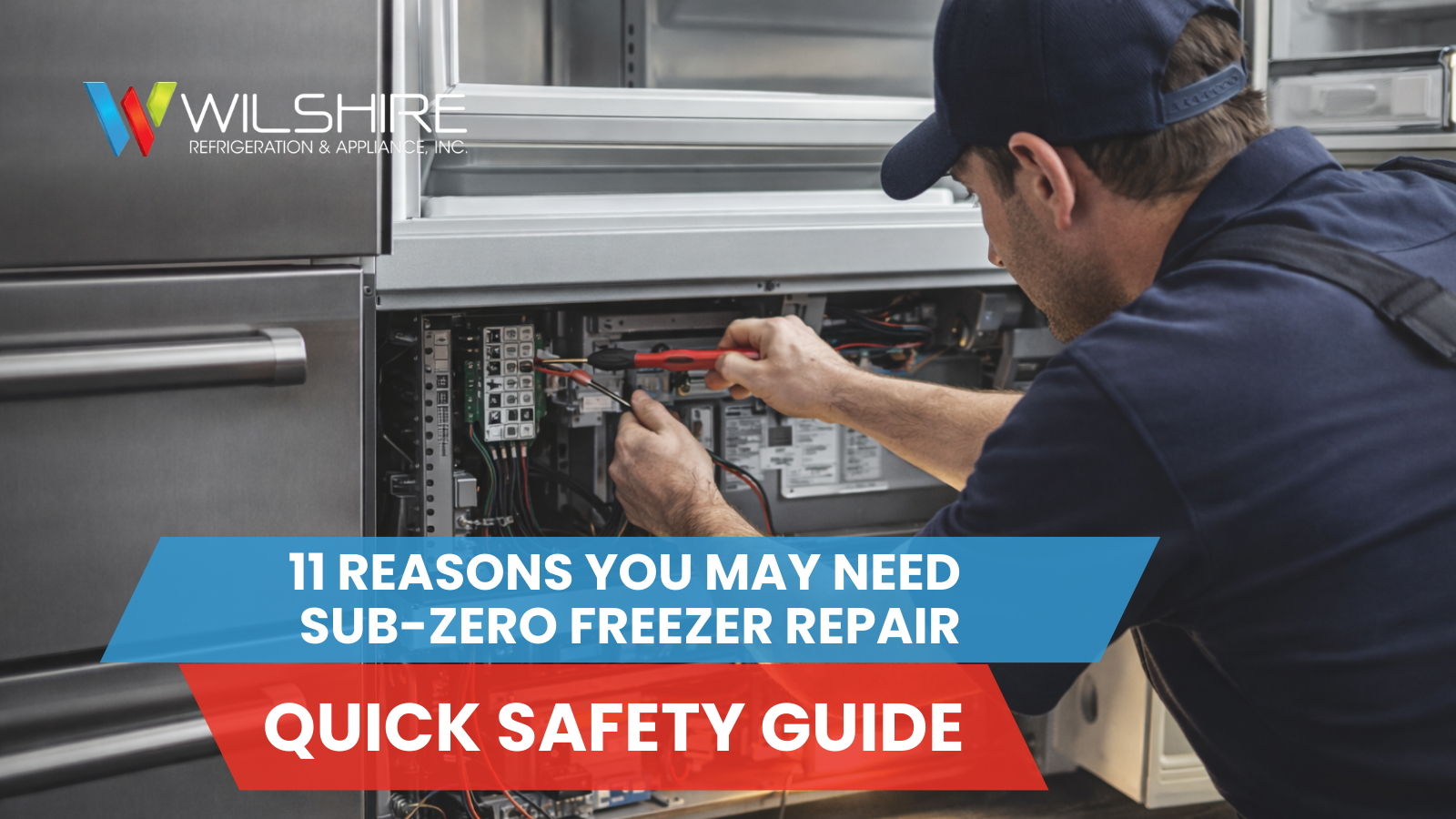
You reach in to grab a pint of ice cream, and it is completely soft. The appliance motor is humming loudly, but the cold air just is not there. Discovering that your unit cannot maintain the correct temperature is incredibly frustrating and risks ruining hundreds of dollars’ worth of groceries. You may need Sub-Zero freezer repair to restore normal freezer performance and help prevent food loss.
Sometimes the fix is surprisingly simple. A blocked air vent or a dusty component can completely throw off the internal temperature. In other cases, a broken internal part requires the hands of an experienced technician. Below are 11 common reasons a Sub-Zero refrigerator-freezer may stop cooling properly, along with safe checks to try first and signs that it is time to schedule professional service from Wilshire Refrigeration & Appliance.
Quick Navigation
Table of Contents
1
Why Is My Sub-Zero Freezer Not Working?
2
What Signs Show You May Need Sub-Zero Freezer Repair?
3
What Can You Safely Check Before Scheduling Service?
4
What Should You Not Try to Fix Yourself?
5
When Should You Call a Professional for Sub-Zero Freezer Repair?
6
Frequently Asked Questions
7
Schedule Expert Sub-Zero Freezer Repair With Wilshire
Why Is My Sub-Zero Freezer Not Working?
If your Sub-Zero freezer isn’t working, it’s typically due to restricted airflow, dirty condenser coils, broken door seals, or failing internal electronics. Other frequent culprits include a dead evaporator fan, a faulty thermostat, heavy frost buildup, main control board errors, or trouble inside the sealed refrigerant system. These issues can affect cooling performance and prevent the freezer from maintaining a consistent low temperature.
1. Are the Temperature Settings Set Incorrectly?
Accidental changes to your digital settings will immediately affect how the appliance performs. It is very easy to bump the control panel while loading heavy boxes of frozen goods. If the thermostat gets pushed to a higher number, your food might feel cool but will never actually freeze solid. Always check the display first and allow time for the freezer to respond after any temperature change.
2. Could Dirty Condenser Coils Be Making the Freezer Work Harder?
Dust and pet hair constantly float through the air and settle right onto your appliance coils. When these condenser coils become coated with grime, they can no longer effectively release heat. The machine has to work much harder to reach the target temperature. This is a commonly overlooked cause of poor cooling, and even high-end units need routine condenser cleaning to maintain proper performance.
3. Are Blocked Air Vents Stopping Cold Air From Moving Properly?
We all tend to overpack the shelves after a big trip to the grocery store. Shoving bags and boxes tightly against the back wall blocks the internal air vents. This prevents cold air from circulating properly throughout the compartment. Blocked airflow can create warm spots, soften frozen food, and make the system run longer than normal.
4. Is a Worn Door Gasket Letting Cold Air Escape?
The rubber seal around the door works hard every single day. Over time, that gasket can dry out, tear, or lose its magnetic grip. A bad seal lets freezing air spill out into your kitchen while pulling warm room air inside. You will usually notice visible gaps, unexplained moisture, or heavy frost building up along the interior walls as the unit wastes energy trying to cool the room.
5. Could the Evaporator Fan Motor Be Failing?
The evaporator fan helps move cold air across the freezer compartment. If airflow feels weak, temperatures vary from shelf to shelf, or unusual fan-related noise comes from inside the unit, the fan motor may need attention.
6. Is Frost Buildup Pointing to a Defrost System Problem?
A light frost pattern can be normal, but heavy ice buildup can block airflow and reduce cooling performance. Repeated frost problems may indicate a defrost system issue, a door seal problem, or another airflow-related fault that requires professional diagnosis.
7. Could a Thermistor or Thermostat Be Giving the Wrong Temperature Reading?
Temperature sensors help the control system decide when to run cooling. They monitor the interior climate and tell the control board exactly when to turn the cold air on or off. A broken thermistor sends inaccurate data to the computer. The appliance might think it is perfectly freezing inside when it is actually far too warm, leading to soft food and highly unpredictable cooling cycles.
8. Is the Start Relay, Start Device, or Inverter Board Causing the Problem?
The compressor depends on electrical components such as the start relay, start device, or inverter board to start and run properly. When one of these parts fails, the sealed system may not operate as intended, leading to weak, intermittent, or no cooling.
9. Could the Main Control Board Be Affecting Freezer Performance?
Modern high-end refrigeration relies on complex computer boards to coordinate every single function. The main control board manages the fans, sensors, and the cooling timeline. A faulty board can disrupt cooling by sending incorrect signals to fans, sensors, or other key components. These electronic issues can easily mimic other hardware failures and are very difficult to confirm without specialized voltage-testing tools.
10. Is the Compressor or Sealed System Failing?
The compressor and sealed system move refrigerant through the cooling circuit to remove heat from the freezer. Refrigerant leaks, compressor wear, or other sealed-system problems are among the most serious causes of cooling failure and should be handled by a qualified technician.
11. Did a Power Issue or Reset Problem Affect the Freezer?
A power interruption can sometimes leave the freezer unresponsive or out of normal operation. If the lights work but cooling does not resume, check the outlet, breaker, and control display first before scheduling service.
What Signs Show You May Need Sub-Zero Freezer Repair?
A few early warning signs can indicate a cooling problem before a full breakdown. Professional service is worth considering if you notice any of these obvious warning signs:
- Meats feel soft instead of freezing solid.
- Water pools randomly on the interior shelves.
- Thick frost quickly covers the back wall.
- Frozen food softens, or the freezer cannot maintain the set temperature.
- Loud clicking or grinding sounds come from the machine.
- The motor runs continuously without stopping.
- The refrigerator works fine, while the freezer stays warm.
What Can You Safely Check Before Scheduling Service?
You can easily perform a few safe visual inspections before making a phone call. Looking at basic settings and airflow paths often saves you from paying for an unnecessary service visit. Keep your troubleshooting highly practical. Never attempt to remove internal panels or test live wires on your own. Instead, try these simple home checks first:
- Check the Temperature Setting: Verify the digital display hasn’t been accidentally bumped to a warmer setting.
- Clear the Vents: Rearrange your groceries so cold air can circulate freely to every shelf.
- Inspect the Door Gasket: Feel along the rubber seal for hidden cracks that let warm air in.
- Clean the Condenser Coils: Vacuum away dust so the machinery can easily release trapped heat.
- Look for Heavy Frost: Check the interior walls for thick ice, which signals a failing defrost system.
- Check the Power Supply: Confirm the outlet, breaker, and control display are functioning before scheduling service.
What Should You Not Try to Fix Yourself?
Avoid opening internal panels, testing live electrical components, or attempting sealed-system repairs at home. Jobs involving control boards, fan motors, compressors, or refrigerant components are best left to a qualified technician, as misdiagnosis can lead to additional damage and higher repair costs.
When Should You Call a Professional for Sub-Zero Freezer Repair?
Knowing when to call for Sub-Zero freezer repair can help prevent food loss and limit further strain on major components. Reach out to an expert technician immediately if you experience any of these stubborn mechanical issues:
- Food thaws repeatedly even after you adjust the temperature.
- Thick frost returns just days after you manually clear it.
- The appliance makes loud, unusual grinding noises.
- Basic home troubleshooting fails to restore proper cooling.
- You suspect a hidden sensor, fan, or compressor failure.
Frequently Asked Questions
Why is my Sub-Zero freezer not freezing but still running?
If a Sub-Zero freezer is running but not freezing, common causes include dirty condenser coils, weak airflow, a door-seal issue, a fan problem, or a temperature-sensing fault.
How do I know if I need Sub-Zero freezer repair or just a minor adjustment?
Professional sub-zero freezer repair is worth scheduling when basic checks, such as adjusting the temperature, improving airflow, and cleaning the condenser, do not restore normal cooling.
Can dirty condenser coils cause problems with a Sub-Zero freezer?
Yes. Dirty condenser coils can reduce heat transfer, prolong system run time, and contribute to poor cooling performance.
What is the most common cause of a Sub-Zero freezer not working?
Common causes of a warm Sub Zero freezer include blocked airflow, door-seal problems, dirty condenser coils, fan failure, and temperature-control issues.
When should I call for a Sub-Zero freezer repair?
Call a Sub-Zero repair professional if basic troubleshooting fails to resolve these three warning signs: your food is thawing, heavy frost keeps returning, or the appliance won’t maintain a freezing temperature.
Schedule Expert Sub-Zero Freezer Repair With Wilshire
Watching frozen food thaw can be stressful, especially in a high-end kitchen. Understanding these common mechanical failures helps you take the right steps to protect your kitchen.
Basic maintenance, such as condenser cleaning and better airflow, can help prevent some cooling problems, but persistent frost, weak airflow, sensor faults, and sealed-system issues should be inspected by a qualified technician.
If the freezer stays warm after basic troubleshooting, Wilshire Refrigeration can diagnose the issue and recommend the right repair. Contact Wilshire Refrigeration to schedule service.