Quick Navigation
Table of Contents
Click To Expand
Quick Navigation
Table of Contents
Click To Expand
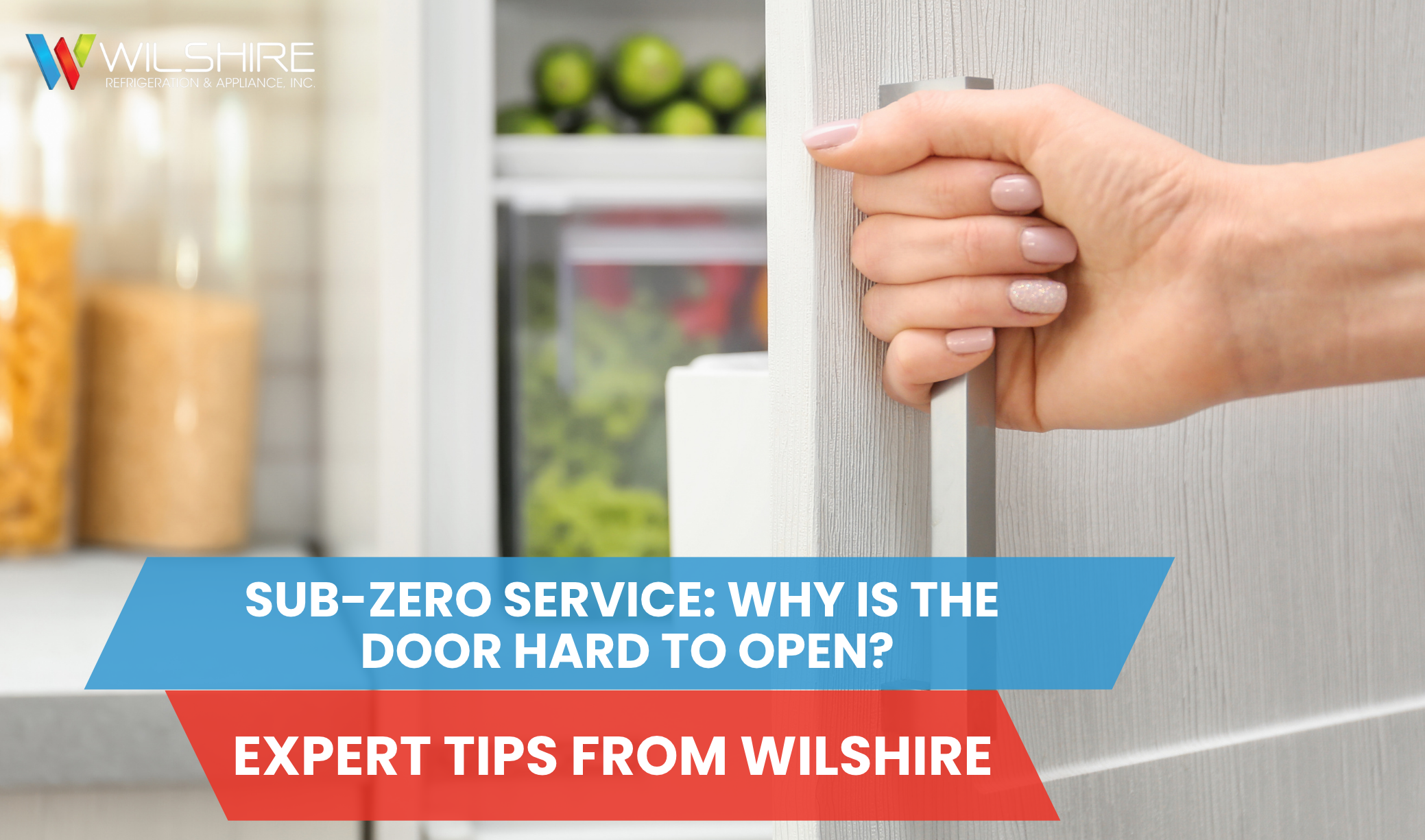
You close the refrigerator, remember one more ingredient, and suddenly the door feels locked. Brief resistance can be normal just after closing, but persistent sticking may call for Sub-Zero service. Don’t pull harder or pry at the seal if a gentle pull cannot open it.
If the door stays difficult to open, contact Wilshire Refrigeration for a diagnostic visit. Notice when the resistance occurs, inspect accessible surfaces, and watch for cooling changes to decide when a professional assessment makes sense.
Key Takeaways
- Wait 30–60 seconds before reopening the refrigerator door. Resistance that eases after this pause may be normal.
- Turn the unit off before cleaning accessible door seals with mild detergent, water, and a soft cloth. Rinse, dry, and restore operation.
- Avoid prying the door or applying unapproved lubricants. Leave hinge adjustments and hidden drain repairs to a qualified technician.
- Arrange Sub-Zero service if sticking persists after waiting and approved cleaning, especially with recurring ice, rubbing, seal damage, or cooling changes.
- Verify the provider through Sub-Zero’s official Factory Certified Service locator. Confirm diagnostic charges, genuine parts, and warranty coverage before approving repairs.
FACTORY-CERTIFIED APPLIANCE REPAIR
Luxury Appliance Trouble? Get Expert Help Fast.
From premium refrigeration to high-end kitchen appliances, our factory-certified team delivers trusted diagnosis and repair with the professionalism your home deserves.
Why Is Your Sub-Zero Door Hard to Open?
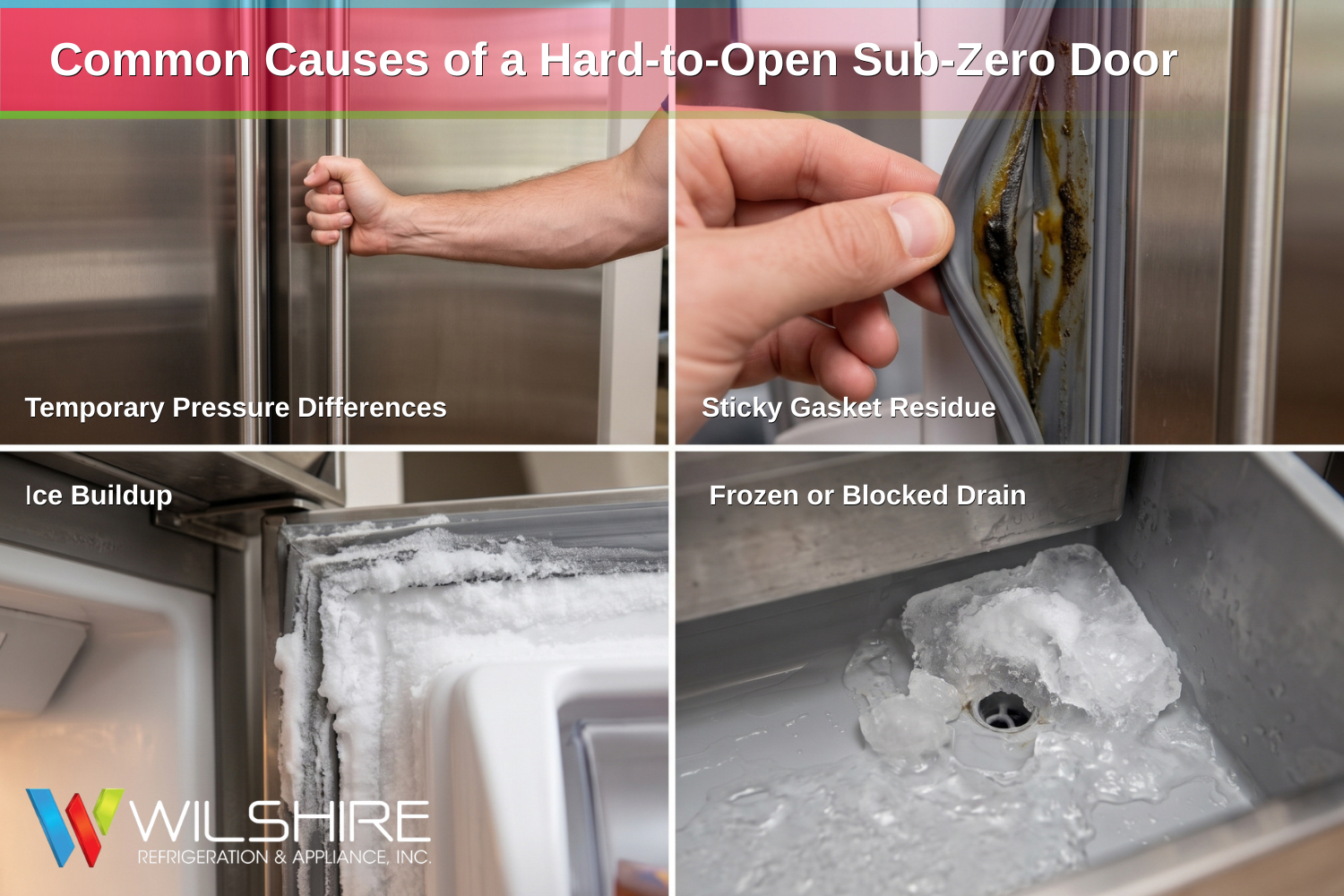
A temporary pressure difference can make a Sub-Zero door harder to reopen right after you close it. Persistent resistance may be caused by sticky residue, ice buildup, or a blocked drain.
Temporary Pressure Differences
Warm room air enters when the door opens and cools after the door closes. This can briefly lower pressure inside the compartment, so opening the door takes more effort. Sub-Zero recommends waiting 30–60 seconds before trying again. Resistance that eases after this pause may be normal. Larger temperature differences between the room and compartment can make the effect last longer.
Sticky Gasket Residue
A gasket is the flexible seal around the door. Sticky spills on the seal or the surface it touches can make the door cling. Inspect these accessible areas when the door opens, look for tears or deformation, and clean residue using the approved method. A firm seal alone does not show that the gasket needs replacement.
Ice or Drain Blockages
Ice buildup can prevent a door from opening freely. A frozen or blocked drain may also cause excessive opening resistance on some models. These problems need assessment, especially when ice returns or water collects inside. Repeatedly forcing the handle won’t fix the cause, so leave hidden drain access and repairs to a qualified technician.
What Can You Check Before Sub-Zero Repair Service?
A few external observations can help before Sub-Zero repair service, especially the timing of resistance and the seal’s visible condition. Before booking, check these details:- Allow a short pause after closing before trying the handle again.
- Notice whether resistance occurs only at first or throughout the door’s movement.
- Inspect the gasket for visible residue, tears, or ice when the door opens.
- Look for accessible frost, condensation, or standing water.
- Record temperature warnings, door alarms, recent changes, and when the trouble began.
When Is Sub-Zero Refrigerator Repair Needed?
Arrange Sub-Zero refrigerator repair when resistance persists after the recommended wait and approved cleaning. A change in the door’s movement also deserves assessment, especially if the door no longer closes properly. A hard-to-open door alone does not establish a compressor problem.Persistent Sticking or Rubbing
Repeated catching or rubbing can point to a hinge or alignment issue. Ask a qualified technician to inspect the hardware and make necessary adjustments, especially on heavy doors with decorative panels. Some hinge clicks can be normal, so describe new resistance rather than assuming every sound means a fault.Frost or Cooling Changes
Recurring ice, visible seal damage, or temperature warnings give the technician useful clues. If cooling has changed, check an appliance thermometer and report the reading. The Food and Drug Administration (FDA) recommends refrigerator temperatures of 40°F or below.FACTORY-CERTIFIED APPLIANCE REPAIR
Luxury Appliance Trouble? Get Expert Help Fast.
From premium refrigeration to high-end kitchen appliances, our factory-certified team delivers trusted diagnosis and repair with the professionalism your home deserves.
What Happens During Sub-Zero Service?
During Sub-Zero service, a technician checks the door, seal, hardware, and other relevant systems before recommending repairs. Depending on the model and symptoms, the inspection may include:
- Checking gasket contact, cleanliness, and condition.
- Inspecting door alignment, hinges, and surrounding clearances.
- Investigating frost, moisture, or drain restrictions.
- Checking compartment temperatures when cooling concerns are reported.
- Explaining the diagnosis, proposed repair, and estimate.
The findings determine whether cleaning, an adjustment, or a replacement part is needed. An inspection may confirm that the door is operating normally and needs no replacement parts. At Wilshire Refrigeration, Sub-Zero refrigerator repair includes diagnostics, seal inspections, genuine parts when needed, and performance checks.
Share when the problem began and any notes for the service visit to help explain the symptoms. The goal is proper door operation, which may still include brief resistance after closing.
How Can You Verify Sub-Zero Authorized Service?
Confirm Sub-Zero authorized service through the manufacturer’s official locator or Customer Care. Verify the company’s Factory Certified Service listing for your service area before booking.Sub-Zero Certified Service Listings
Factory Certified Service is Sub-Zero’s program name. Enter the service address’s postal code in the official locator and confirm the company listing; “authorized” and “certified” do not describe separate service tiers.Parts and Warranty Details
Ask about compatible genuine parts, diagnostic charges, and warranty coverage before approving repairs. Have the model and serial numbers and installation date available, since coverage depends on the appliance, written terms, and diagnosed problem. A door issue does not automatically qualify for warranty service. Keep copies of the purchase receipt and previous service records so the provider can review the appliance’s history before repair.FACTORY-CERTIFIED APPLIANCE REPAIR
Luxury Appliance Trouble? Get Expert Help Fast.
From premium refrigeration to high-end kitchen appliances, our factory-certified team delivers trusted diagnosis and repair with the professionalism your home deserves.
Frequently Asked Questions
Why is my Sub-Zero refrigerator door hard to open after closing it?
Pressure differences can briefly resist reopening; wait 30–60 seconds and seek assessment if resistance persists.
How do you clean a sticky Sub-Zero refrigerator seal?
Turn the unit off, use mild detergent and water with a soft cloth, then rinse and dry thoroughly.
Why does my Sub-Zero door make a whooshing sound?
An occasional whoosh can reflect air equalization through drain lines; persistent or unusual noise, or seal damage, deserves inspection.
Can a blocked drain make a Sub-Zero door hard to open?
Frozen or blocked drains can increase opening resistance on some models, so professional assessment is needed.
How do you find Sub-Zero authorized service near you?
Enter the service postal code in Sub-Zero’s official locator and confirm the company before booking.
Why Keep Struggling with the Door?
Give it time to equalize pressure, check accessible surfaces, and arrange Sub-Zero service if the resistance persists. Contact Wilshire Refrigeration to discuss the door problem and request a service appointment. Have the model number and a brief description of the symptoms available so the team can prepare for the service visit.