A Sub-Zero built-in refrigerator is designed for precise cooling, but routine maintenance still matters. Dust buildup, restricted airflow, worn seals, and overdue filters can all affect temperature stability and day-to-day efficiency over time.
Below are nine practical Sub-Zero maintenance tips, warning signs to watch for, and situations where professional service from Wilshire Refrigeration may be worth scheduling.
1
Why Does Built-In Sub-Zero Maintenance Matter
2
Signs Your Sub-Zero Needs Repair
3
What Sub-Zero Refrigerator Maintenance is Safe at Home?
4
What Should You Not Try to Fix Yourself
5
When to Call the Experts for Sub-Zero Freezer Repair
7
Schedule Built-In Sub-Zero Maintenance and Service With Wilshire
Why Does Built-In Sub-Zero Maintenance Matter
Routine Sub-Zero maintenance helps support stable temperatures, consistent airflow, and efficient operation. Basic tasks such as condenser cleaning and seal checks can reduce unnecessary strain on the cooling system and help spot smaller issues before they become larger repairs.
1. Are You Cleaning the Condenser Coils Often Enough?
Dirty condenser coils trap heat, forcing the refrigerator motor to work much harder than it needs to. Pet hair and kitchen dust naturally cling to these metal grids over time. Cleaning the condenser is one of the most important parts of proper Sub-Zero refrigerator maintenance. The exact interval depends on the model and environment, so the safest approach is to follow the unit’s owner’s guide.
2. Are the Temperature Settings Right for Fresh Food and Freezer Storage?
Wrong temperature settings can affect food storage and force the system to run less efficiently. A Sub-Zero built-in unit may feel cold, but settings that drift too high or too low can still create problems. Check the owner’s guide for the model’s recommended temperature range. On many Sub-Zero units, factory settings are 38°F for the refrigerator and 0°F for the freezer, though the available range can vary by series.
3. Is the Door Gasket Sealing the Way It Should?
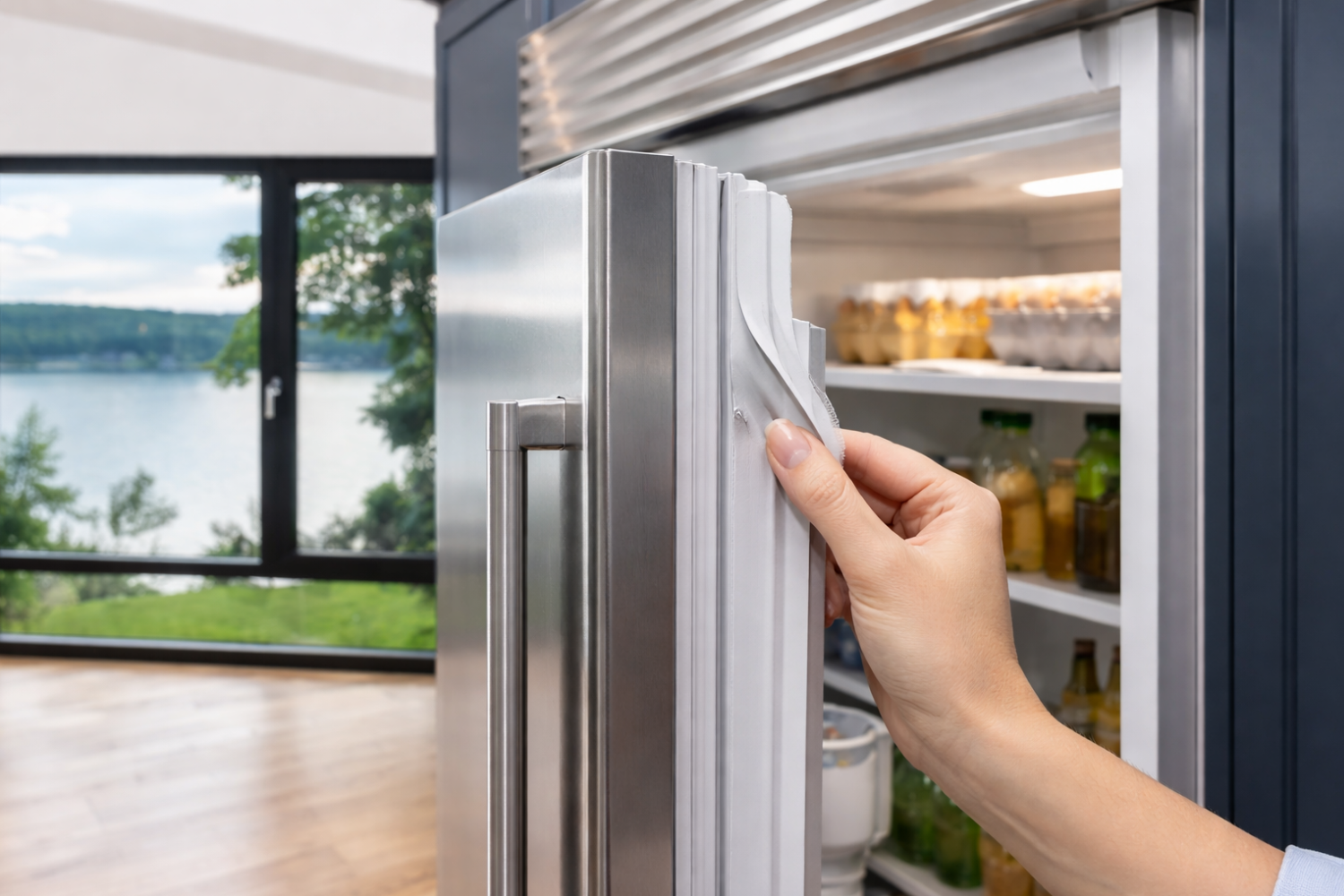
A torn, dirty, or loose door gasket can let cold air escape, forcing the cooling system to work harder. You may notice condensation inside the cabinet or a door that does not seem to close as firmly as it should. Wipe the seals with warm water, check for gaps or damage, and make sure the door closes evenly.
4. Are You Blocking Airflow Inside the Refrigerator or Freezer?
Packing items tightly against the back wall or interior vents can restrict airflow and create uneven temperatures. Cold air needs room to move through the cabinet so food stays consistently cooled from shelf to shelf. Leave reasonable space around vents and avoid overloading shelves to ensure cold air circulates more evenly through the unit.
5. Are You Replacing the Water Filter on Time?
An overdue water filter can affect water flow, ice quality, and overall performance. Many people forget about this part of Sub-Zero maintenance until the dispenser slows down or the ice seems off. Replace the water filter according to the schedule for the model, or when the filter indicator indicates it is due. Many Sub-Zero refrigerator filters are replaced about once a year or every 750 gallons, though some specialty ice-maker models use a shorter interval.
6. Have You Checked for Frost, Moisture, or Condensation?
Finding puddles of water inside the fridge can point to a failing door seal, blocked airflow, or another performance issue. Small drops of condensation may not seem serious at first, but recurring frost deserves attention. Recurring frost, standing water, or repeated condensation can point to airflow issues, drainage problems, seal trouble, or temperature-control concerns. Catching those signs early can help prevent a smaller problem from turning into a repair visit.
7. Are You Paying Attention to New Noises or Longer Run Times?
New rattling, grinding, or repeated clicking noises, along with unusually long run times, can signal a component, airflow, or temperature-control issue. A healthy unit will cycle on and off as needed, but a noticeable change in sound or run pattern should not be ignored. If the sound is new or the refrigerator seems to run much longer than usual, it is worth monitoring and scheduling service if the pattern continues.
8. Are You Cleaning the Interior and Checking Food Storage Habits?
Routine interior cleaning helps keep the refrigerator sanitary and makes spills easier to manage before they can turn into residue. Wiping down shelves and organizing drawers also makes it easier to keep vents clear and spot early signs of trouble. It also helps protect seals, drawers, and drainage areas from sticky debris and food particles.
9. Have You Scheduled Professional Service for Preventive Care?
Trained technicians understand the complex wiring and refrigeration components in a built-in system far better than most homeowners. Professional service can make sense when a unit is showing symptoms, after a move or remodel, or when a homeowner wants a model-specific inspection. Some providers offer yearly maintenance packages, but the right schedule depends on the model, usage, and condition of the appliance.
Signs Your Sub-Zero Needs Repair
Even with regular cleaning, a built-in Sub-Zero can develop issues that maintenance alone cannot resolve. Watch for these signs that the unit may need a professional diagnosis.
Keep an eye out for these red flags:
- Warm internal temperatures: The refrigerator cabinet feels noticeably warmer than usual.
- Soft frozen goods: The freezer fails to keep items like ice cream completely solid.
- Low ice production: Daily ice output drops dramatically or stops entirely.
- Excessive condensation: Thick moisture builds up inside the unit and reappears daily.
- Unusual mechanical noises: Loud grinding sounds come from behind the wall.
- Rapid food spoilage: Fresh produce and vegetables go bad faster than expected.
- Unusually long run times: The cooling system seems to run much longer than normal without reaching or holding the set temperature.
What Sub-Zero Refrigerator Maintenance is Safe at Home?
Several at-home maintenance tasks are safe as long as the work stays limited to cleaning, visual checks, and owner-approved basic care. Handling these routine checks can help protect the appliance and may reduce the chance of a preventable service call. Focus on these simple tasks:
- Clean the condenser coils: Remove dust and lint using the cleaning method shown in the owner’s guide.
- Verify temperature settings: Confirm the control panel matches the recommended setting for the model.
- Inspect and wipe door gaskets: Clean the seals and check for gaps, tears, or debris.
- Replace the water filter: Change the filter when the model’s schedule or replacement indicator says it is due.
- Clear the air vents: Keep vents and return-air paths free of containers and packaging.
- Monitor for warning signs: Watch for recurring frost, pooled water, warmer temperatures, or new noises.
What Should You Not Try to Fix Yourself
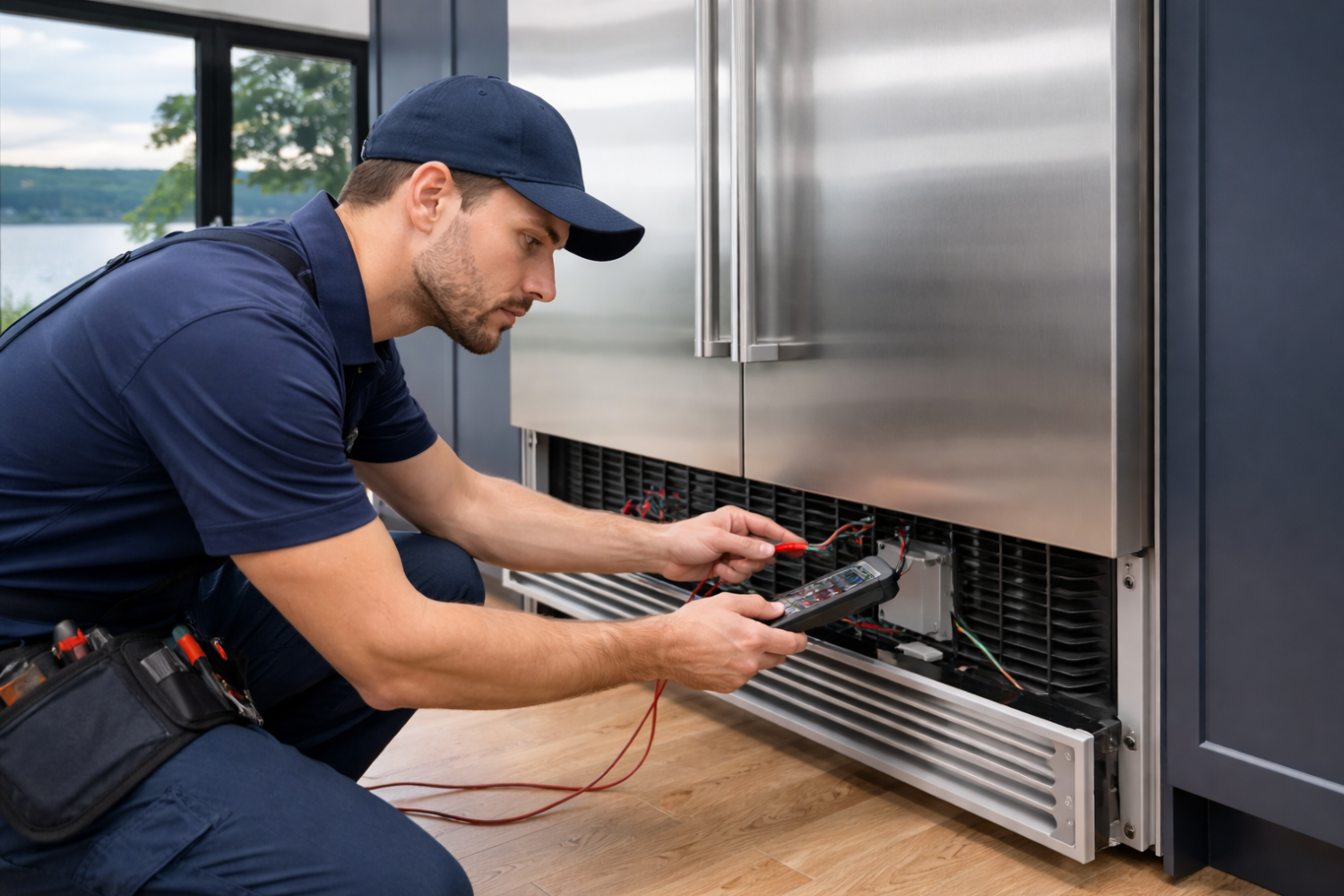
Do not try to repair control boards, fan motors, wiring, compressors, or sealed refrigeration components without the proper training and tools. DIY work on those parts can create safety risks, damage expensive components, and affect warranty coverage.
If a unit has serious cooling issues, electrical problems, or signs of a sealed-system fault, it is best to leave that work to a qualified technician. That helps protect the appliance and reduces the risk of worsening the problem.
When to Call the Experts for Sub-Zero Freezer Repair
Call a qualified technician when the unit will not hold temperature, when basic maintenance does not improve performance, or when frost, moisture, or unusual noises keep returning. Service is also worth scheduling when temperature swings continue after basic checks.
Schedule an expert visit if you experience any of the following:
- Basic maintenance did not help: Coil cleaning or other routine upkeep does not improve performance.
- Repeated frost buildup: Heavy ice returns to the back walls or freezer surfaces.
- Persistent warm temperatures: The interior does not stay consistently cold.
- Grinding, banging, or repeated clicking noises: The machinery begins making unusual sounds.
- Run times that seem unusually long: The motor keeps running longer than normal.
- Temperature swings that do not stabilize: The internal temperature keeps shifting without settling.
Frequently Asked Questions
How often should a Sub-Zero built-in refrigerator be serviced?
Start with the owner’s guide for the model. Many Sub-Zero condensers are cleaned every 6 to 12 months, with more frequent cleaning in homes with pets or heavier dust buildup. Professional service is usually symptom-based or model-specific, not a universal annual requirement.
What is included in Sub-Zero refrigerator maintenance?
At-home Sub-Zero refrigerator maintenance usually includes condenser cleaning, temperature checks, gasket cleaning, airflow checks, and water-filter replacement on the model’s schedule.
How do I clean condenser coils on a Sub-Zero built-in unit?
On many built-in models, the condenser sits behind the top grille. Use the owner-approved cleaning method, typically a soft brush and vacuum, and take care not to bend the fins.
What are the signs my Sub-Zero needs professional service?
Service may be needed when the unit will not hold temperature, develops repeated frost or moisture, runs much longer than usual, or makes new grinding or clicking noises.
Can regular maintenance help a Sub-Zero refrigerator last longer?
Regular maintenance can support efficient operation and may reduce avoidable strain on the cooling system, but it should not be treated as a guarantee of a specific lifespan.
Schedule Built-In Sub-Zero Maintenance and Service With Wilshire
Routine home care and timely professional service can help protect a Sub-Zero built-in refrigerator over time. Wilshire Refrigeration services premium refrigeration systems and can inspect issues such as temperature instability, repeated frost, unusual noises, and airflow concerns.
If you are ready to schedule Sub-Zero maintenance or repair, Wilshire Refrigeration is prepared to help.