Quick Navigation
Table of Contents
Click To Expand
Quick Navigation
Table of Contents
Click To Expand
You open the appliance expecting sparkling glasses but pull out cloudy, chalky messes instead. It is beyond frustrating. That chalky film completely ruins the look of your dishes and usually points to an underlying issue with the machine. If your dishwasher is leaving white residue, the problem is often easier to fix than you might expect.
Many homeowners quickly resolve these issues by tweaking daily routines. Others eventually rely on the factory-certified experts at Wilshire Refrigeration to restore these luxury units to peak performance. Let us figure out exactly what is coating your glassware so you can choose the right repair.
FACTORY-CERTIFIED APPLIANCE REPAIR
Luxury Appliance Trouble? Get Expert Help Fast.
From premium refrigeration to high-end kitchen appliances, our factory-certified team delivers trusted diagnosis and repair with the professionalism your home deserves.
What Is the White Residue on Dishes?
It helps to know exactly what you are dealing with before trying to clean the machine. The white residue on dishes is typically leftover hard water minerals, undissolved detergent, or greasy buildup from inside the tub. Knowing the difference between these substances helps you stop the problem at its source. Testing the cloudy surface reveals exactly what the appliance left behind.Is It Hard Water Residue?
Hard water naturally leaves behind dissolved minerals when the water evaporates. This mineral deposit often causes cloudy drinking glasses, chalky dinner plates, and tough white spots that feel slightly rough to the touch.Is It Dishwasher Soap Residue?
Dishwasher soap residue frequently occurs when you use far too much detergent for a small load of dishes. This thick, sticky film also forms when cold water fails to fully dissolve the soap tablet during the main wash cycle.Is It Glass Etching Instead of Residue?
Glass etching might look exactly like a cloudy film. However, it is actually permanent physical damage to the glass itself. You can easily test for etching by wiping a single drop of white vinegar on the surface. If the cloudiness disappears, it is just residue. If it stays cloudy, the glass is permanently scratched.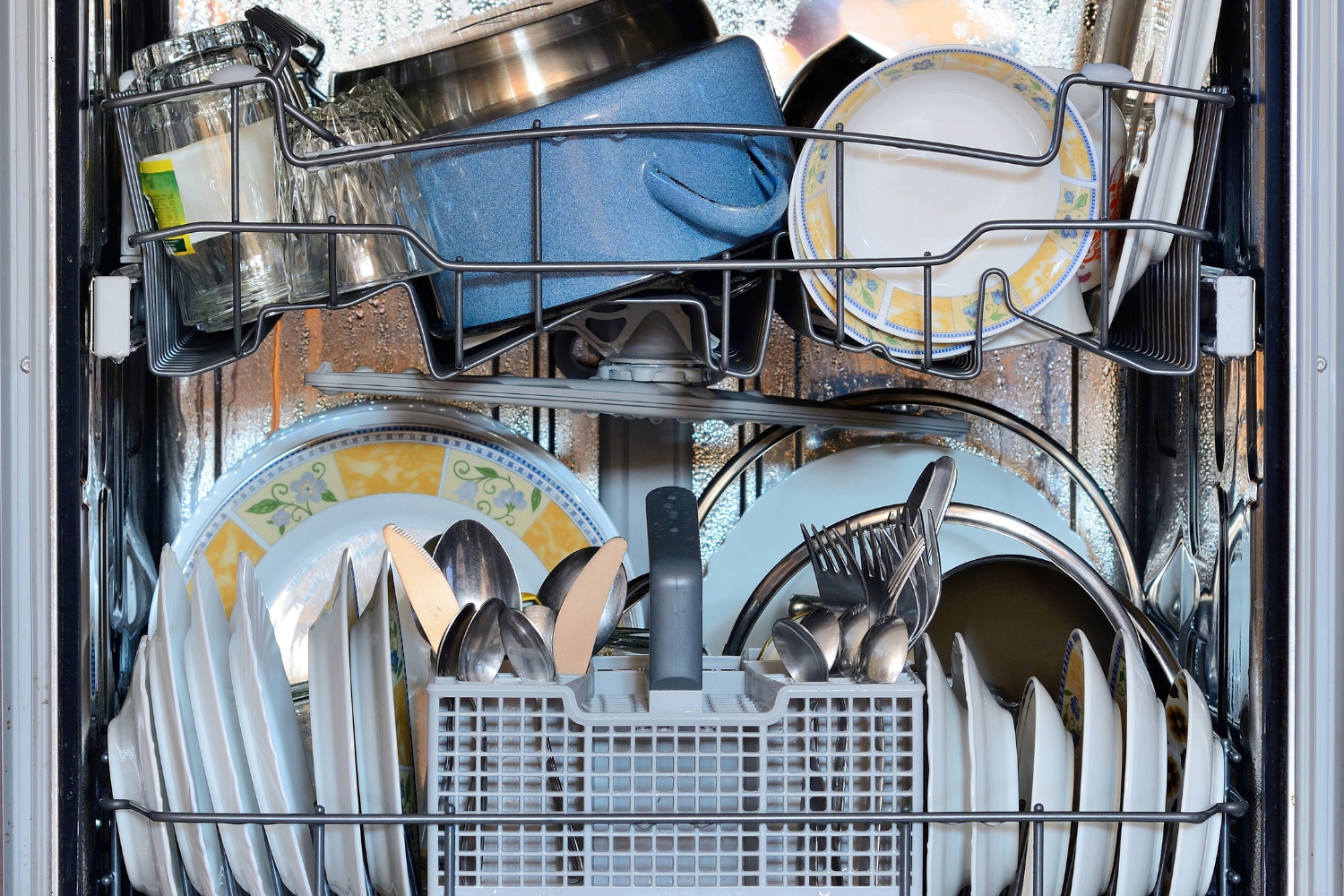
Why Is My Dishwasher Leaving White Residue?
- Hard water may be leaving mineral deposits: Homes with hard water have high levels of calcium and magnesium, which can stick to hot dishes and coat internal dishwasher parts with a chalky film.
- Too much detergent may be causing soap buildup: Adding extra detergent can make the problem worse, especially in homes with soft water. The dishwasher may not rinse away the excess soap, leaving a sticky film behind.
- The rinse aid dispenser may be empty: Rinse aid helps water slide off plates, glasses, and utensils. Without it, dishes are more likely to come out with spots, streaks, or cloudy residue.
- The dishwasher may be overloaded: Packing the racks too tightly blocks water and detergent from moving freely. Crowded dishes can shield each other from the spray arms, preventing a clean rinse.
- The dishwasher filter may be dirty: A clogged filter can trap old food debris and send dirty water back through the wash cycle, leaving gritty or greasy white residue on clean dishes.
- The spray arms may be clogged: Hard water minerals and small food particles can block the spray arm holes. When water pressure cannot evenly reach the dishes, some areas may come out unwashed.
- The water may not be hot enough: Cool water may not fully dissolve detergent pods or powder, which can leave a thick white residue after the drying cycle.
Is White Residue on Dishes Harmful?
It is completely normal to worry about the safety of the plates you eat from. Many people ask if white residue on dishes is harmful to a household. Hard water residue is generally harmless in small amounts because it consists of natural minerals. However, plates coated in sticky soap residue, old food particles, or greasy buildup need to be washed again before you use them. Even if the cloudy film is not toxic, it is a clear warning sign that the machine is failing to clean or rinse your items properly.FACTORY-CERTIFIED APPLIANCE REPAIR
Luxury Appliance Trouble? Get Expert Help Fast.
From premium refrigeration to high-end kitchen appliances, our factory-certified team delivers trusted diagnosis and repair with the professionalism your home deserves.
How Do You Get Rid of White Residue in the Dishwasher?
You can easily remove dishwasher white residue by adjusting your soap routine and cleaning the internal components. These simple DIY steps save you time and quickly solve most common rinsing problems. Try these basic maintenance tasks before you pick up the phone to call a professional.Use Less Detergent
Reduce the amount of detergent you use. This is especially important if you buy pre-measured pods or live in a home with soft water. Using less soap makes it much easier for the machine to rinse the plates completely clean.Add Rinse Aid
Check the rinse aid dispenser located next to the soap cup and fill it to the maximum line. Adding this liquid actively helps the water sheet off the dishes and prevents hard mineral spots from forming.Clean the Dishwasher Filter
Pull the main filter out of the bottom tub and scrub it under hot water with a soft brush. Regular filter cleaning greatly improves water circulation and ensures the machine rinses with clean water.Run a Dishwasher Cleaning CycleBuy a dedicated commercial dishwasher cleaner to strip away grease and hard-water buildup from the interior tub. You can also check the owner’s manual to see if running a blank cycle with white vinegar is safe for your specific model.Clear the Spray Arms
Remove the spinning spray arms and use a toothpick to poke out any mineral buildup or trapped food debris. Clearing these tiny holes restores proper water pressure for a heavy rinse.Load Dishes With More Space
Leave plenty of breathing room between your plates and bowls when loading the bottom rack. The water needs enough space to move around each dish to wash the soap away.Check for Dishwasher Salt on Select Luxury Models
Some high-end dishwashers feature built-in water softeners that actively fight hard water deposits. These advanced premium systems require special dishwasher salt to function correctly and prevent cloudy glasses.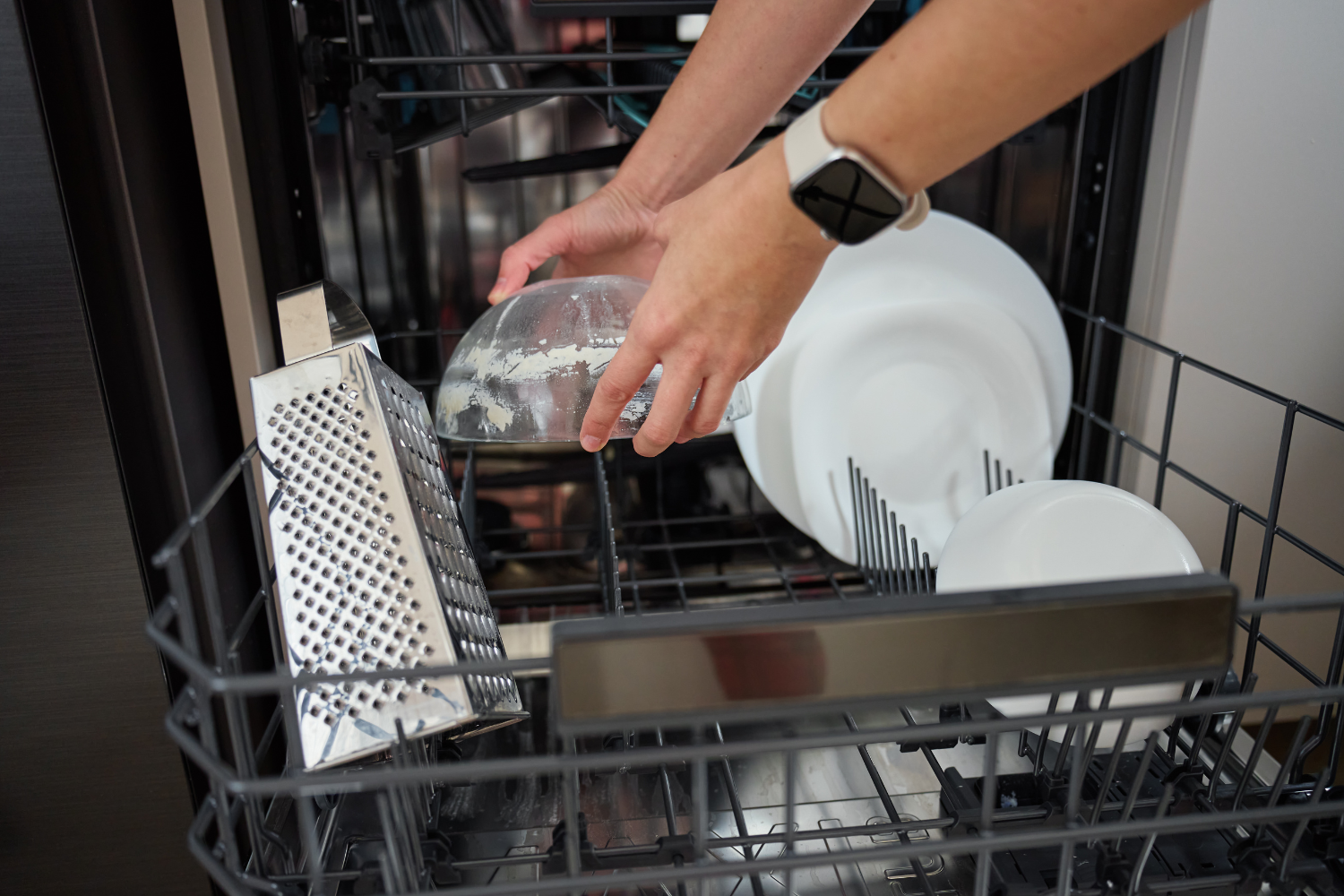
How Can You Prevent White Residue From Coming Back?
Preventing a dishwasher from leaving residue on dishes requires matching your cleaning habits to your local water quality. Consistent daily care stops hard minerals and leftover soap from building up inside the machine. Establishing a few basic routines keeps your glassware looking perfect.Match Detergent to Your Water TypeUse significantly less detergent if you have soft water flowing through your pipes. Consider buying a hard-water-friendly detergent to fight severe mineral deposits if your water is naturally hard.Keep Rinse Aid Filled
Make checking and refilling the rinse aid dispenser a strict monthly habit. Consistent use of rinse aid is the easiest way to keep your glasses completely clear.Clean the Filter Often
Schedule a quick routine filter check every two weeks to remove trapped food. A clean filter is the absolute best defense against dirty water recirculating and leaving a film.Avoid Overloading Every Cycle
Resist the urge to cram one more plate into a completely full rack. Better spacing directly leads to better water pressure and a much stronger final rinse.Schedule Service if Residue Keeps Returning
Stubborn residue that keeps coming back after a deep clean usually points to a deeper mechanical failure. You need to schedule professional service if adjusting your soap and cleaning the filter fails to solve the problem.When Should You Call a Professional for Dishwasher White Residue?
Basic DIY fixes can solve many hard water and detergent problems, but some white residue issues point to a deeper mechanical problem. Call Wilshire Refrigeration for professional dishwasher service if:- Your dishwasher is not rinsing well: Poor rinsing can come from a clogged spray arm, a weak circulation pump, a low water fill valve, or a drainage problem. A technician can identify what is blocking proper water flow.
- Detergent remains after the cycle: A solid block of soap in the dispenser may mean the dispenser door is stuck, the water temperature is too low, or the wash system is failing.
- Your luxury dishwasher has water softener issues: Premium dishwashers may require precise salt levels, proper water hardness settings, and brand-specific care to operate correctly.
- White residue keeps coming back: Recurring chalky residue can be a sign of severe internal buildup, a failing heating element, or poor pump circulation.
- The issue continues after simple maintenance: If you already adjusted the detergent, refilled the rinse aid, cleaned the filter, and checked the loading pattern, the appliance may need a professional diagnosis.
FACTORY-CERTIFIED APPLIANCE REPAIR
Luxury Appliance Trouble? Get Expert Help Fast.
From premium refrigeration to high-end kitchen appliances, our factory-certified team delivers trusted diagnosis and repair with the professionalism your home deserves.
Frequently Asked Questions
Why is my dishwasher leaving white residue on dishes?
Your dishwasher may be leaving white residue due to hard water, excessive detergent, low rinse aid, poor rinsing, or buildup inside the appliance.
How do I stop dishwasher white residue?
Use less detergent, add rinse aid, clean the filter, check the spray arms, and avoid overloading the dishwasher.
Is white residue on dishes harmful?
Hard water residue is usually harmless in small amounts, but soap residue or food buildup should be rinsed or washed off.
Why is my dishwasher leaving soap residue?
Soap residue can happen when too much detergent is used, the water is not hot enough, or the dishwasher is not rinsing properly.
Can a broken dishwasher cause white residue?
Yes, a dishwasher with poor water flow, a clogged filter, a dispenser issue, or a heating problem may leave white residue on dishes.