Quick Navigation
Table of Contents
Click To Expand
Quick Navigation
Table of Contents
Click To Expand
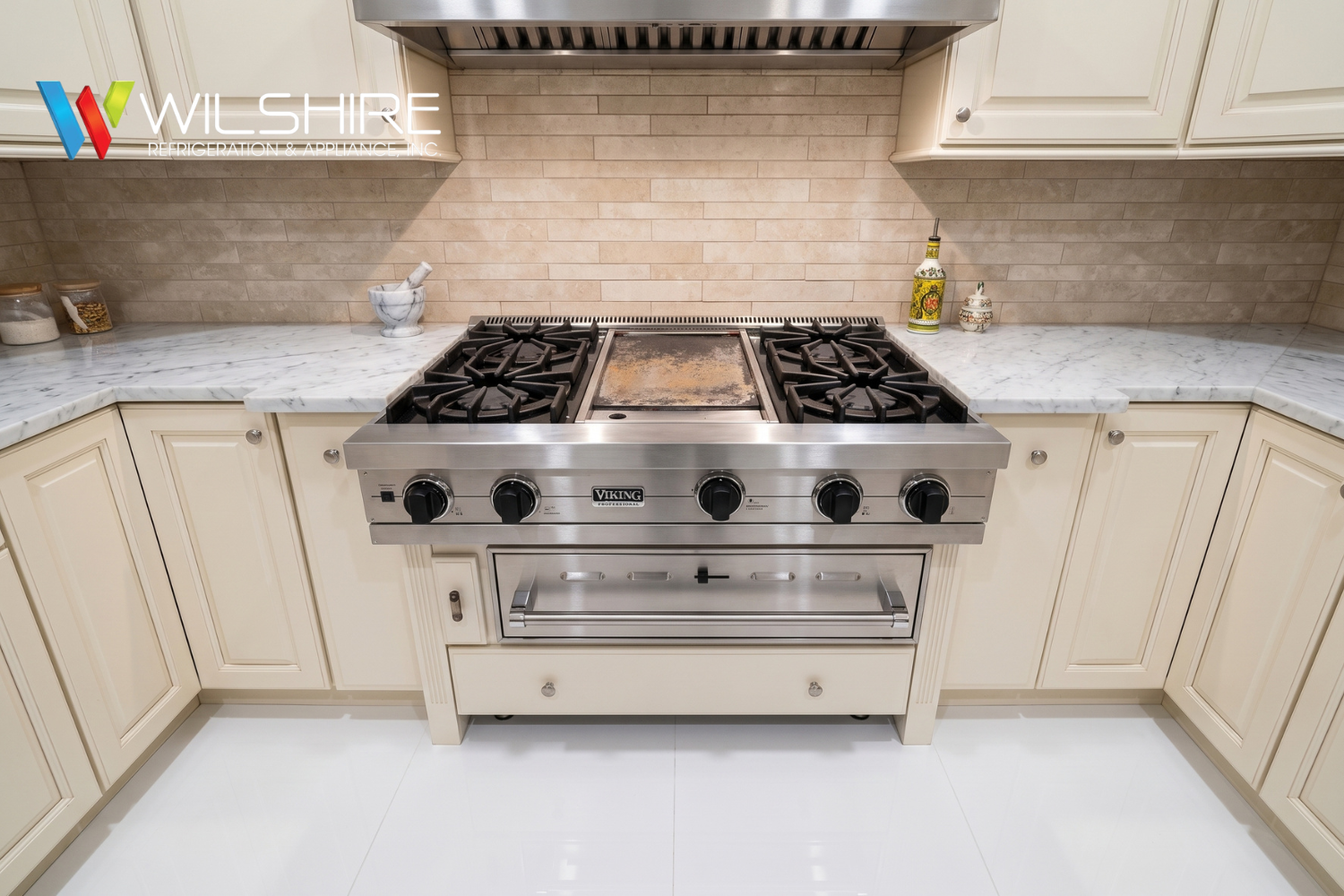
Does your Viking griddle look dull, sticky, or harder to clean than it used to? Proper care depends on your exact Viking stove and griddle type, so know that before reaching for oil, vinegar, or a scrubber. Viking gives different instructions for 5 Series and 7 Series griddles, and some 7 Series configurations have used chrome-plated griddles, while cast-iron options have also been available.
For example, Viking says the protective coating on a 5 Series griddle must be removed before initial seasoning, while a 7 Series griddle does not require that same preparation. Checking the model manual first can prevent unnecessary scrubbing or seasoning. Wilshire Refrigeration services Viking cooking appliances and can help when griddle problems go beyond routine cleaning.
FACTORY-CERTIFIED APPLIANCE REPAIR
Luxury Appliance Trouble? Get Expert Help Fast.
From premium refrigeration to high-end kitchen appliances, our factory-certified team delivers trusted diagnosis and repair with the professionalism your home deserves.
Why Should You Season a Viking Griddle?
Seasoning is important when Viking specifies it for the appliance’s griddle. On a 5 Series Viking range or rangetop, Viking instructs owners to remove the factory protective coating and apply a thin layer of unsalted vegetable oil before first use.The process prepares the cooking surface for use, but not every Viking griddle requires the same treatment. Always identify the series and griddle material first.Non-Stick Cooking Surface
A properly prepared griddle releases food more easily and is simpler to clean after cooking. The thin oil layer used during seasoning conditions the surface without leaving a heavy coating.More oil is not better. Viking specifies only about 1/2 to 1 teaspoon of unsalted vegetable oil for the entire 5 Series griddle during initial seasoning.Rust Prevention
Keeping an appropriate cast-iron surface clean and dry can help limit the moisture that encourages surface rust. This matters most when the specific Viking gas range or griddle accessory actually uses cast iron.Do not assume every built-in Viking griddle is cast iron. Viking has also offered chrome-plated griddles, so material-specific care should be found in the manual for the exact model.Enhanced Flavor Retention
Seasoning primarily prepares and protects the cooking surface. Don’t treat it as a layer of old food or cooking grease that needs to stay on the griddle.Clean away cooked-on residue after use rather than letting it build up. Good griddle care focuses on maintaining the cooking surface, not on accumulated food deposits.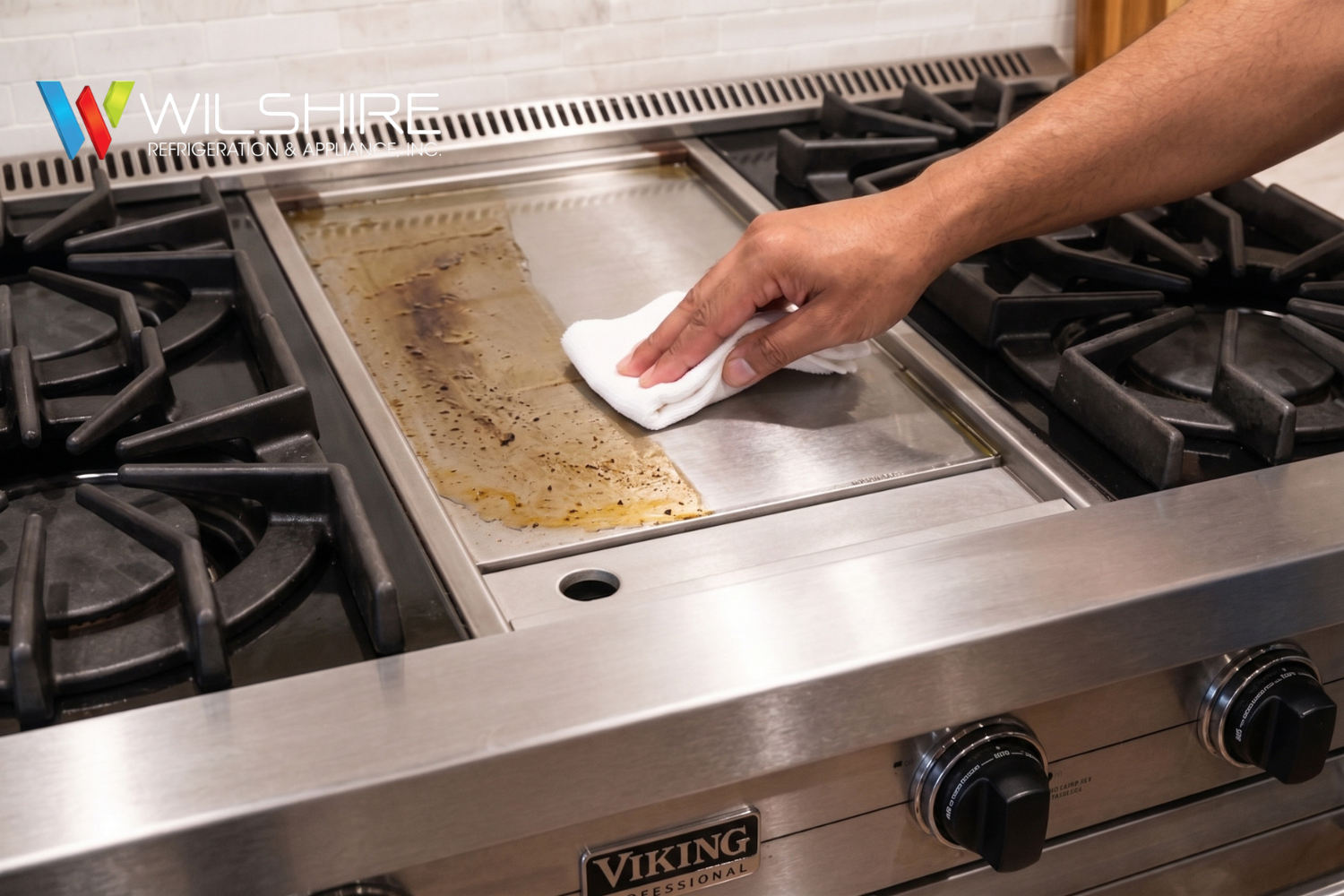
How Do You Season a Viking Griddle?
A 5 Series Viking griddle should be prepared according to Viking’s initial-seasoning procedure before first use. The manufacturer calls for removing the protective coating, washing and drying the plate, and applying a very small amount of vegetable oil.
This procedure should not automatically be applied to every Viking cooktop, Viking gas cooktop, or griddle-equipped range because series and surface materials differ.
Initial Oil Coating
For a 5 Series range or rangetop, Viking first instructs owners to scrub the griddle with a solution of one quart of warm water and 1/4 cup of white vinegar using a blue Scotch-Brite pad. Then dry the plate, wash it with warm soapy water, rinse it, and dry it again.
Next, spread approximately 1/2 to 1 teaspoon of unsalted vegetable oil across the entire griddle with a clean cloth or paper towel. A thick, greasy layer is unnecessary.
Heating for Polymerization
Many general cast-iron guides use heat to create a polymerized oil layer, but Viking’s published 5 Series initial-seasoning instructions do not call for a separate high-heat polymerization step. Viking directs owners to let the thin layer of vegetable oil remain on the griddle for about one hour, then wipe away the excess.
Follow that model-specific process instead of applying a generic cast-iron method to a Viking stovetop without checking the manual.
Repeating for Stronger Layers
Viking’s initial 5 Series instructions do not require owners to repeat the oil application several times before using the griddle. One properly completed preparation process is enough to make the griddle ready for use according to the manufacturer’s published guidance.
If the surface later becomes damaged, sticky, rusty, or difficult to cook on, check the use and care manual before stripping or rebuilding the finish.
FACTORY-CERTIFIED APPLIANCE REPAIR
Luxury Appliance Trouble? Get Expert Help Fast.
From premium refrigeration to high-end kitchen appliances, our factory-certified team delivers trusted diagnosis and repair with the professionalism your home deserves.
How Do You Clean a Cast-Iron Griddle?
Clean a Viking griddle after cooking, following the instructions for the surface material and model. Viking directs owners to its Cleaning Tips guidance for everyday griddle cleaning, so aggressive cast-iron methods should not automatically be used on every griddle.Allow the cooking surface to reach a safe cleaning temperature before touching it, and avoid treating the surrounding porcelain, stainless steel, and burner components as part of the griddle.Scrape Food Residue While Warm
Loose food residue is usually easier to remove before it hardens. Use only a utensil or cleaning tool that is suitable for the specific griddle surface.Avoid sharp scraping methods unless Viking approves them for the model. A tool that is safe on bare cast iron may scratch the finish on another Viking griddle.Rinse with Hot Water
Follow the use and care instructions for the exact appliance. During initial 5 Series preparation, Viking specifically calls for warm, soapy water followed by rinsing and thorough drying.Do not flood the surrounding Viking gas stove controls, burners, igniters, or openings while cleaning the griddle.Apply Thin Oil Layer After Drying
If the model or cast-iron accessory requires an oil coating after cleaning, keep the layer very thin. Excess oil can leave the cooking surface greasy or sticky.For the initial seasoning of a 5 Series griddle, Viking specifies unsalted vegetable oil rather than a heavy coating of specialty seasoning products.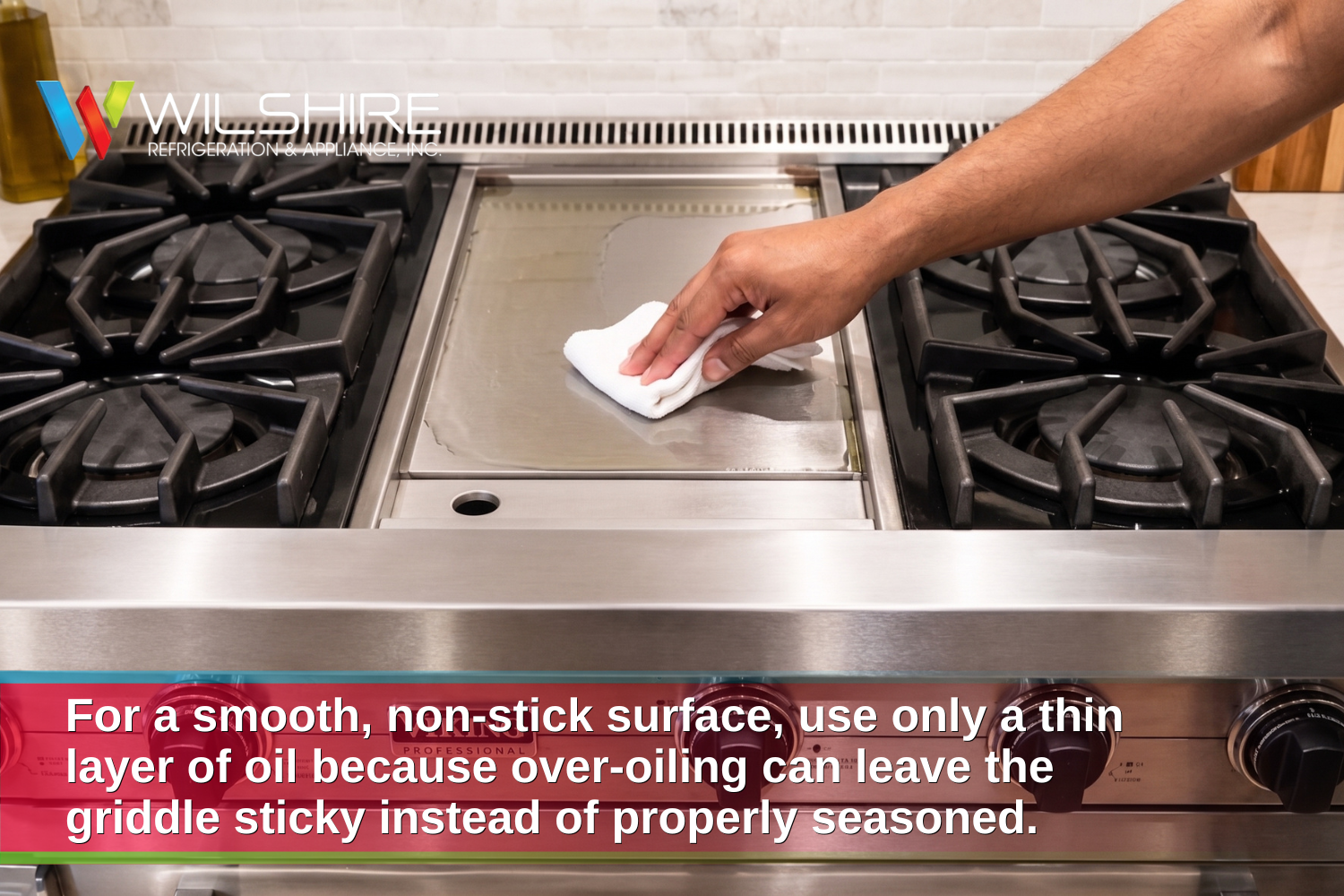
What Supplies Should You Use for Cleaning?
The safest supplies depend on the exact Viking range top and griddle material. Viking publishes model documentation and cleaning information for current and retired products, so check the manual before using abrasive tools or strong chemicals.Useful supplies may include:- Soft cloths or paper towels: Useful for wiping oil, moisture, and loose residue from an approved surface.
- Blue Scotch-Brite pad: Viking specifies this for removing the protective coating during the initial preparation of a 5 Series griddle.
- White vinegar: Viking uses a measured vinegar-and-water mixture during initial 5 Series griddle preparation, not as a universal everyday cleaner.
- Warm soapy water: Part of Viking’s initial cleaning procedure after the protective coating is removed.
- Unsalted vegetable oil: Viking recommends a small amount for initial 5 Series griddle seasoning.
- Model-approved scraper or cleaning tool: Confirm compatibility before using metal, stiff, or abrasive tools.
How Do You Maintain a Viking Griddle Long-Term?
Long-term griddle care comes down to promptly cleaning residue, keeping the surface dry, and following the instructions for your specific Viking model. Routine care should preserve the cooking surface rather than repeatedly stripping and rebuilding it.
This approach works well for a heavily used Viking professional stove or other professional range where the griddle is used frequently for cooking.
Regular Seasoning Touch-Ups
Touch up seasoning only when the griddle material and model instructions call for it. Viking specifically distinguishes between its 5 Series, which requires an initial seasoning procedure, and 7 Series griddles that do not.
If the surface starts sticking or develops unusual discoloration, first determine whether the issue is normal residue, damaged seasoning, or a different griddle finish.
Avoiding Harsh Detergents
Avoid using a powerful cleaner simply because food residue is difficult to remove. Viking provides different cleaning procedures for stainless steel, porcelain, burner components, ceramic surfaces, and griddles, which means one cleaner is not suitable for every part of the range.
Keep chemical cleaners away from surfaces unless the product manual or Viking cleaning guidance approves them.
Proper Storage in Dry Conditions
A built-in griddle does not need conventional storage, but it should be left clean and dry between uses. If the appliance has a removable cast-iron accessory, store it according to its product instructions.
Keeping moisture off exposed iron surfaces can reduce the chance of surface rust.
Can Incorrect Care Damage the Griddle?
Yes. Using the wrong abrasive, cleaner, seasoning process, or moisture level can affect the griddle surface. The risk is one reason Viking provides separate use and care documentation for specific Viking ranges and rangetops.Check the model before attempting to correct discoloration or using an aggressive cleaning method.Loss of Seasoning Layer
Heavy scrubbing or using an unsuitable chemical can remove an oil-conditioned surface when seasoning is required. On the other hand, applying cast-iron seasoning methods to a surface that doesn’t need them can also cause problems.A 7 Series griddle, for example, does not require the same initial seasoning procedure as a 5 Series griddle.Rust Formation
Rust can develop on exposed iron when moisture remains on the surface. If a cast-iron Viking accessory develops light rust, do not automatically use a harsh rust remover near the cooking appliance.Check the component instructions first. Deep corrosion, flaking, cracking, or extensive surface damage may warrant a professional evaluation.Uneven Cooking Performance
Food cooking unevenly across the griddle is not always a cleaning issue. Heavy residue can affect surface contact, but heating problems can also involve the griddle controls, burner, thermostat, or other components.If cleaning does not correct the problem, repeated seasoning is unlikely to fix a mechanical fault.
Should You Call a Professional for Griddle Issues?
Professional service is warranted when the griddle does not heat properly, temperature control is inconsistent, ignition problems occur, or the surface appears physically damaged. Those conditions go beyond normal wiping and seasoning.Wilshire Refrigeration provides Viking repair and maintenance for ranges, cooktops, ovens, and other Viking appliances.Deep Cleaning Services
Routine surface cleaning is usually a homeowner task, but burned residue around internal heating components or inaccessible areas may need more careful attention.Avoid disassembling gas or electrical components to clean beneath the griddle. A technician can inspect areas that are not intended for normal user access.Inspection for Damage
Cracks, severe corrosion, heating failures, damaged controls, or recurring ignition problems warrant professional inspection. A technician can determine whether the concern is limited to the griddle surface or involves the appliance underneath.This distinction is especially important on premium Viking kitchen appliances, where griddles may be integrated into the range or rangetop rather than used as a separate pan.Expert Maintenance Tips
A technician can also confirm the model and identify the appropriate cleaning procedure for the installed griddle. That can be useful when manuals have been lost or when a kitchen contains an older Viking appliance.Wilshire Refrigeration states that its Viking service includes factory-trained technicians, diagnostics, maintenance, and repairs for Viking cooking products.FACTORY-CERTIFIED APPLIANCE REPAIR
Luxury Appliance Trouble? Get Expert Help Fast.
From premium refrigeration to high-end kitchen appliances, our factory-certified team delivers trusted diagnosis and repair with the professionalism your home deserves.
Frequently Asked Questions
What oil should I use to season a Viking griddle?
Viking recommends a thin coating of unsalted vegetable oil for the initial seasoning of a 5 Series griddle.
How often should I season my Viking stove griddle?
There is no universal Viking seasoning schedule, so follow the manual for the specific griddle and remember that 7 Series griddles do not require the 5 Series initial-seasoning process.
Can I use soap to clean a cast-iron griddle?
Viking uses warm soapy water during initial 5 Series griddle preparation, but routine cleaning should follow the instructions for your specific griddle surface.
Why does my Viking griddle develop rust spots?
Rust can form on exposed cast-iron surfaces when moisture remains on the metal, so clean and dry the griddle according to the model instructions.
How do I restore a griddle that lost its seasoning?
First, identify the Viking model and griddle material, then follow the manufacturer’s care procedure rather than applying a generic cast-iron restoration method.