Quick Navigation
Table of Contents
Click To Expand
Quick Navigation
Table of Contents
Click To Expand
A Lacanche range is built to be cooked on, but careful maintenance helps keep its enamel, burners, ovens, and specialty surfaces in good condition. A Lacanche combines materials such as porcelain enamel, stainless steel, cast iron, brass, and aluminum, so no single cleaner or maintenance method suits every part. Lacanche publishes separate care guidance for cooktops, burners, ovens, induction zones, planchas, and other components.
Regular cleaning can be done at home, while ignition faults, electrical problems, gas issues, and internal component failures require professional attention. Wilshire Refrigeration lists Lacanche among the luxury appliance brands it services in Southern California and Las Vegas. Good maintenance starts with knowing which jobs fall under normal kitchen care and which require a trained technician.
FACTORY-CERTIFIED APPLIANCE REPAIR
Luxury Appliance Trouble? Get Expert Help Fast.
From premium refrigeration to high-end kitchen appliances, our factory-certified team delivers trusted diagnosis and repair with the professionalism your home deserves.
Why Does Proper Maintenance Matter?
Proper maintenance keeps a Lacanche range cleaner, easier to use, and more predictable during cooking. It also gives small changes in ignition, oven temperature, or burner performance a better chance of being noticed before they develop into a larger problem.
Lacanche builds its ranges with stainless steel, cast iron, and baked porcelain enamel, while many components remain removable for cleaning and service.
Preserving Performance
Cleaning food, grease, and spills from burners and cooking surfaces helps keep normal operation easier to monitor. Lacanche gas burners have removable brass caps, cast-aluminum burner bodies, and enameled cast-iron grates that can be cleaned separately.
If a burner begins clicking repeatedly, ignites slowly, or develops an unusual flame pattern after the visible parts have been cleaned and properly seated, the problem may require service rather than more scrubbing.
Extending Lifespan
No single cleaning step guarantees how long a French range will last. Long-term condition depends on use, installation, cleaning habits, ventilation, repairs, and the exact configuration.
Lacanche does emphasize durable materials and continued component compatibility across product generations. Regular care can support that design by reducing baked-on residue, corrosion risks, and damage from unsuitable cleaning products.
Protecting Investment
A premium French stove includes finishes and cooking components that the wrong cleaner can damage. Chlorine-based products can harm stainless steel, while abrasive, acidic, chlorinated, or strongly alkaline cleaners should not be used on decorative handles and finishes.
Following material-specific care is less costly than trying to correct damaged trim, scratched surfaces, or neglected cooking components later.
How Should You Clean a Lacanche Range?
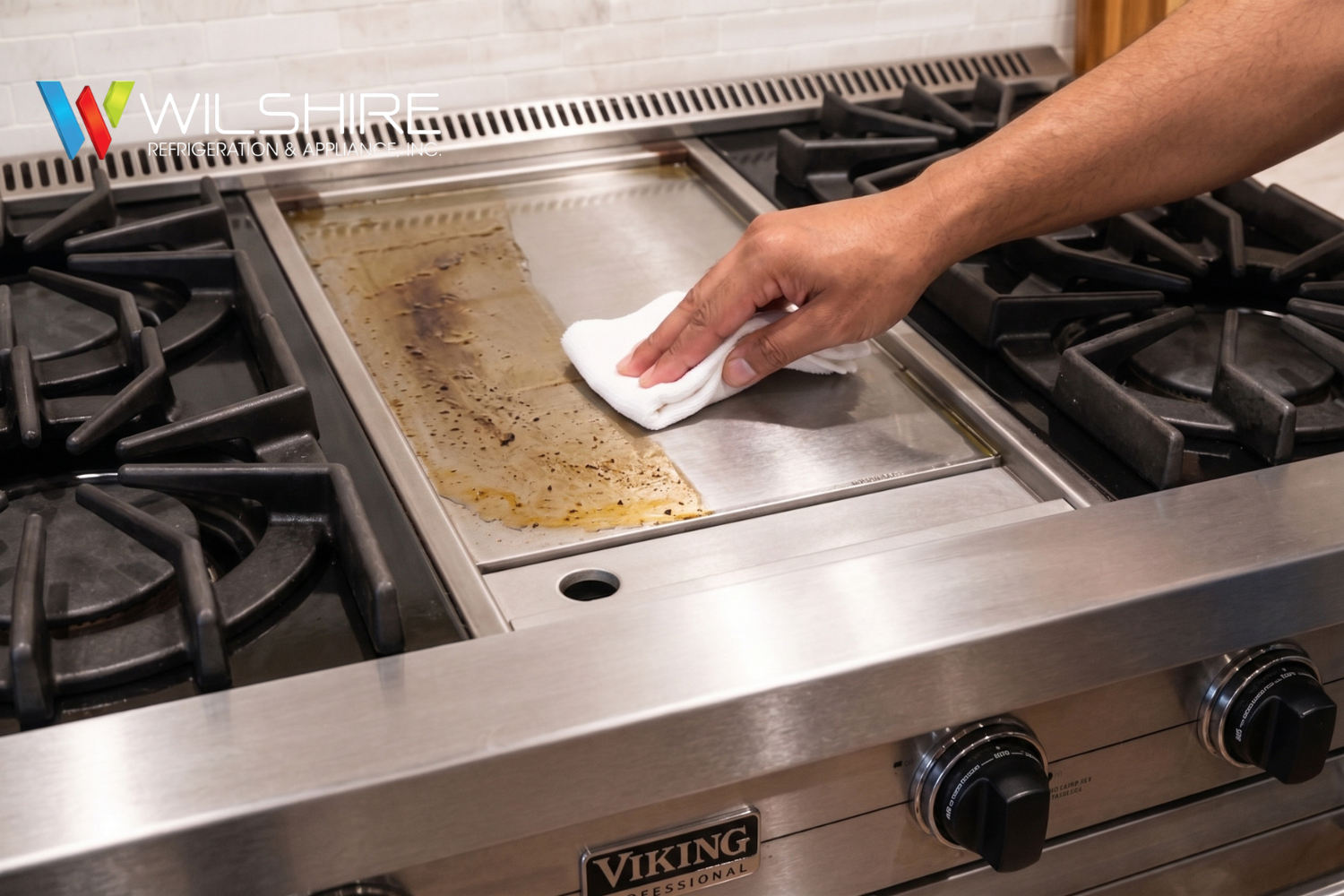
Clean a Lacanche range based on the material you’re cleaning. Enamel, stainless steel, brass, oven interiors, burner parts, glass-ceramic surfaces, and specialty cooking zones all have different care needs.Start with the mildest manufacturer-approved method and move to stronger cleaning only when the Lacanche guidance for that surface allows it.Caring for Enamel Surfaces
Lacanche porcelain enamel can usually be cleaned with warm water and nonabrasive dish soap applied with a damp cloth or sponge. The manufacturer also lists glass cleaner, alcohol, or white vinegar as suitable options for enameled surfaces.Wipe up spills before reheating, as they bake onto the surface. Avoid treating the enamel like unfinished metal with aggressive scouring tools.Maintaining Brass and Stainless Steel
Brass and stainless steel need different care. Lacanche says decorative handles and finishes can be cleaned with nonabrasive dish soap and warm water, while brass finishes may be polished with a copper polishing paste when needed.Never clean the stainless steel cooktop with chlorine-based products. Mild dishwashing detergent and warm water are appropriate for routine cleaning, while manufacturer-approved stainless steel cleaning methods can be used when grease has accumulated.Brass burner caps naturally develop a patina from heat and oxygen. Lacanche notes that this color change is normal, and the caps can be cleaned with soap or other methods listed in its burner-care guidance.Oven and Cooktop Cleaning
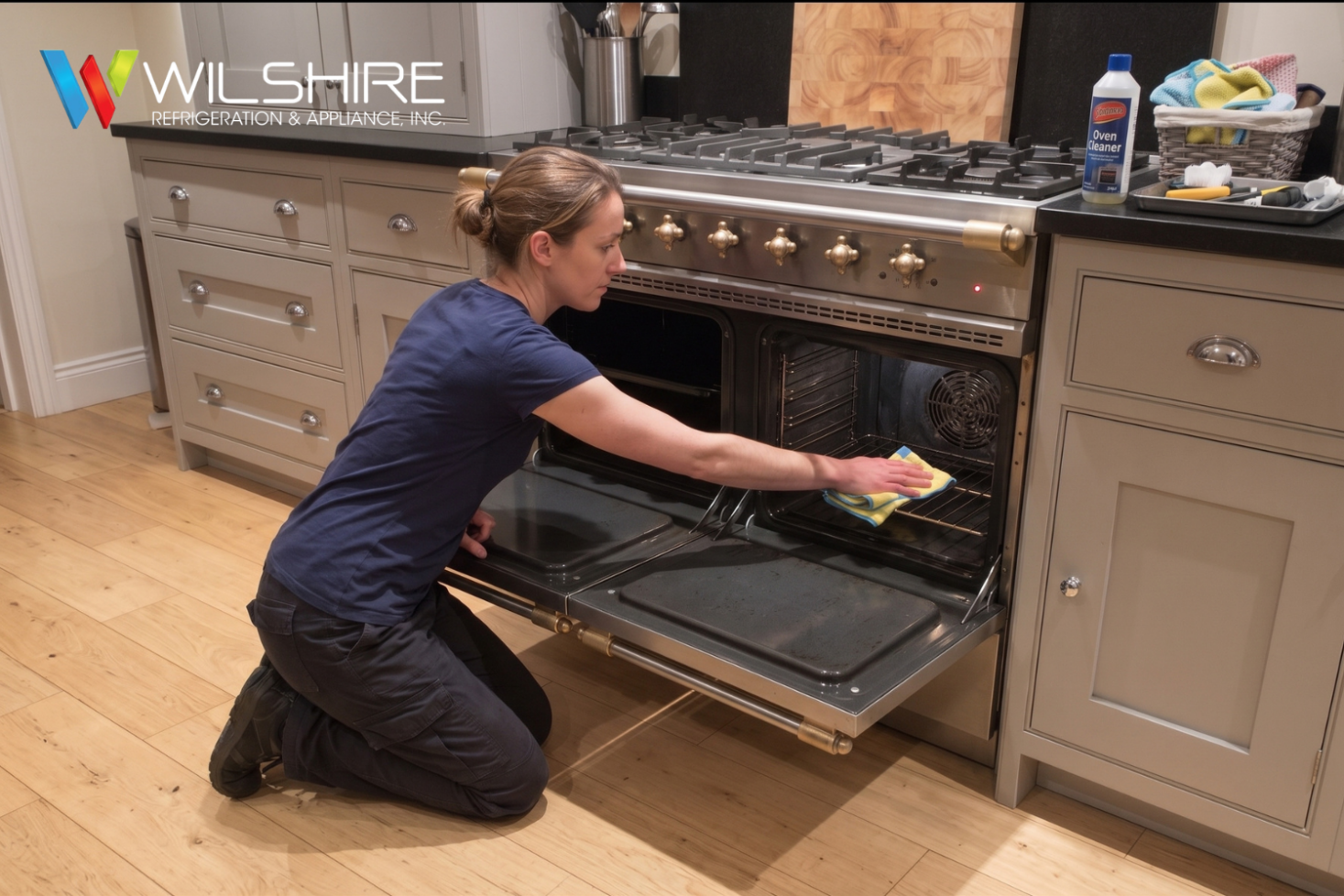
A Lacanche oven uses a porcelain-enamel interior rather than a high-temperature self-cleaning system. Lacanche recommends a natural soap-based detergent and suitable cleaning tools, and removable side panels can be placed in a dishwasher.For stubborn oven residue, Lacanche provides a deeper-cleaning method using baking soda, water, and white vinegar, followed by controlled heating and cleaning. Follow that published procedure instead of experimenting with harsh oven chemicals.You can clean the stainless cooktop with a nonabrasive sponge and soapy water. Tougher grease may be treated with an appropriate stainless steel cleaning sponge, but aggressive pads and chlorine-based products can permanently damage the surface.FACTORY-CERTIFIED APPLIANCE REPAIR
Luxury Appliance Trouble? Get Expert Help Fast.
From premium refrigeration to high-end kitchen appliances, our factory-certified team delivers trusted diagnosis and repair with the professionalism your home deserves.
What Routine Checks Keep It Running Smoothly?
Routine checks should focus on visible operation rather than taking apart gas or electrical systems. Watch how the Lacanche stove behaves during normal use, and note any changes that persist after basic cleaning.
Useful checks include:
- Inspect burner ignition and flame stability: Watch for delayed ignition, repeated clicking, or a flame that behaves differently after you clean the burner cap and body and position them correctly. Lacanche burners use electric ignition and an independent thermocouple safety system.
- Check oven temperature performance: Preheat the oven properly and note any recurring cooking problems or a large temperature discrepancy that doesn’t resolve after normal use. Lacanche recommends preheating above the target temperature for 10 to 15 minutes before reducing to the desired setting.
- Examine seals, doors, and visible hardware: Look for loose components, damaged seals, poor door closure, or any changes from normal operation.
- Note ignition switch or spark problems: Do not open the appliance to test spark modules or internal switches. Document repeated clicking, failure to spark, or unusual ignition behavior for service.
- Review ventilation performance: Keep the range hood clean and ensure it operates properly. Lacanche states that its high-performance gas ranges should be used under a suitable canopy hood.
Which Accessories Require Special Care?
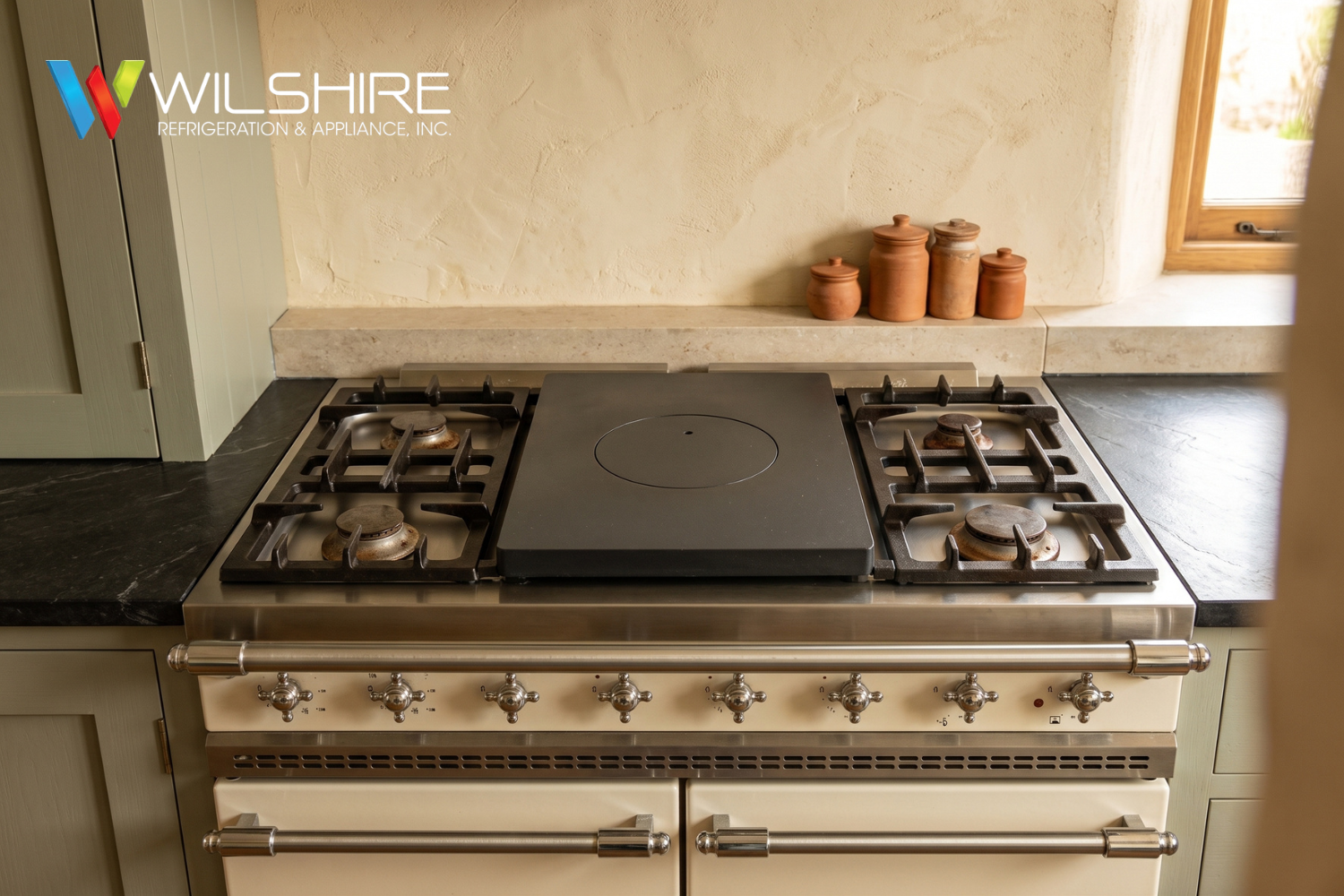
Maintain specialty Lacanche cooking modules according to the material and heating method used. A French cooking suite may include a Traditional French Top, plancha, induction zones, radiant burners, a multicooker, a grill, or other options, depending on the model.
Do not apply the cleaning method for one accessory to another without checking the Lacanche guidance.
French Plate and Plancha
The Traditional French Top is made from enameled cast iron and sits over a powerful gas burner. Cast iron retains heat for a long time, so let the plate cool before cleaning or handling the removable center.
The Lacanche plancha features a chrome-plated stainless-steel cooking surface with an integrated thermostat. Because that surface differs from unfinished cast iron, avoid applying generic cast-iron seasoning advice to the plancha. Use the Lacanche cleaning instructions for the specific plancha instead.
Multicooker and Induction Options
The Lacanche multicooker uses a stainless-steel pan and a water-supply system for steaming, boiling, warming, and bain-marie cooking. This option requires a water connection, so inspect for unusual filling, drainage, or water-level behavior rather than disassembling the appliance to correct it.
Induction zones use a ceramic surface and require cookware with a ferritic base. Clean the glass once it is safe to touch and avoid tools that can scratch or damage the surface.
Radiant glass-ceramic burners have separate care guidance. Lacanche allows the use of household degreaser, white vinegar, or baking soda and water for certain spills, and warns that heated sugar can become permanently bonded to the glass.
Flame Grill and Oven Racks
Lacanche offers both gas and electric flame grills in selected configurations. Remove food and grease after the cooking surface has cooled enough to clean safely, and follow the product instructions for removable grill components.
The French oven range uses removable oven supports and accessories that can make cleaning easier. Lacanche states that removable enameled oven side walls may be cleaned in a dishwasher.
When Should You Call for Professional Service?
Professional service is appropriate when a Lacanche range has persistent ignition faults, unstable heating, gas concerns, electrical problems, or a component that requires internal access. Routine cleaning is different from diagnosis and repair.
Wilshire Refrigeration & Appliance, Inc. lists Lacanche range repair among its luxury appliance services.
Persistent Ignition Issues
A burner that still will not ignite after the removable parts are clean, dry, and correctly seated may have an ignition or control problem.
Lacanche gas burners combine electric ignition with thermocouple flame-safety controls. Leave internal ignition diagnosis to a qualified technician rather than repeated disassembly.
Electrical or Gas Connection Concerns
Stop using the affected portion of the range if you suspect a gas leak, damaged wiring, unusual electrical behavior, or another condition that could create a safety concern.
Gas adjustment and electrical repairs require appropriate training. Lacanche also notes that burner adjustment may be needed in certain installation conditions, such as higher elevations, which is another reason to treat burner calibration as technical work.
Complex Part Replacements
Knobs, grates, and other simple removable pieces differ from thermostats, ignition components, wiring, gas valves, and internal oven parts.
Use the model information and Lacanche technical documentation when a component needs to be replaced. Lacanche maintains manuals and technical resources for its ranges and hoods. A professional technician can identify the correct part and determine if another fault caused the original failure.
What Are Common Mistakes to Avoid?
The biggest maintenance mistakes are using the wrong cleaner, overlooking performance changes, and turning simple cleaning into unnecessary appliance disassembly.
A French stove range combines several materials and cooking systems into one appliance, so cautious, model-specific care is important.
Using Harsh Chemicals
Do not assume a powerful cleaner is better. Lacanche specifically warns against chlorine-based cleaners on stainless steel and against abrasive, acidic, chlorinated, or strongly alkaline products on decorative handles and finishes.
Use the cleaning method listed for the actual surface.
Ignoring Small Repairs
A delayed burner, loose control, poor door closure, or an oven that repeatedly cooks differently from normal deserves attention.
A small change does not automatically mean an expensive repair is coming, but documenting the problem early gives a technician more useful information if service becomes necessary.
Overlooking Seasonal Maintenance
Lacanche’s public support guidance does not publish a universal seasonal service interval for every range configuration. Instead of inventing a spring or fall schedule, base routine care on cooking frequency, visible condition, performance changes, and the instructions for the exact model.
A heavily used French oven range may need cleaning and checks more often than one used only occasionally.
FACTORY-CERTIFIED APPLIANCE REPAIR
Luxury Appliance Trouble? Get Expert Help Fast.
From premium refrigeration to high-end kitchen appliances, our factory-certified team delivers trusted diagnosis and repair with the professionalism your home deserves.
Frequently Asked Questions
How often should a Lacanche range be professionally serviced?
Lacanche does not publish a universal professional-service interval, so schedule service when performance changes, a fault appears, or the model documentation calls for technical attention.
What cleaning products are safe for enamel finishes?
Lacanche recommends nonabrasive dish soap and warm water for routine enamel care, and also lists glass cleaner, alcohol, or white vinegar as suitable options.
Can I replace Lacanche parts myself?
Simple removable accessories may be owner-managed, but repairs to gas, ignition, electrical, thermostat, and internal components should be handled by a qualified service technician.
How do I maintain brass trim without tarnishing?
Clean brass gently with nonabrasive dish soap and warm water, and use an appropriate copper polishing paste for a polished finish.
What’s the best way to protect a Lacanche during remodeling?
Keep construction dust, paint, debris, and tools away from the appliance, avoid using the range as a work surface, and follow Lacanche installation documentation before utilities or cabinetry are changed.