Quick Navigation
Table of Contents
Click To Expand
Quick Navigation
Table of Contents
Click To Expand
A BlueStar oven that won’t light almost always comes down to a weak glow-bar igniter. A healthy igniter glows bright orange-white and draws about 3.2 to 3.6 amps. When it weakens with age, it may still glow but cannot pull enough current to open the gas safety valve, so no gas flows and the burner never lights.
Replacing the igniter fixes most no-light ovens on a BlueStar range. Below is how to check the simple stuff, test the igniter the right way, and know when the problem is something bigger, at which point it is time to call a certified appliance repair professional like Wilshire Refrigeration.
Quick Answer
Why Your BlueStar Oven Won’t Light
Your BlueStar oven won’t light because the igniter has aged and lost strength, or because the gas safety valve or power supply has failed. The igniter and the valve work as a pair, so when the igniter cannot draw enough current, the valve stays shut. Match what you see to the likely cause and fix in the table below.
| What you see | Likely cause | Fix |
|---|---|---|
| Glows bright, no flame | Weak igniter or bad safety valve | Test the amps, replace the igniter |
| Glows dim or red | Igniter failing | Replace the igniter |
| No glow at all | Dead igniter, no power, or open circuit | Check power, test continuity |
FACTORY-CERTIFIED APPLIANCE REPAIR
Luxury Appliance Trouble? Get Expert Help Fast.
From premium refrigeration to high-end kitchen appliances, our factory-certified team delivers trusted diagnosis and repair with the professionalism your home deserves.
Rule Out the Simple Stuff First (2 Minutes)
Rule out the easy causes before you test anything, since a two-minute check often solves it. A gas oven still needs electricity to run the igniter, so start with power and gas. These checks take less time than pulling the oven apart.- Power: Make sure the range is plugged in, and the breaker hasn’t tripped, because no power means no glow.
- Gas supply: Confirm the main gas valve behind the range is fully open. A newly installed or serviced Blue Star stove sometimes has the supply valve left closed.
- Knob position: Turn the oven knob fully to the bake or ignite setting.
- Recent cleaning: Moisture left in the burner after cleaning can block ignition. For that fix, see our guide, “Burners Won’t Light After Cleaning? How to Dry Out Your Modern Gas Range.”
The Usual Culprit: A Weak Glow-Bar Igniter
A weak glow-bar igniter is the most common reason a BlueStar oven stops lighting. The igniter is a bar that heats up and glows when power runs through it. It sits wired in line with the gas safety valve, and only when it draws enough current does that valve open and release gas.Here is the timing that matters. A healthy igniter usually lights the burner within about 30 to 90 seconds. If it glows for more than 90 seconds and no flame appears, the igniter is likely too weak. Two patterns point straight to the igniter. In the first, it glows but the burner never lights, which means it is drawing some current but not enough to trip the valve. In the second, it glows dim or red instead of bright orange-white, or it does not glow at all. Both patterns match how people describe a failing BlueStar oven, and both usually end with a new igniter.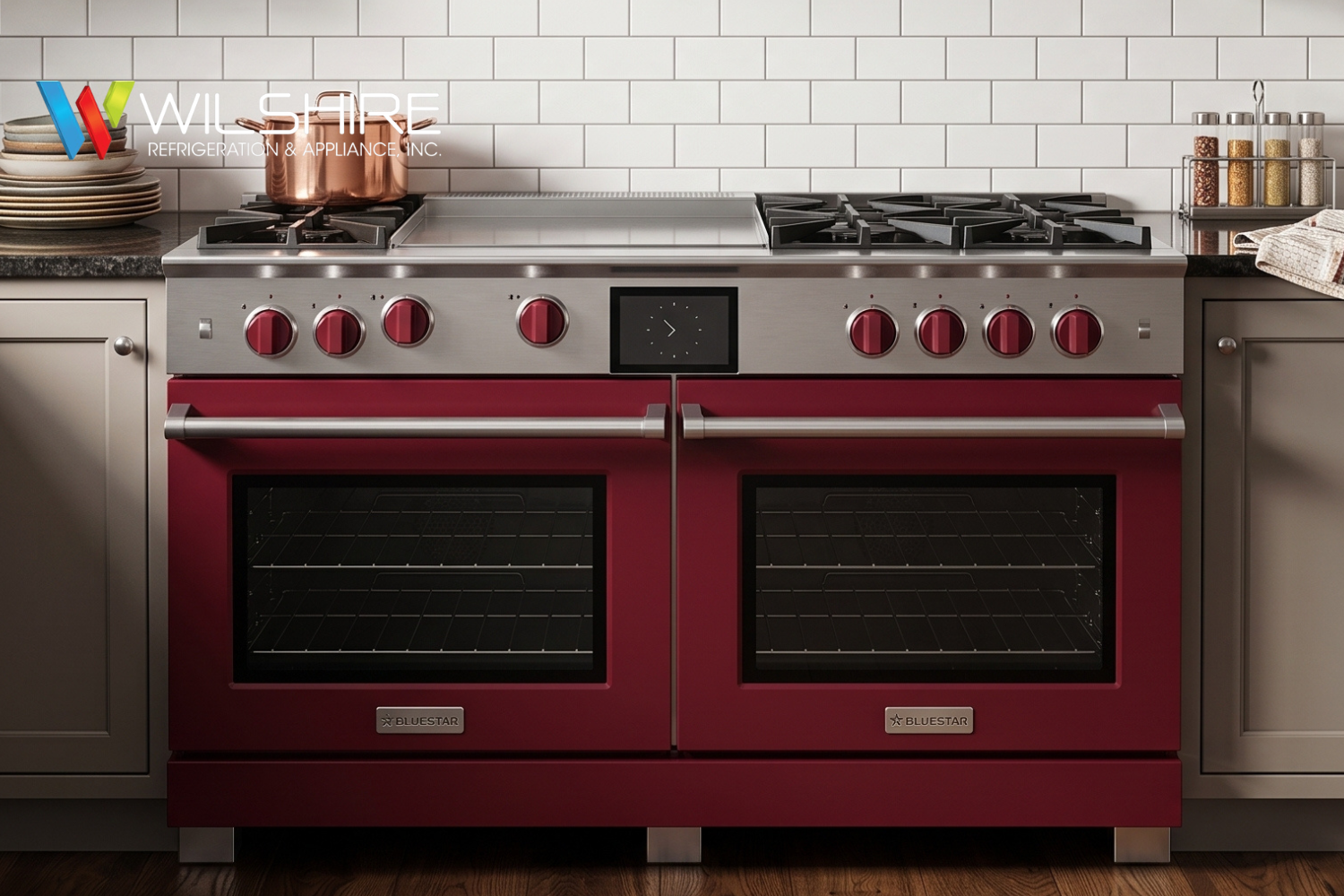
How to Test a BlueStar Oven Igniter
You test a BlueStar oven igniter three ways: by sight, by amp draw, and by continuity. The amp test gives the clearest answer, so it is worth doing if you own a meter. Cut the gas and unplug the range before you touch any part.The Visual Test
The visual test is quickest. A healthy igniter glows bright orange-white. A dim orange or red glow means it is weak, and no glow at all means it is dead or no power is reaching it.The Amp-Clamp Test
The amp-clamp test is the most reliable. Clamp an amp clamp from a multimeter around one igniter wire and run the bake cycle. A healthy igniter draws about 3.2 to 3.6 amps.Here is the BlueStar-specific detail that trips people up: the safety valve on many BlueStar ranges is a Robertshaw dual valve stamped with its own amp rating, often around 3.3 to 3.6 amps, and the valve will not open until the igniter meets that number. A reading of 3.2 amps can be too weak on a BlueStar even though it would pass on some other brands. Check the rating printed on your safety valve, and if the igniter draws below it, replace the igniter.The Continuity Test
If there is no glow at all, test continuity with a multimeter while the range is unplugged and the igniter is disconnected. No continuity means a broken igniter or an open circuit.Safety Warnings
A gas range mixes live electrical parts with gas lines, so shut off the gas and unplug the unit before touching anything. If you ever smell gas, stop, open a window, and call your gas company or a licensed pro. In some states, including Massachusetts, a licensed professional must do gas connections.FACTORY-CERTIFIED APPLIANCE REPAIR
Luxury Appliance Trouble? Get Expert Help Fast.
From premium refrigeration to high-end kitchen appliances, our factory-certified team delivers trusted diagnosis and repair with the professionalism your home deserves.
How to Replace a BlueStar Oven Igniter (Step by Step)
Replacing a BlueStar oven igniter takes about an hour with basic tools once you have the right part. Order the correct igniter for your model first, since the wrong one causes the same no-light problem. Keep the gas off, and the range unplugged the whole time.- Gather tools: a nut driver or screwdriver set, work gloves, and the replacement igniter for your model.
- Cut the power and gas: Unplug the range and shut the gas supply valve behind it.
- Access the bake burner: Open the oven and remove the oven floor or bottom panel to reach the bake burner. The igniter sits next to the burner.
- Disconnect the old igniter: Note how the wires connect, then unplug the connector or cut and cap it per the part instructions.
- Install the new igniter: Handle it only by the base, since skin oils on the element can shorten its life. Mount it in the same spot and reconnect the wires.
- Test the new igniter: Reassemble the panel, restore gas and power, then run a bake cycle to confirm the burner lights.
BlueStar System Notes
Two BlueStar notes save you a wasted part. Bake and broil use separate igniters, so confirm which function actually failed before you order anything. The oven’s 1850-degree infrared broiler is a separate system from the bottom bake burner and uses its own igniter, so a broiler that will not light doesn’t necessarily mean the bake igniter is bad.Part Choice Considerations
On the part choice, an OEM (original equipment manufacturer) igniter from BlueStar is guaranteed to match. A universal igniter costs less and often works, but only if it is the same type, flat versus round, and meets your valve’s amp rating. A wrong-spec universal igniter is a common cause of a repair that changes nothing, since it glows but never trips the valve.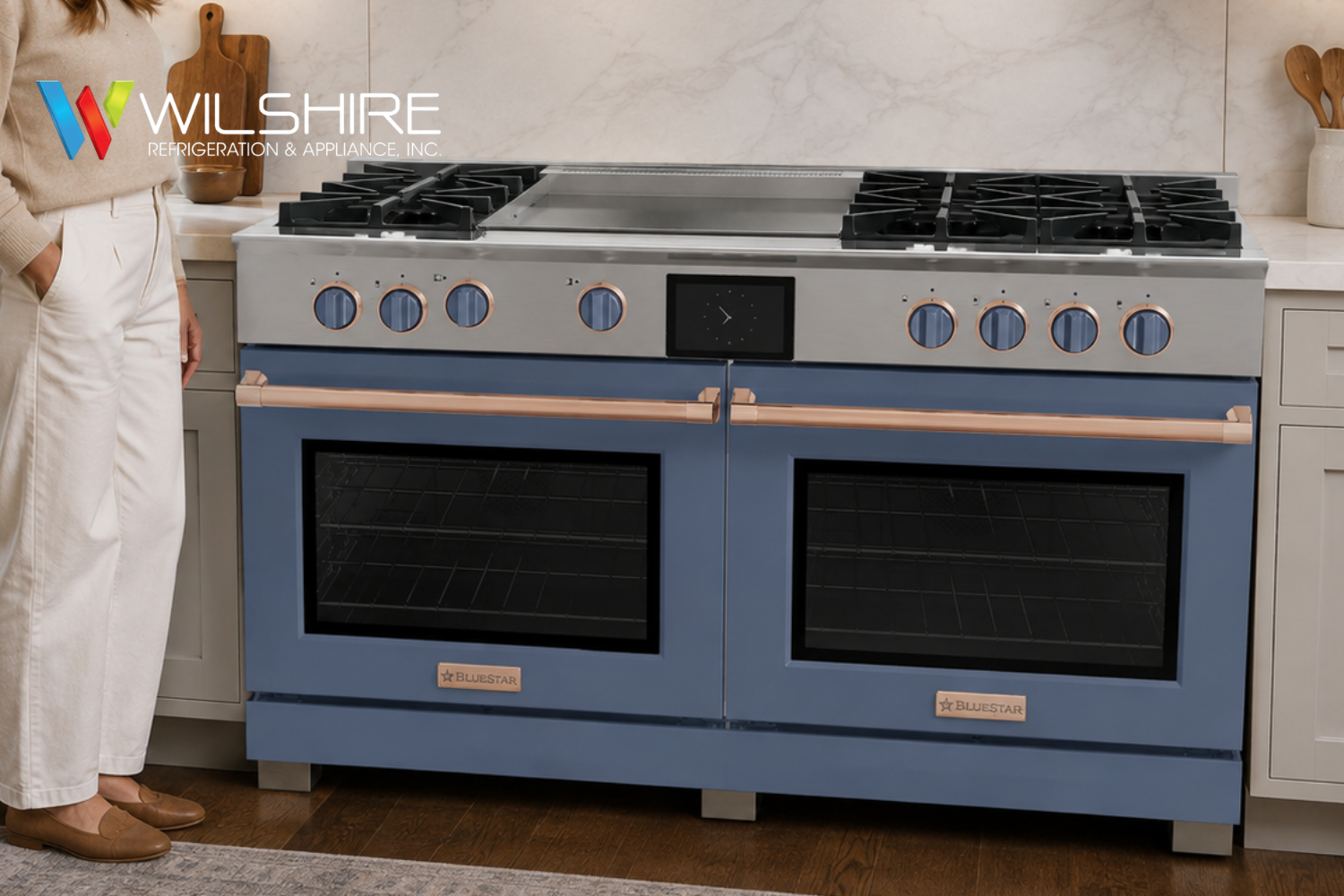
When It Is Not the Igniter
If a new igniter doesn’t fix the oven, the problem lies elsewhere in the ignition path. A few parts can mimic a bad igniter, so it helps to know the short list before you spend more.The gas safety valve can fail closed even when the igniter is strong. The oven thermostat or control board may not be sending power to the igniter at all. Wiring faults can cut off voltage before it reaches the igniter, which can look exactly like a dead igniter. If the trouble is with your top burners rather than the oven, you have a spark ignition system rather than a glow bar, so a bad spark module is the likely cause. For clicking burners that will not catch, see our guide, “Why Your Gas Stove Is Clicking But Not Lighting.”BlueStar Model Notes
BlueStar builds several range series, and knowing yours helps you order the right igniter and describe the problem. Prizer-Painter Stove Works has made these ranges in Reading, Pennsylvania, since the 1880s, and the brand is known for open burners and a recessed 1850-degree infrared broiler.Primary Range Series
- RNB Series: The most customizable open burner range, with UltraNova burners up to 22,000 BTU (British Thermal Units).
- RCS (Culinary) Series: The pro-style line in stainless steel, offered in open or sealed burner setups.
- Platinum Series: Sits at the top, with 25,000 BTU burners and the PowR oven, which preheats faster by heating from the back.
- BSP Series: BlueStar’s sealed-burner range for cooks who prefer a sealed cooktop.
Shared Ignition Systems
BlueStar also makes rangetops, cooktops, and a gas double-wall oven, so the igniter location can vary by product. Whatever model you own, these BlueStar ranges share the same basic ignition system, so the igniter test above is a reliable first step on almost any BlueStar cooking range, and the same logic carries across other BlueStar appliances.FACTORY-CERTIFIED APPLIANCE REPAIR
Luxury Appliance Trouble? Get Expert Help Fast.
From premium refrigeration to high-end kitchen appliances, our factory-certified team delivers trusted diagnosis and repair with the professionalism your home deserves.
Frequently Asked Questions
How long do BlueStar oven igniters last?
A BlueStar oven igniter usually lasts about 5 to 10 years, and it wears out slowly until it can no longer open the gas valve.
Can I replace a BlueStar igniter myself?
Yes, replacing a bake igniter is a common do-it-yourself repair on a BlueStar gas range if you shut off the gas, unplug the unit, and use the correct part.
Why does my BlueStar oven light and then go out?
A BlueStar oven that lights then goes out often has a weakening igniter or a marginal safety valve that cannot stay open through the full cycle.
Should I use an OEM or universal BlueStar igniter?
An OEM igniter guarantees the right fit, while a universal one saves money only if it matches the flat or round type and your valve’s amp rating.
How much does BlueStar igniter replacement cost?
A BlueStar igniter part usually runs about $40 to $90, and a professional BlueStar range repair costs more once labor is added, so ask for a free estimate.