Opening a luxury dishwasher to find a pool of murky water can ruin the satisfaction of a clean kitchen. Instead of putting away dry plates, the sight of a dishwasher not draining turns the end of the day into another task.
Premium units often use ultra-fine filtration and tighter internal tolerances designed to protect delicate glassware. That precision can make drainage issues show up quickly when food debris, grease film, or even a paper label slips into the system.
This guide covers quick checks, a simple filter and drain inspection, and safe cleaning steps that help restore water flow without damaging delicate parts. If the results indicate a component or installation issue, Wilshire Refrigeration & Appliance can help confirm what is preventing proper drainage.
What “Dishwasher Not Draining” Usually Means
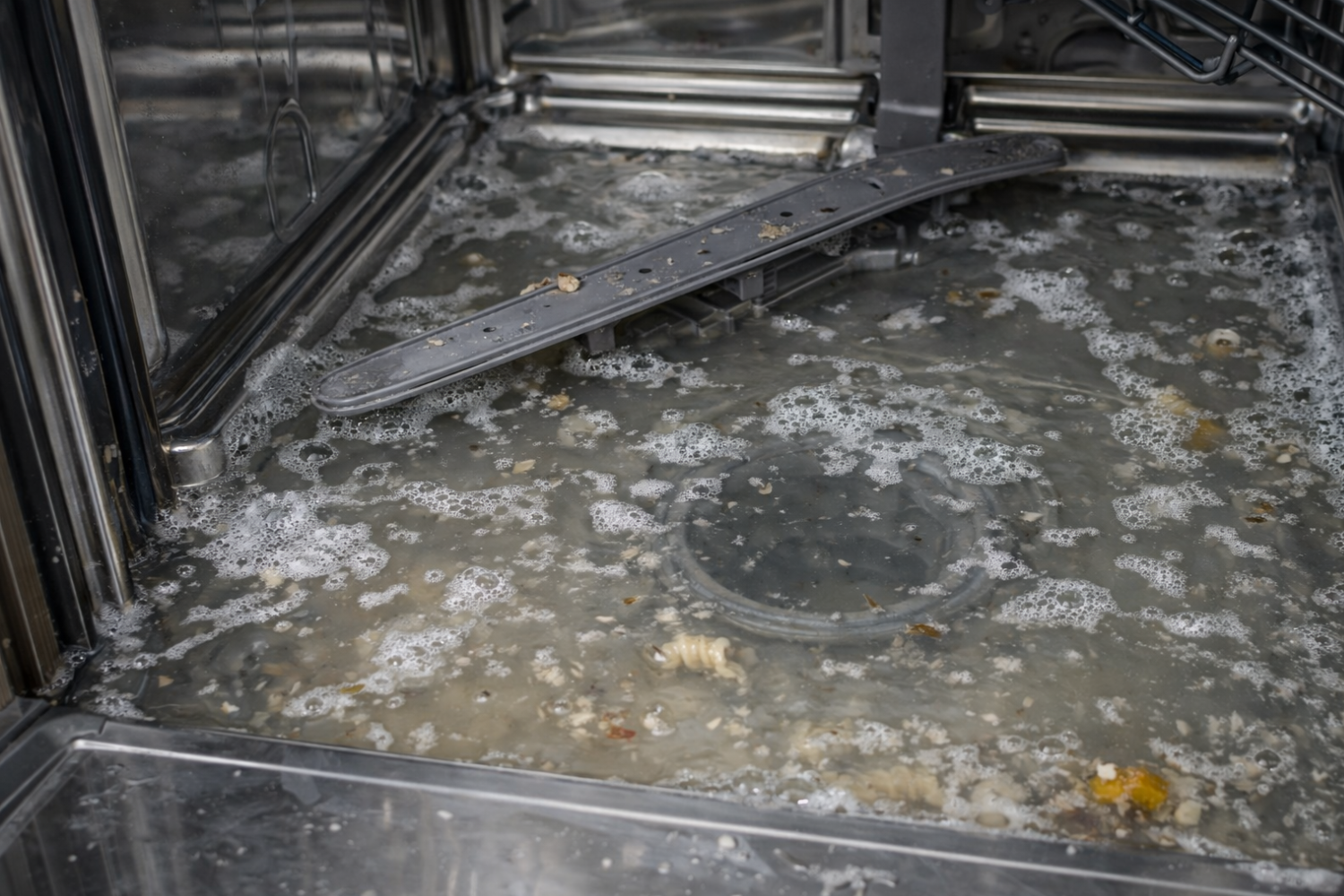
A dishwasher is usually considered not draining when dirty water remains pooled in the tub after the cycle ends. It helps distinguish between standing water covering the tub floor and a small amount of residual water that some models may retain near the sump or filter area. A small amount of leftover water can be normal on certain designs and may help keep internal seals from drying out.
When water is deeper than expected, the cause is often one of a few common problem areas. A clogged ultra-fine filter is a frequent suspect. Other causes include a blocked air gap, a backed-up garbage disposal connection, a pinched drain hose, a jammed pump impeller, a stuck check valve, or an incorrect hose routing during installation.
Core Reasons Premium Dishwashers Leave Standing Water
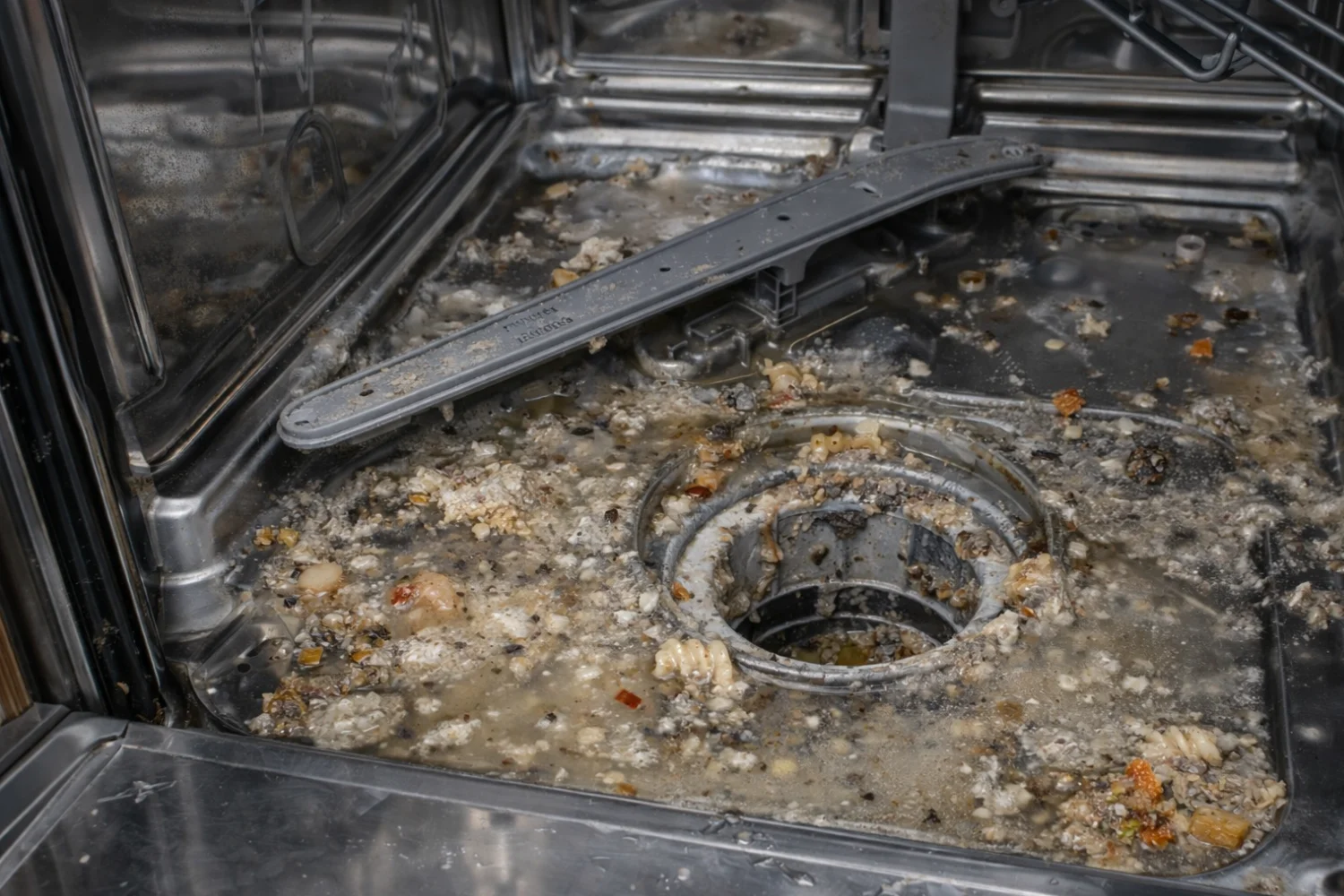
Premium appliances rely on highly engineered internal pathways to wash quietly and efficiently. When those pathways collect grease film or food debris, water flow can slow down or stop during the drain cycle. Below are common causes of standing water on high-end models.
Clogged Ultra-Fine Filter and Mesh Screens
High-end dishwashers often use ultra-fine mesh filters designed to trap small food particles and help protect delicate glassware. Because the mesh is very fine, grease film and sticky residue can build up faster when dishes go in with heavy food debris. Common culprits include grease, softened paper labels, grains of rice, and small fruit seeds. When the mesh clogs, water may collect around the filter area, and the dishwasher may not drain completely.
Debris in the Drain Pump or Impeller
The dishwasher drain pump physically pushes the dirty water out of the appliance and into your household plumbing. A shattered glass shard, a hard piece of bone, or a rogue toothpick can easily slip past the primary filter. Once inside, debris can jam the impeller or restrict movement. The drain motor may hum or sound strained while little to no water flows from the tub.
Drain Hose Kink, Clog, or Poor Routing
The flexible plastic hose connecting your appliance to the sink takes a lot of abuse, hidden under a crowded cabinet. A kink or crushed section can cause a backup, especially when cabinet items press against the hose. The hose also needs a proper elevated loop mounted high under the sink. This high loop prevents dirty sink water from flowing backward into the clean tub.
Air Gap, Garbage Disposal, or Backflow Issues
Some kitchens use an air gap mounted near the sink to reduce the risk of backflow. When food debris collects inside the air gap, it can restrict the drain path. Another common issue happens after a disposal installation. If the small knockout plug inside the garbage disposal inlet is not removed, the dishwasher drain connection can stay blocked even when the dishwasher filter looks clean.
Quick Checklist Before You Start Pulling Things Apart
A few quick checks can rule out common clogs before any deeper troubleshooting. Run through these steps first:
- Filter: Remove the bottom filter assembly, rinse it under warm water, and reinstall it correctly. Run a short rinse cycle to see if draining improves.
- Sink and disposal: Confirm the garbage disposal is clear and running smoothly. If an air gap is installed, check for trapped debris.
- Drain hose: Look for kinks or crushed spots under the sink. Confirm the hose routing includes a high loop mounted high under the counter to reduce backflow.
Stop DIY troubleshooting and schedule service if water backs up into the sink repeatedly, a grinding sound comes from the pump area, or error codes continue after filter cleaning.
How To Clean a Dishwasher Drain and Filter Safely
Knowing how to clean the dishwasher drain and filter parts helps prevent accidental damage during routine maintenance. Careful cleaning can improve drainage and reduce the risk of repeat clogs. A soft brush and warm water are usually enough for the filter and surrounding areas.
Remove and Rinse the Filter Assembly
Remove the lower rack and locate the filter assembly at the bottom of the tub. Many models use a cylindrical filter that twists and lifts out, along with a flat screen below it. Rinse the parts under warm water and scrub gently with a soft nylon brush to remove grease film and trapped debris. Reinstall the filter assembly securely so the dishwasher can drain properly.
Clear a Dishwasher Air Gap (If You Have One)
Pull the decorative metal cap straight up and off the dishwasher air gap sitting next to your sink faucet. Look inside the exposed plastic mechanism and use a small bottle brush or a pair of tweezers to remove any trapped food chunks. Flush the air gap with a small amount of hot water to help clear the pathway.
Check the Drain Hose for Kinks and Clogs
Grab a flashlight and visually inspect the ribbed plastic hose running from the appliance to your sink drain. Make sure no heavy boxes or cleaning supplies are crushing the line against the cabinet’s back wall. Avoid disconnecting plumbing connections unless you have experience with under-sink fittings and water lines.
Dishwasher Not Draining but No Blockage Found
A clean filter does not always mean the drain system is working. When a dishwasher is not draining, but no blockage is visible, the cause may involve internal components that are difficult to inspect without testing.
Possible causes include a weak or jammed drain pump, a check valve that sticks during the drain cycle, a wiring or control issue that prevents the pump from running as intended, or an installation problem, such as a garbage disposal knockout plug that was never removed. When basic checks do not change the symptom, service testing can identify the exact point where drainage is stopping.
Frequently Asked Questions
Why is there water at the bottom of the dishwasher after a cycle?
Some models keep a small amount of residual water near the sump or filter area. Deeper standing water covering the tub floor is more consistent with a drain restriction or a pump issue.
How do I fix a dishwasher that isn’t draining completely?
Start by cleaning the filter assembly and checking the sink connection, garbage disposal inlet, and the air gap, if installed. If the dishwasher still has standing water after a rinse cycle, schedule service to test the drain pump and related components.
What causes standing water in the dishwasher filter area?
Grease film, small food debris, and softened paper labels can clog ultra-fine mesh screens and slow drainage around the filter area.
How do you clean a clogged dishwasher air gap?
Remove the air gap cap, clear any trapped debris with a small brush, then flush with hot water to improve flow.
Why is my dishwasher not draining even though no blockage is visible?
A weak drain pump, a stuck check valve, a control or wiring issue, or an installation problem, such as a disposal knockout plug, can prevent draining even when hoses look clear.
Are You Ready to Fix Your Flooded Luxury Dishwasher?
Checking the filter assembly and confirming proper drain hose routing can resolve many standing water problems, especially on models with ultra-fine mesh screens. Regular cleaning also helps reduce repeat clogs and improves overall drainage.
When standing water in the dishwasher persists after basic checks, a clogged drain path, a jammed impeller, or a failing drain component may be the cause. If the dishwasher is not draining, Wilshire Refrigeration can test the drain pump and related parts to confirm the root cause and recommend the next step.