
Quick Navigation
Table of Contents
Click To Expand
Quick Navigation
Table of Contents
Click To Expand
Does your ASKO washer have a musty smell or sticky detergent buildup around the drawer? Moisture, excess detergent, and residue can collect in parts of a washing machine that stay damp between loads. Regular cleaning helps prevent odors and keeps these areas easier to maintain.
One important detail depends on the model. Current domestic ASKO appliances use the brand’s Steel Seal™ design, which eliminates the conventional rubber door bellow found on many front-load washers. Older or market-specific machines may have a rubber seal that needs separate cleaning. At Wilshire Refrigeration, proper cleaning and timely service can help address persistent odor, drainage, and residue problems in an ASKO washing machine.
FACTORY-CERTIFIED APPLIANCE REPAIR
Luxury Appliance Trouble? Get Expert Help Fast.
From premium refrigeration to high-end kitchen appliances, our factory-certified team delivers trusted diagnosis and repair with the professionalism your home deserves.
Why Do Mold and Residue Build Up?
Mold, odors, and detergent residue are more likely to develop when moisture and soap remain inside the washer after a cycle. Overusing detergent, keeping the machine closed while damp, and skipping routine cleaning can make buildup worse.Addressing these causes is easier than removing heavy residue after it has sat for months.Moisture Trapped in Seals
Moisture left around the door area can contribute to odors and buildup, especially on older washers with a conventional rubber gasket. ASKO maintenance guidance recommends allowing the washer to dry after use and drying the lower portion of a rubber door seal, if present.Many newer ASKO washers are different. Steel Seal™ removes the traditional rubber bellow, reducing an area where dirt and grime commonly collect.Excess Detergent Use
Too much detergent can leave foam and residue behind rather than improve cleaning. ASKO notes that overdosing may contribute to excess suds, musty odors, poor washing results, and even leakage from the detergent compartment or door.Use the recommended amount of detergent for the detergent, water hardness, soil level, and load size. On an ASKO washer with automatic dosing, check the dosing setting if excess foam remains after washing.Poor Ventilation
A washer that stays closed while damp dries more slowly. ASKO recommends leaving the door and detergent compartment open after washing so moisture can escape.This small habit can make a noticeable difference, especially when you wash several loads in quick succession.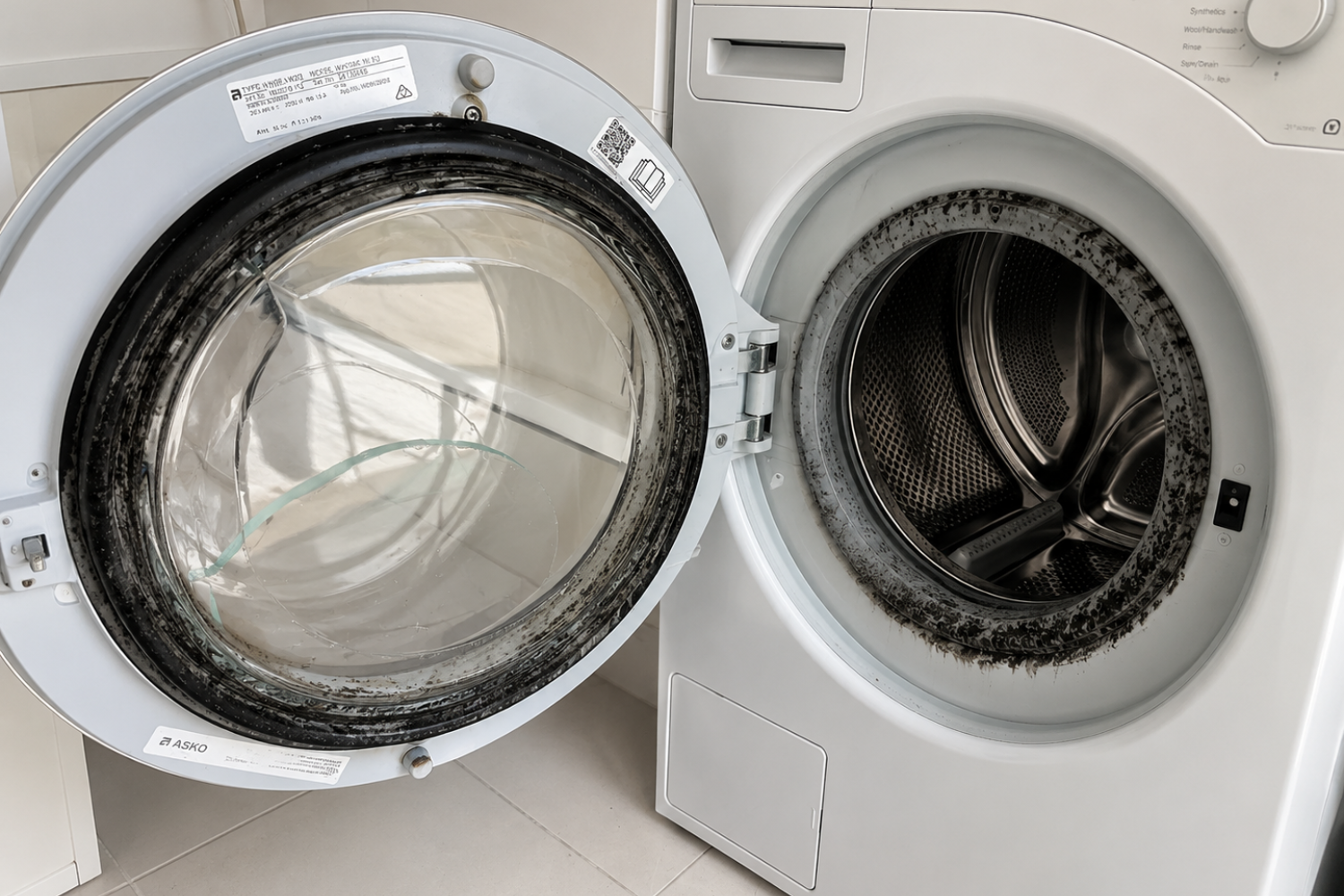
How Do I Clean the Door Seals?
Clean the door area according to the design of the specific ASKO model. Older machines with rubber gaskets need attention around folds and low points, while current Steel Seal™ washers do not have a conventional rubber bellow.Always check the model manual before using a household cleaner on rubber, painted surfaces, or other appliance materials.Wipe with Vinegar Solution
Vinegar should not automatically be applied directly to every ASKO door seal. ASKO guidance in some markets mentions a small amount of natural vinegar as an optional maintenance aid during a wash cycle, but model-specific instructions should come first.For routine cleaning of door areas, start with a soft, damp cloth. If an older model has a rubber seal, wipe away lint, detergent film, and standing moisture without using harsh or abrasive chemicals unless the manual approves them.Scrub with a Soft Brush
A soft toothbrush or cleaning brush can help loosen residue from small creases and hard-to-reach areas. Keep pressure light to avoid scratching or damaging rubber, plastic, or finished surfaces.Focus on visible residue rather than aggressively scrubbing the entire door assembly. If dark staining persists in a seal after normal cleaning, the part may require professional inspection.Dry Thoroughly After Use
Drying the door area after washing helps reduce the moisture that supports musty odors and grime. Older washers with a rubber seal deserve extra attention along the lower edge, where water can remain after a cycle.Leave the washer door open enough for air to circulate after you remove the laundry.How Do I Clean the Detergent Drawer?
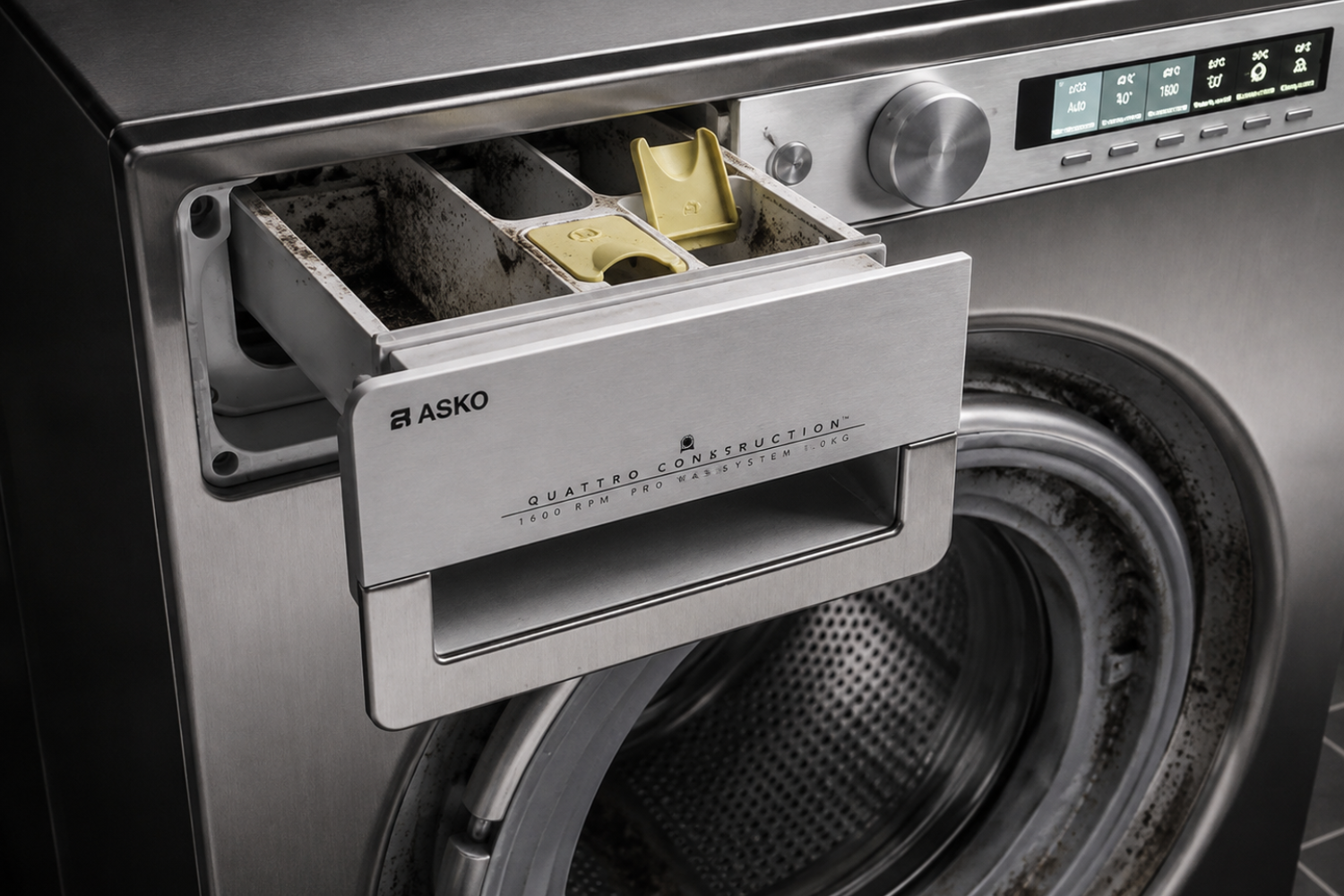
Clean the detergent drawer by removing washable components, rinsing away loose residue, and cleaning the compartment according to the washer manual. ASKO recommends regular drawer cleaning because detergent and softener can collect in the dispenser over time.
Some newer models also include automatic cleaning beneath the detergent drawer, but manual care may still be needed when visible buildup appears.
Remove and Rinse Drawer
Remove the detergent drawer only as described in the model manual. Rinse removable sections with warm water to soften detergent and fabric-softener deposits.
ASKO maintenance guidance also suggests using a small amount of dishwashing liquid with an old toothbrush or dish brush when cleaning the detergent drawer.
Scrub Residue with Baking Soda
Baking soda is often suggested as a household cleaning option, but ASKO’s published washer-care guidance does not list it as a standard detergent-drawer cleaner. A safer manufacturer-aligned approach is warm water, mild dishwashing liquid, and a soft brush.
Avoid packing abrasive pastes into small dispenser openings or internal channels. If you’re considering baking soda for a specific model, check the owner’s manual first.
Wipe Housing with Cloth
After removing the drawer, wipe accessible parts of the housing with a damp microfiber cloth. Remove visible detergent film around the opening without forcing cloths or tools deep into internal water passages.
Dry the accessible surfaces before reinstalling the drawer. Make sure all removable inserts are seated correctly so detergent can dispense as designed
What Supplies Should I Use?
Simple, nonabrasive supplies are usually enough for routine ASKO washer care. Always follow the appliance manual and any instructions printed on the cleaning product.Recommended supplies include:- Warm water: Helps soften fresh detergent and softener residue.
- Mild dishwashing liquid: ASKO guidance recommends a small amount for cleaning detergent drawers.
- Microfiber cloths: Useful for wiping door areas, dispenser housings, and exterior surfaces.
- Soft toothbrush or dish brush: Helps reach corners of removable detergent-drawer parts.
- Washing machine cleaner: Suitable for periodic machine cleaning when used according to the product and washer instructions.
- White vinegar: Use only when appropriate for the model and cleaning method. ASKO guidance in some markets lists natural vinegar as an optional maintenance aid.
- Rubber gloves: Helpful when handling cleaning products or heavy residue.
FACTORY-CERTIFIED APPLIANCE REPAIR
Luxury Appliance Trouble? Get Expert Help Fast.
From premium refrigeration to high-end kitchen appliances, our factory-certified team delivers trusted diagnosis and repair with the professionalism your home deserves.
How Often Should I Clean My Asko Washer?
Routine maintenance should happen before visible buildup becomes severe. ASKO guidance recommends allowing the machine to dry after each wash and performing more thorough maintenance regularly.How often deeper cleaning is needed can depend on detergent use, water quality, washing temperature, and how often the machine runs.Monthly Maintenance Cycle
A monthly cleaning cycle is a useful starting point for many households. ASKO guidance recommends using a washing-machine maintenance product with an empty drum or running the machine’s dedicated self-cleaning program when available.ASKO’s Drum Cleaning program is designed to address detergent residue in areas including the drum, hoses, detergent compartment, and drain pump.Weekly Seal Wipe-Down
Check the door area regularly for water, lint, or residue. On an older washer with a rubber gasket, wiping the lower portion helps prevent water from sitting in the folds.Current Steel Seal™ machines do not have a conventional rubber bellow, so focus cleaning on the stainless door area and other accessible surfaces.Regular Drawer Rinse
Rinse the detergent drawer whenever you notice visible soap or fabric-softener deposits beginning to collect. A busy household may need to do this more often than one that runs only a few loads each week.Leaving the dispenser slightly open after washing also allows the compartment to dry.
Can Preventive Steps Reduce Mold?
Reducing leftover moisture and detergent buildup can make mold and musty odors less likely to develop. Good habits after each wash usually require less effort than removing thick residue later.The goal is to give moisture somewhere to escape and avoid leaving more detergent in the machine than the wash cycle can rinse away.Leave Door Slightly Open
Leave the washer door open after a cycle is complete so the interior can dry. ASKO also recommends leaving the detergent compartment open between uses.Keep the opening appropriate for the household, especially where young children or pets are present.Use Correct Detergent Amount
Follow the detergent manufacturer’s dosage instructions and never exceed the maximum level marked on the dispenser. Water hardness, load size, soil level, and detergent concentration can all affect the correct amount.An ASKO washer-dryer setup will not benefit from adding extra detergent to the washer. More soap can simply create more residue for the rinse cycle to remove.Run Hot Cleaning Cycles
Periodic higher-temperature or dedicated cleaning cycles can help remove detergent and greasy residue that accumulates during frequent low-temperature washing. ASKO recommends a monthly machine-cleaning routine and, where available, use of the dedicated Drum Cleaning program.Follow the owner’s manual rather than choosing the hottest possible program without checking the model instructions.Should I Call a Professional for Persistent Issues?
Professional service is worth considering when odors, residue, drainage problems, or visible contamination keep returning after normal cleaning. Persistent symptoms may point to buildup in hard-to-reach areas or a mechanical problem that routine housekeeping can’t fix.Wilshire Refrigeration services ASKO washers, dryers, and dishwashers in Southern California and Nevada.Deep Cleaning Services
Routine cleaning of drawers and doors can be handled at home, but internal hoses, pumps, drains, and other enclosed components require professional attention. Avoid taking apart the washer simply to chase an odor.A technician can determine if the problem is ordinary residue or if another part of the machine needs service.Inspection for Hidden Build-Up
A recurring odor after a proper cleaning cycle may indicate residue beyond the visible drawer and door areas. Drainage problems can also leave dirty water or debris in areas that normal wiping cannot reach.The same principle applies across ASKO appliances. An ASKO dishwasher or other water-using appliance can also develop performance problems when filters, drains, or detergent systems need attention, although cleaning steps differ between washers and ASKO dishwashers.Long-Term Performance Care
Regular cleaning, correct detergent use, and early attention to unusual smells or drainage issues can help keep the washer operating normally. ASKO also recommends routine machine cleaning rather than waiting until heavy residue becomes visible.If cleaning no longer solves the problem, professional diagnosis can help determine what actually needs repair.FACTORY-CERTIFIED APPLIANCE REPAIR
Luxury Appliance Trouble? Get Expert Help Fast.
From premium refrigeration to high-end kitchen appliances, our factory-certified team delivers trusted diagnosis and repair with the professionalism your home deserves.
Frequently Asked Questions
How do I remove mold from an Asko washer gasket?
If an older ASKO washer has a rubber gasket, wipe and dry it according to the model manual, while current Steel Seal™ washers do not use a conventional rubber door bellows.
What is the best cleaner for Asko detergent drawers?
ASKO guidance recommends cleaning the detergent drawer with a soft brush and a small amount of mild dishwashing liquid or an approved washing-machine cleaner.
Can vinegar damage my Asko washing machine?
ASKO guidance in some markets allows limited vinegar use for certain maintenance routines, but the safest approach is to follow the cleaning instructions for the exact ASKO model.
How often should I run a cleaning cycle on my Asko washer?
A monthly machine-cleaning routine is a useful manufacturer-supported starting point, using the dedicated cleaning program when the model provides one.
Why does my Asko washer smell even after cleaning?
Persistent odor can result from detergent buildup, trapped moisture, drainage issues, or internal residue that may require further cleaning or professional inspection.
Want a Fresh, Efficient ASKO Washer?
Keeping an ASKO washing machine clean starts with simple habits: use the correct amount of detergent, let the door and dispenser dry between loads, clean the drawer regularly, and run the recommended maintenance cycle. Current Steel Seal™ washers require different door care than older models with rubber gaskets, so always follow the instructions for your specific appliance.
If odors, detergent buildup, drainage issues, or other problems keep returning, contact Wilshire Refrigeration for professional ASKO appliance service and diagnosis.