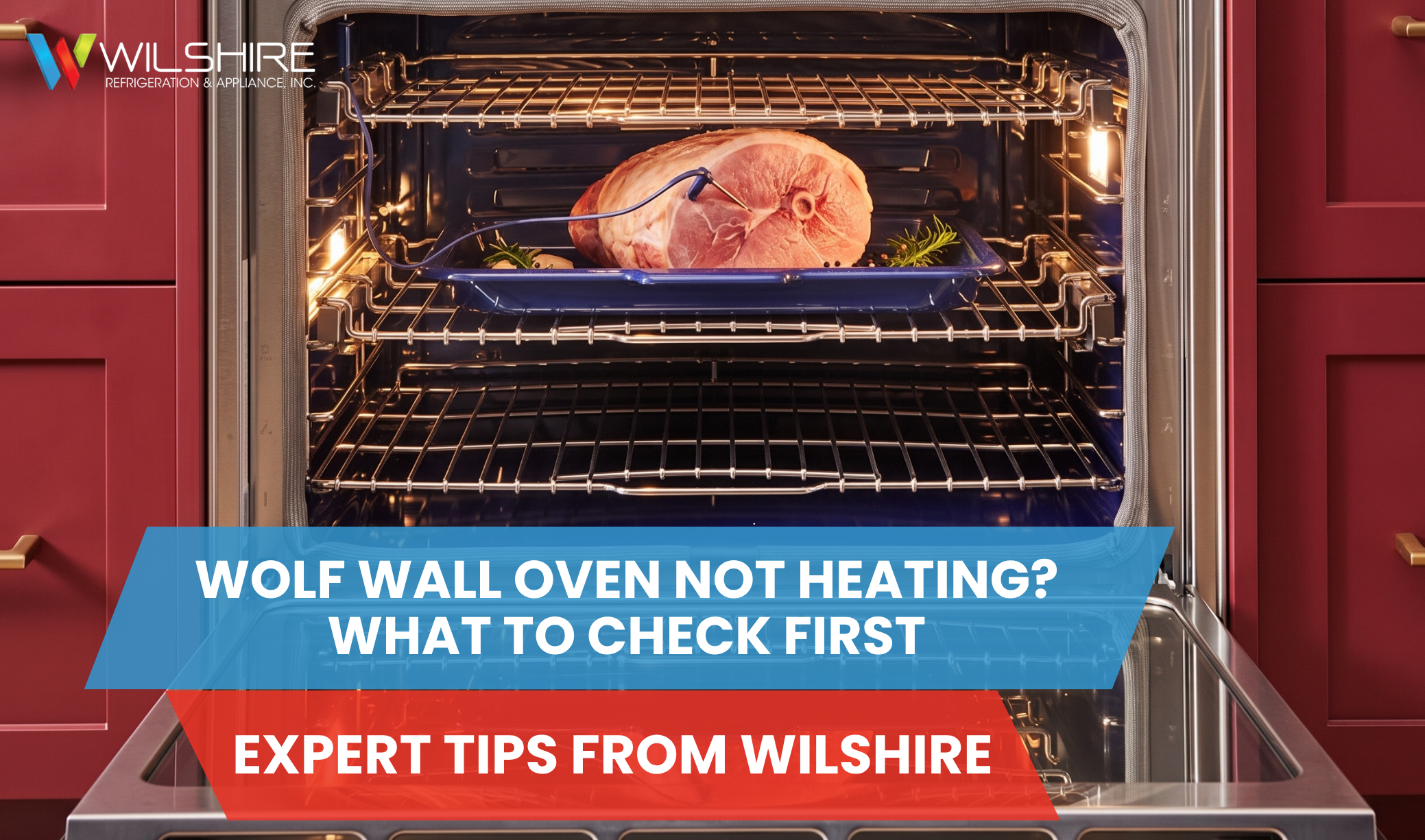
There is nothing quite like the sinking feeling of pulling a half-baked casserole out of the oven just as guests arrive. A missed preheat or uneven cooking can turn a simple dinner into a stressful scramble. When an oven is not heating up the way it should, the problem can throw off timing, waste ingredients, and make everyday cooking feel harder than it needs to be.
This guide walks through quick checks, a simple accuracy test, and basic calibration options by model. If the results indicate a component issue, Wilshire Refrigeration can help confirm temperature accuracy and diagnose the part preventing proper heat transfer.
Why Is My Oven Not Heating Up
An oven that fails to do its job usually comes down to one of two issues. It either produces no heat, or it heats but runs noticeably hotter or cooler than the temperature set on the control panel. Knowing which problem is happening makes troubleshooting much easier.
If there is zero heat, the cause is often a failed heating element, igniter, safety, or control issue. Slow preheat can point to a weak igniter, a struggling bake element, or a temperature sensor problem. Uneven baking can also come from a damaged bake element, poor airflow, or rack and cookware placement. If the oven runs about 25°F off target consistently, a digital calibration setting may help, depending on the model.
Common Reasons a High-End Oven Will Not Reach Temperature
Several parts inside the appliance must work together to create stable, repeatable heat. When one component fails, the oven may not heat up enough to bake properly. Below are the common issues that keep many luxury ranges from reaching the set temperature.
Weak Igniter in Gas Ovens
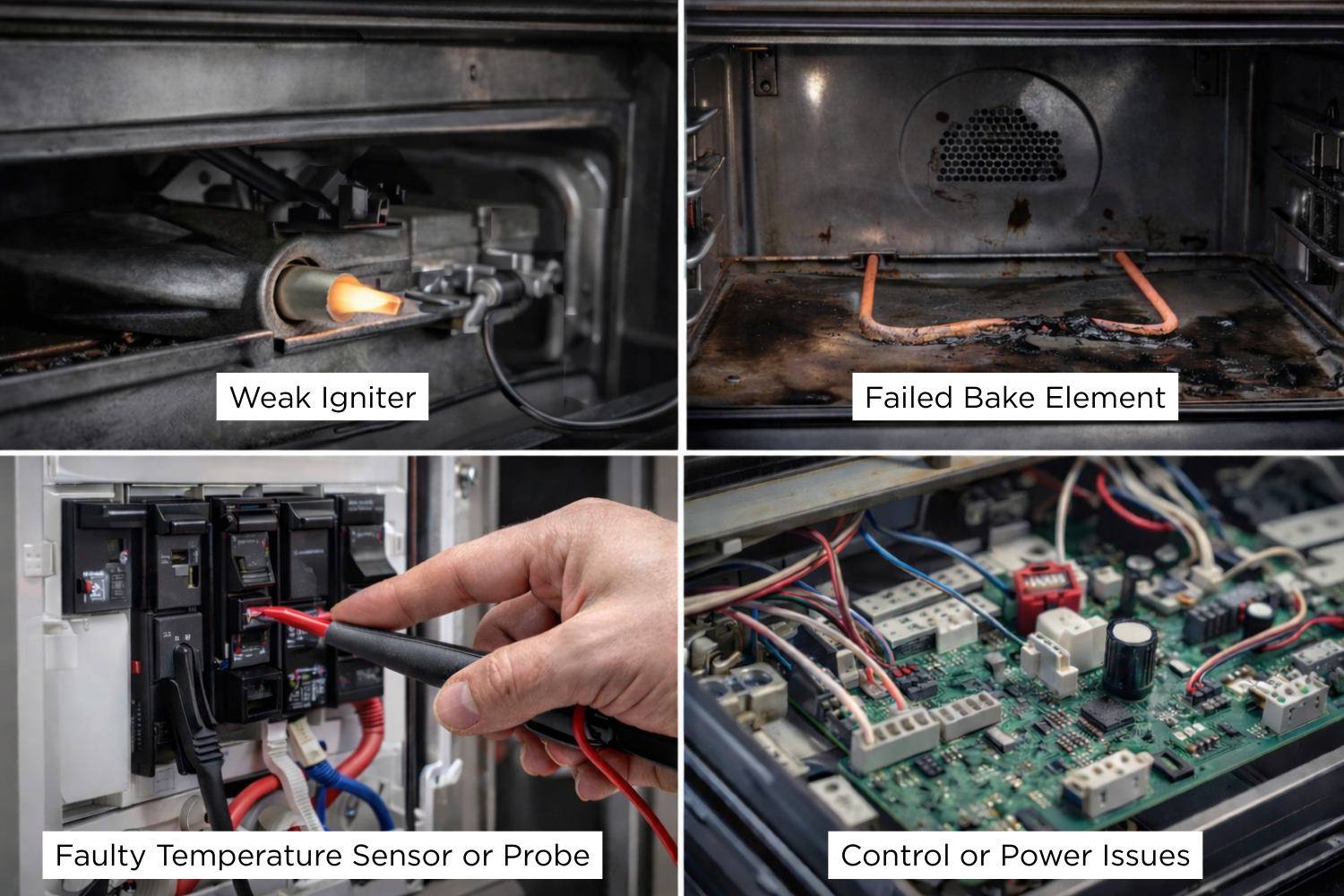
A weak igniter can be misleading because it may still glow. On many gas ovens, the igniter must draw enough current to open the gas valve fully. When that signal is weak, the oven may light inconsistently or produce low heat, making it struggle to reach the desired temperature. Replacing a worn igniter or addressing the ignition circuit can restore reliable burner operation.
Failed Bake Element in Electric Ovens
A failed bake element can disrupt the heat coming from the bottom of the cavity. In many cases, the damage is visible. Look for blistering, dark spots, or visible breaks on the metal coil. When the bake element is not heating evenly, food may not brown evenly, especially on the bottom crust.
Faulty Temperature Sensor or Probe
The temperature sensor measures oven temperature and reports it to the control board. The control board then cycles the heating system on and off to maintain the set point. If the sensor readings are inaccurate, the oven may shut the heat off too early or keep heating too long. This can cause poor preheat accuracy and leave the oven not heating properly.
Control or Power Issues That Interrupt Heating
Sometimes the issue is not inside the oven cavity. Power problems can prevent the heating system from running correctly. A tripped breaker, a loose power connection, a failed relay, or a control board problem can keep the appliance from getting the power it needs. Check the main electrical panel first before assuming an internal part has failed.
Clear Signs Your Oven Is Not Heating Properly
Specific symptoms help narrow down why an oven is not preheating. Watch for these signs:
- Uneven baking across racks during the same cycle
- Preheat times taking much longer than usual
- No ignition click on a gas oven, or no visible glow from a lower element on an electric oven
- Error codes appearing shortly after preheat starts
- Food remaining undercooked in the center even when cook time and temperature match the recipe
How To Test If Your Oven Temperature Is Accurate
Testing the heat inside the cavity shows whether a repair is needed or if the settings are simply off. An oven thermometer helps confirm how far the temperature drifts from the set point. Follow these steps to measure current heat output.
Run a Simple Accuracy Test With an Oven Thermometer
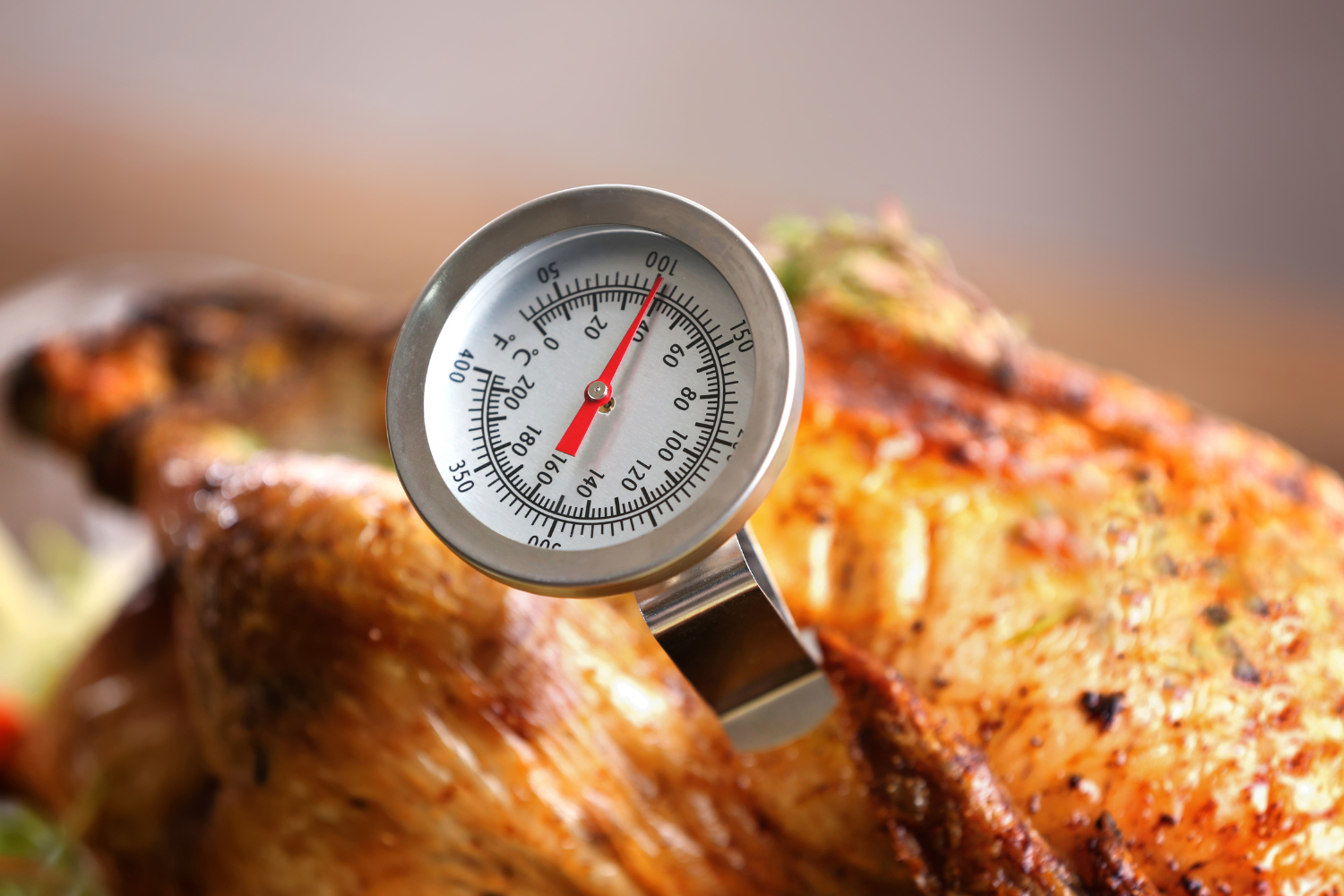
Place a reliable oven thermometer in the center of the middle rack. Set the oven to 350°F and preheat. Wait 5 to 10 minutes, then read the thermometer through the door. Check the reading every 10 minutes for about 45 to 60 minutes, then calculate an average. Most ovens cycle above and below the set temperature as heating turns on and off. If the average temperature is consistently off by about 25°F or more, calibration or a sensor issue may be present, depending on the model.
Compare Results Across Two Temperatures
Try the test again at 450°F to see whether the offset remains the same at a higher temperature. Confirming a similar offset at both settings helps determine whether a calibration adjustment is likely to help. If readings swing unpredictably or drift significantly over time, a sensor, airflow, or control issue is more likely than a simple calibration offset.
Can You Calibrate a High-End Oven Yourself?
Calibration is sometimes possible, but it depends on the model. Many modern ovens allow a temperature offset adjustment through the control panel. Some premium brands restrict access to calibration settings or require service procedures that are not intended for homeowner adjustment.
If Your Oven Supports a Temperature Offset in Settings
Check the owner’s manual to confirm whether the control panel supports a user-adjusted offset. If available, the setting often allows small adjustments, commonly in 5°F to 10°F increments. After changing the offset, repeat the thermometer test to confirm the oven reaches the target average temperature.
Knob-Style Thermostat Adjustments
A few analog models allow the temperature knob to be removed so a small calibration screw on the back can be adjusted. Only attempt this when the manufacturer provides model-specific instructions in the user guide. Adjusting internal screws without guidance can damage the thermostat or throw temperature accuracy further off.
When Calibration Should Be Left to Certified Service
Some luxury appliances restrict calibration access or tie temperature settings to specialized cooking modes. In those cases, service calibration helps avoid unintended changes to performance across modes. Professional diagnosis can also confirm whether the issue is due to calibration, a sensor problem, or a failing heating component under load.
Quick Checklist Before Calling for Oven Repair
Simple oversights can cause an oven not to get hot. Check these items first:
- Confirm the correct cooking mode is selected, such as Bake instead of a delayed or timed setting
- Confirm the door closes fully and the gasket seals without obstruction
- Remove foil or liners that block airflow or cover vents, especially near the bottom of the cavity
- Confirm the control panel is not set to Delay Start
- For gas ovens, confirm the gas shutoff valve is fully open
- For electric ovens, check the breaker and confirm it has not tripped
Frequently Asked Questions
Why is my oven not heating up, but the stovetop works?
The stovetop and oven use different components. A failure in the oven heating system, such as a bake element, igniter, sensor, or control issue, can occur while the cooktop still works normally.
How do I fix a gas oven that isn’t heating up enough?
Start by confirming proper airflow and checking whether ignition appears weak or inconsistent. If the oven lights but struggles to reach temperature, a worn igniter, a sensor issue, or a gas supply problem may be the cause. For safety, diagnosis, and parts replacement should be handled by a qualified service technician.
What causes an oven not to preheat to the set temperature?
Common causes include a weakened heating element or igniter, an inaccurate temperature sensor, restricted airflow, or a control board issue that prevents steady heating.
Why is my oven not getting hot after self-cleaning?
Self-cleaning exposes the oven to extreme heat. On some models, that heat can trigger a high-limit safety condition, stress wiring or connectors, or reveal a weak component that was already failing. If the oven does not heat afterward, a service diagnosis is usually needed.
Should I try to fix an oven that’s not heating properly?
Basic temperature testing and model-approved calibration adjustments are generally safe. Work involving internal wiring, gas components, or major part replacement should be left to a qualified technician.
Is It Time to Call a Luxury Appliance Expert for Your Cold Oven?
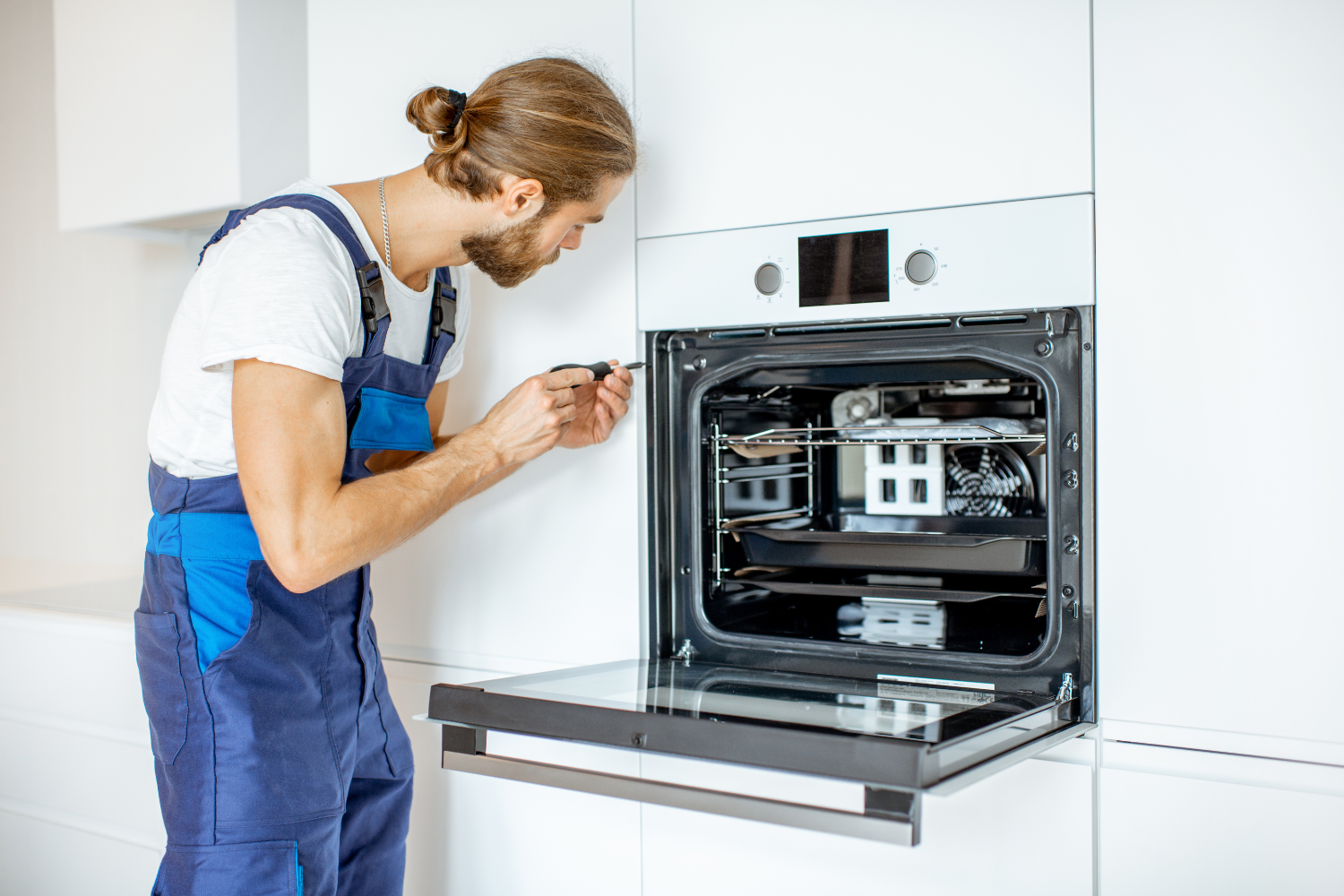
Professional service is a good next step when the oven remains consistently off-temperature after a thorough thermometer test. Service is also recommended when there is zero heat, repeated error codes, burning odors, a breaker that trips during preheat, or any sign of a gas smell.
Wilshire Refrigeration can help test key components and confirm why the main oven is not heating up. Accurate diagnosis helps avoid unnecessary parts and gets the oven back to steady, predictable cooking temperatures.