If a refrigerator suddenly sounds louder than usual, start by identifying the exact noise and when it happens. A refrigerator making a loud noise can feel stressful in a quiet home, especially with a premium built-in unit that normally fades into the background.
Some low, steady humming is normal during cooling cycles. New, persistent, or worsening sounds can signal airflow problems, loose parts, or a component starting to wear. For homeowners who want a reliable next step without guesswork, Wilshire Refrigeration & Appliance can help diagnose the source and recommend the right fix.
Quick Sound Decoder (Match the Noise to the Likely Source)
Matching the specific noise to its location helps you figure out exactly what is failing inside the cabinet. You can quickly narrow down the suspects just by listening closely for a minute.
- Humming or Buzzing (back or bottom): Often tied to condenser airflow, a dusty condenser area, or the compressor working harder than normal.
- Clicking (back or lower area): Can be normal cycling or defrost activity, but repeated rapid clicking may indicate a relay, control, or compressor-start issue.
- Rattling or Vibration (bottom or behind unit): Commonly caused by leveling, a loose drain pan, tubing vibration, or cabinet contact.
- Knocking or Thumping (inside or freezer): Often happens when a fan, damper, or ice buildup creates contact with a moving part.
- Noise Stops When Door Opens: Often suggests the evaporator fan or airflow components, because many refrigerators pause the fan when the door switch opens.
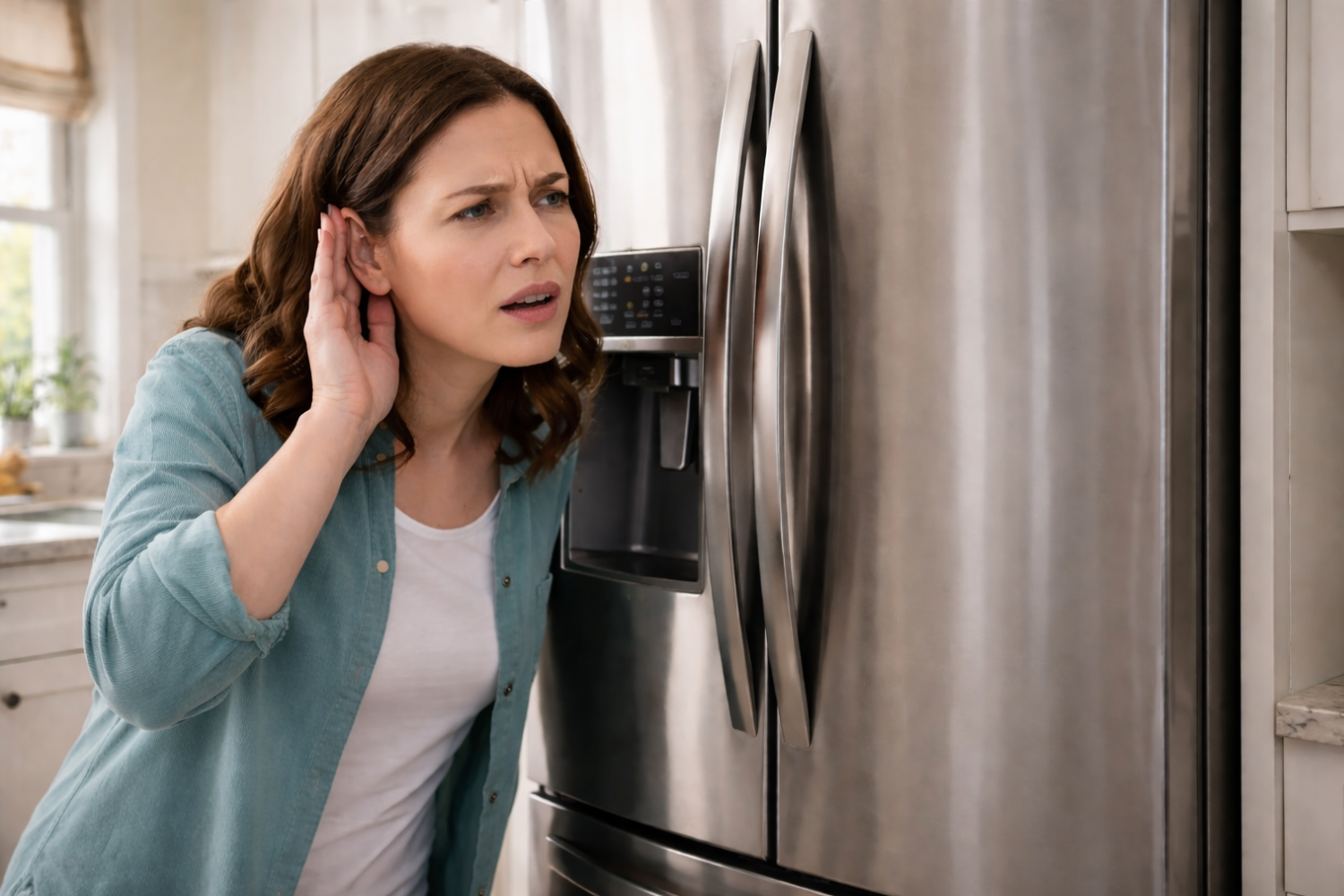
Humming or Buzzing: When It Is Normal and When It Is a Problem
Some humming is completely normal, but a sudden increase in volume usually means the airflow is blocked or a motor is struggling. Your kitchen should not sound like a busy engine room. Let’s look at the difference between a healthy hum and a desperate cry for help.
Normal Operating Hum vs a Sudden Louder Drone
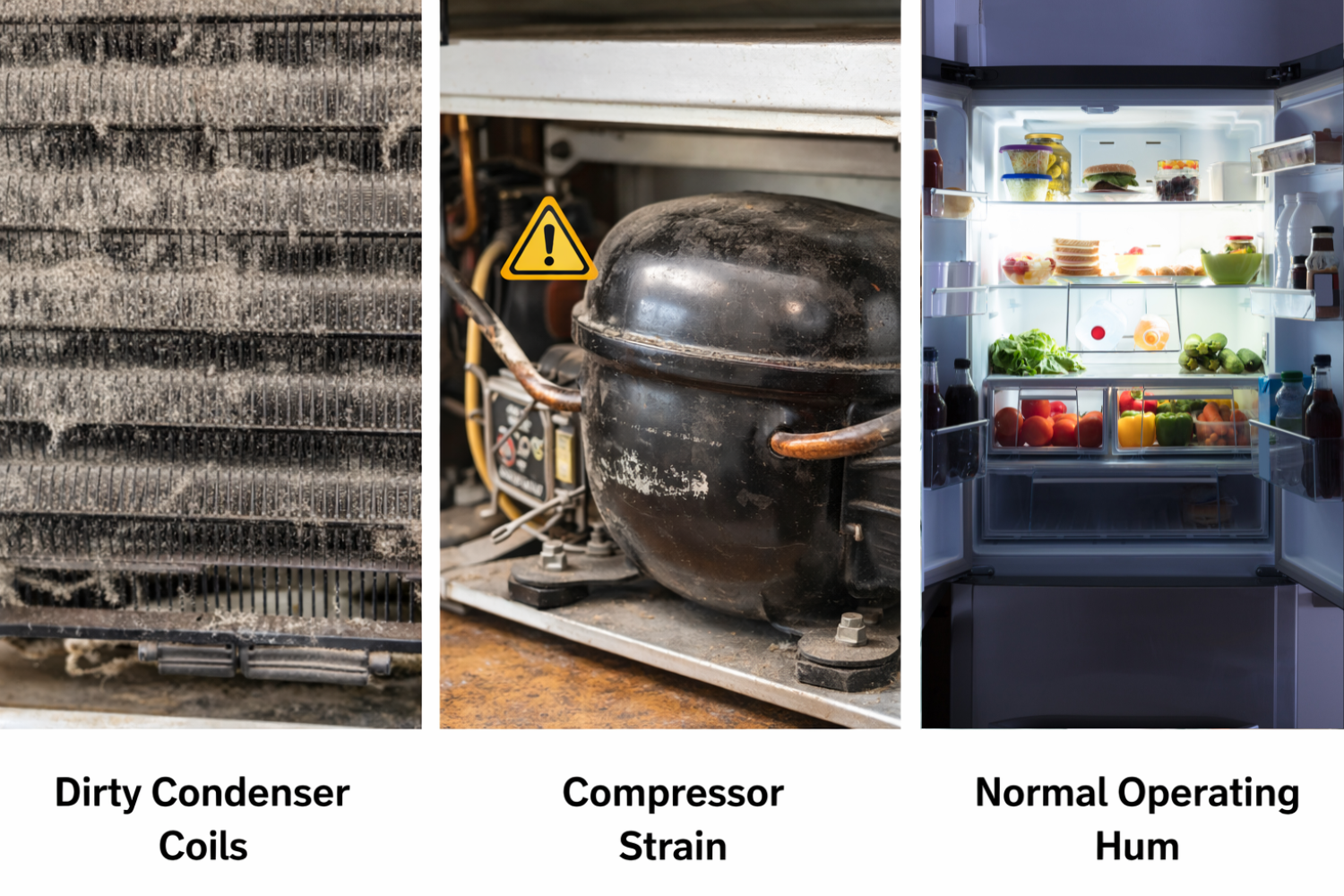
A quiet, steady hum usually means the cooling system is running as designed. Refrigerators move refrigerant through a sealed loop and run fans to move air across cold surfaces. A sudden, louder drone that becomes noticeable across the room can mean the unit is working harder than usual, or a motor is starting to strain.
Dirty Condenser Coils or Restricted Airflow
Thick dust gathering on your condenser coils acts like a heavy winter coat. It traps the heat and forces the entire system to run longer to reach the target temperature. This extra workload naturally makes the machine much louder. Dust on condenser coils can trap heat, causing the system to run longer. When airflow improves, the refrigerator may sound calmer and cycle more normally, especially if the noise is tied to heavy compressor load or a struggling condenser fan.
Compressor Strain or Excess Vibration
The compressor pressurizes refrigerant and drives the sealed cooling loop. If the fridge compressor noise steadily increases over time, the compressor mounts, internal wear, or related airflow problems may be to blame. A compressor that runs longer than normal can also show up alongside warm temperatures or uneven cooling.
Clicking or Ticking: Normal Cycling vs Repeated Start Attempts
Clicking can happen during normal daily cycling, but frequent repeated clicks paired with warming temperatures are a major warning sign. Your appliance uses small mechanical relays to switch between cooling modes. Understanding these clicks saves you from unnecessary panic.
Normal Clicks During Defrost or Cycling
Many refrigerators enter a defrost routine to manage frost buildup. A single click can happen when the system switches modes, powers a component, or changes fan speed. Occasional clicking on its own can be normal.
Repeating Clicks Plus Weak Cooling
Rapid, repeating clicks paired with weak cooling can point to a start or control problem. In some cases, a relay, control board, or compressor-start circuit may be struggling. Avoid DIY testing of electrical parts. If rapid clicking shows up along with warming food, schedule professional service.
Rattling, Knocking, Grinding: Fan and Ice Clues
A fridge making a knocking or loud rattling noise usually means a moving part is physically hitting an obstruction inside the cabinet or vibrating against the wall. These aggressive mechanical sounds are impossible to ignore. Finding the exact location of the rattle helps isolate the broken part fast.
Fan Blades Striking Ice or Frost Buildup
Knocking or grinding from the freezer can happen when the evaporator fan contacts ice buildup, or when debris or a loose shroud touches the fan path. If frost is building up faster than usual, the defrost system, door seal, or airflow may be contributing.

Why the Noise Stops When You Open the Door
The noise may stop because many refrigerators pause the evaporator fan when the door switch opens. If the sound consistently stops the moment the door opens and returns when the door closes, the evaporator fan area becomes a strong place to investigate during service.
Vibration From Leveling, Drain Pan, or Cabinet Contact
Built-in units fit snugly into custom wooden cabinetry. Built-in units sit tightly in custom cabinetry. If leveling is slightly off, the drain pan is loose, or the cabinet touches trim, vibration can transfer into surrounding panels and sound louder than expected.
What You Can Safely Check Before Calling
A quick visual check can rule out simple causes before scheduling service. Focus on alignment, clearance, and loose items without touching wiring or sealed-system parts. You can safely check the exterior alignment and interior shelves without touching any complicated wiring. Take a minute to review these areas.
- Confirm the heavy unit is not physically touching the surrounding cabinetry or decorative trim.
- Check for loose items inside the cabinet vibrating against the plastic shelves.
- Clean visible dust from the accessible bottom grille areas if the design allows it without disassembly.
- Check the rubber door seals for obvious gaps or severe damage letting warm air inside.
- Note exactly when the noise happens, such as constantly, only after the door closes, or just during the night.
Should You Hear Your Fridge Running All the Time?
Some modern luxury refrigerators use variable-speed compressors and fans that run longer at lower, quieter speeds. That can be normal. The concern is a loud motor or fan that runs for long stretches while temperatures drift warmer. In that case, the unit may be experiencing warm-air leaks, restricted airflow, or a component that is no longer operating efficiently. Several everyday factors will force the unit to work overtime.
- Frequent door openings let all the expensive cold air escape into the kitchen.
- Damaged gaskets can allow chilled air to leak out.
- Unusually hot room conditions force the system to run longer cooling cycles.
- Severely restricted airflow at the bottom grille chokes the main condenser.
Frequently Asked Questions
Why is my fridge making noise?
Fans, compressors, and valves can create normal operating sounds as the refrigerator cycles. A gentle hum is common. Loud grinding, rattling, or knocking often suggests contact with ice buildup, a loose panel or pan, or a fan-related issue that needs attention.
Is a noisy fridge dangerous?
A noisy fridge is usually not an immediate safety hazard to the home. The sound can signal a developing mechanical or airflow issue. If cooling performance drops, food may not remain at safe temperatures, making service more time-sensitive.
Why is my freezer making a loud humming noise?
A loud freezer hum can come from the evaporator fan working harder than normal, airflow restrictions, or the compressor running under a heavier load. Ice buildup that blocks airflow can also contribute, especially if the sound changes when the door opens.
Should you hear your fridge running all the time?
You might hear modern variable-speed systems running constantly because they are often designed to operate longer at lower, more efficient speeds. A loud, aggressive roar that never stops is a problem that requires attention.
How do I stop my fridge from making a clicking noise?
Normal single clicks can happen during mode changes, defrost routines, or component switching. Repeated rapid clicking with poor cooling calls for a technician, because the cause can involve the start circuit, relay, control, or compressor-related issues.
Is It Time to Silence Your Noisy Luxury Refrigerator?
Restoring a quieter kitchen starts with identifying the sound, where it comes from, and when it happens. Basic checks, such as confirming clearance, verifying leveling, and cleaning accessible exterior grilles, can rule out simple airflow and vibration issues. Notes about timing, temperature changes, and whether the noise stops when the door opens can also help speed up service diagnostics.
If the noise is new, escalating, paired with warming temperatures, or consistently stops when the door opens, professional service is the safest next step. A qualified technician from Wilshire Refrigeration can pinpoint the likely source and recommend a repair plan that fits the unit and installation.